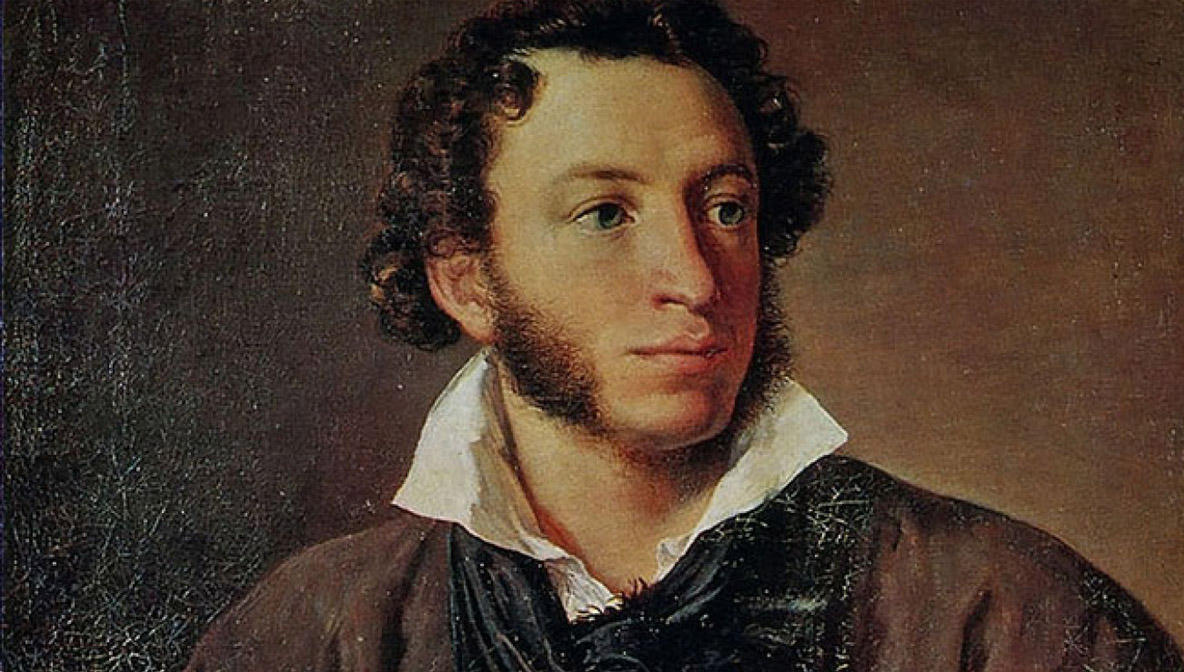

Introduction: The Man Who Invented Modern Russia (With Words)
Imagine being so good at your job that you basically create a whole country’s literature. That’s Alexander Pushkin. Except he didn’t just create literature—he created the Russian language itself as we know it today. Before Pushkin, educated Russians wrote and spoke in French. After Pushkin, they had their own voice.
Think about that for a second. This guy was writing in the 1820s and 1830s, and he’s still the most quoted poet in Russia. His works are memorized by schoolchildren. His face appears on monuments from Moscow to Ethiopia. And he did it all while living a life that makes modern celebrity scandals look tame—twenty-nine duels, a gambling addiction that would make a Las Vegas high-roller blush, a marriage to one of the most beautiful women in Russia, and a death that reads like something out of one of his own tragedies.
Born in Moscow in 1799, Pushkin was a nobleman with African ancestry—his great-grandfather was a Black African page who became a favorite of Peter the Great . He was a linguistic genius who spoke ten languages and read over 4,500 books in fourteen languages. He was a political radical who got himself exiled by the tsar, then somehow talked his way back into favor. He was a notorious womanizer who married the most beautiful woman in Russia, then died in a duel defending her honor.
And yet, despite all the chaos, he created work that’s lasted for over two centuries. His novel in verse, Eugene Onegin, is considered one of the greatest works of literature ever written. His short stories are still studied in universities. His influence looms over every Russian writer who came after him—Dostoevsky, Tolstoy, Chekhov, they all acknowledged Pushkin as their literary father.
This is the story of a man who lived fast, wrote brilliantly, and died young—but left a legacy that’s still very much alive.
Early Life & Background: A Noble Birth with African Roots
Moscow, 1799
Alexander Sergeyevich Pushkin entered the world on June 6, 1799 (that’s May 26 on the old Russian calendar) in Moscow . The city was the ancient capital, a sprawling mess of wooden buildings and grand palaces, where Russia’s nobility lived a life of extravagant privilege while most of the population remained serfs.
Pushkin was born into a family that had been aristocracy for centuries . His father, Sergei Lvovich Pushkin, traced his lineage back to a 12th-century noble family . The Pushkins were old money, the kind of people who didn’t need to prove their status because it was obvious from their name. Sergei was a military man who later worked in the civil service, but his real passion was literature. He wrote poetry himself and had a library full of French classics .
His mother, Nadezhda Ossipovna Gannibal, came from a more recent but far more interesting background. She was the granddaughter of Abram Petrovich Gannibal—and this is where Pushkin’s story gets really fascinating.
The African Ancestry
Abram Gannibal was kidnapped as a child from what is now Cameroon (or possibly Ethiopia—historians still debate the exact location) and taken to the Ottoman court in Istanbul as a gift for the sultan . From there, he was sent to Russia as a present for Peter the Great.
Peter the Great was fascinated by the unusual child. He became Gannibal’s godfather, raised him at court, and eventually sent him to France to be educated as a military engineer . Gannibal rose through the ranks, became a general, and ended up as the governor of Tallinn .
Pushkin was immensely proud of this heritage. He wrote about his great-grandfather in an unfinished historical novel called The Negro of Peter the Great . In a time when most Russians had never met a Black person, Pushkin’s African ancestry made him stand out—and he deliberately leaned into it. He referenced his African roots in his poetry, and it became part of his mystique.
A Childhood of French and Folktales
Like most upper-class Russian families at the time, the Pushkins raised their children to speak French. Alexander and his siblings learned French before they learned Russian, and their first tutors were French . This wasn’t unusual—the Russian nobility saw themselves as European, and French was the language of culture, diplomacy, and good breeding.
But Pushkin also had another teacher: his nanny, Arina Rodionovna . She was a peasant who belonged to the family, and she told him Russian folktales and legends. Years later, when Pushkin was in exile, he would write that these stories were his greatest source of creative inspiration . He immortalized her as Tatiana’s nurse in Eugene Onegin, and he dedicated several poems to her memory.
So young Alexander grew up bilingual—fluent in the aristocratic French of his parents and the earthy Russian of his nanny and the servants. This mix would become the foundation of his literary style: elegant and sophisticated, but with a deep connection to the language of ordinary Russians.
He was a quiet, imaginative child, prone to spending hours alone, wandering through his grandmother’s estate, talking to the peasants, and reading his father’s books . He devoured French literature—Molière, Voltaire, Rousseau—and began writing poetry at an early age .
Education: The Lyceum That Made a Genius
The Imperial Lyceum at Tsarskoye Selo
In 1811, at the age of 12, Pushkin entered the newly founded Imperial Lyceum at Tsarskoye Selo, just outside St. Petersburg . This was the most prestigious school in Russia, created by Tsar Alexander I specifically to educate the sons of the nobility. It was like an Ivy League university crammed into a palace—elite, exclusive, and full of the country’s most privileged youth.
Pushkin was part of the first graduating class, which meant the school’s curriculum was still being worked out as they went along. But what it lacked in formal structure, it made up for in intellectual intensity. The lyceum was modeled on the French educational system, and the boys were exposed to philosophy, literature, history, and languages .
Pushkin thrived. He made lifelong friends, met his future literary rivals and allies, and, most importantly, began to be recognized as a poet . At 15, he published his first poem, a verse epistle called “To My Friend, the Poet,” in The Messenger of Europe magazine . It wasn’t exactly great literature, but it was the beginning of something.
The lyceum was also where Pushkin’s rebellious streak first emerged. He was a smart student but not a well-behaved one. He was known for his wit, his sharp tongue, and his willingness to push boundaries. He wrote satirical verses about his teachers and fellow students, and he developed a reputation as a troublemaker .
Influences and Awakening
During his time at the lyceum, Pushkin was heavily influenced by liberal ideas that were circulating through Europe. The French Revolution had happened only a generation earlier, and its ideals—liberty, equality, fraternity—were intoxicating to young Russians who saw their own country ruled by an autocratic tsar and a rigid class system.
A teacher named Alexander Kunitsyn had a particularly strong influence on Pushkin . Kunitsyn introduced his students to Kantian philosophy and liberal individualist thought, encouraging them to think critically about society and the role of the individual. Pushkin would later commemorate Kunitsyn in his poem “October 19,” showing just how important he was to his intellectual development.
By the time Pushkin graduated in 1817, he was already a known quantity in literary circles . His talent was undeniable, and his political sympathies were clear: he was a radical, a libertarian, a writer who believed that Russia needed to change.
Career & Achievements: The Explosive Rise of a Literary Giant
The St. Petersburg Years
After graduating from the lyceum, Pushkin took a job in the foreign office in St. Petersburg . But his real work was writing. He threw himself into the city’s intellectual and social scene, joining literary societies like Arzamas (an exclusive club of poets) and the Green Lamp association, which was actually a clandestine branch of the Union of Welfare, a secret society dedicated to reform .
His poetry from this period was openly political. He wrote epigrams that ridiculed the tsar and his officials, and his “Ode to Liberty” was a direct challenge to autocracy . These poems weren’t published—the censorship wouldn’t allow it—but they circulated in manuscript form throughout the city. Pushkin became the spokesman for a generation of liberal radicals who were plotting to change Russia.
The government took notice. Pushkin’s poems were found among the belongings of the Decembrists, a group of military officers who attempted a revolution in 1825 . The revolution failed, and five of the conspirators were executed, with many more exiled. Pushkin was lucky to survive—but the political poems he had written years earlier came back to haunt him.
The First Poem: Ruslan and Ludmila
Pushkin’s first major published work was a narrative poem called Ruslan and Ludmila, released in 1820 . It was a mock epic about a medieval knight who has to rescue his bride, Ludmila, from an evil magician. The poem was full of fantasy, humor, and Russian folklore—but it broke every rule of conventional poetry.
The literary establishment was divided. Some critics attacked it for its irreverent tone and playful treatment of serious subjects. Others recognized its genius . Vasily Zhukovsky, one of the leading poets of the time, sent Pushkin his portrait with a note that read: “To the victorious pupil from the defeated master” . That’s about as high praise as you could get.
Exile: The South (1820-1824)
In May 1820, Pushkin was banished from St. Petersburg . The government had had enough of his political poetry, and he was sent to a remote province in the south. The official reason was a “transfer” for work, but everyone knew he was being punished.
He was sent first to Yekaterinoslav (now Dnipro, Ukraine), where he promptly fell ill. While convalescing, he traveled with a military hero, General Rayevski, and his family through the Caucasus and to the Crimea . The trip was an escape, but it was also a source of inspiration. Pushkin had discovered Lord Byron (in French translation), and he fell under the spell of Byronic Romanticism. He began writing “southern cycle” poems about exotic landscapes, rebellious heroes, and passionate love.
The most famous of these poems are The Prisoner of the Caucasus (1820-21), The Robber Brothers (1821-22), and The Fountain of Bakhchisaray (1823) . They cemented Pushkin’s reputation as the leading Russian poet of his generation.
But life in exile wasn’t all poetry. Pushkin lived hard. He drank heavily, gambled, and had numerous affairs. He was in Kishinyov (now Chisinau, Moldova) from 1820-1823, and he found himself in a world of violence, intrigue, and excess . He also became a Freemason and joined the Filiki Eteria, a Greek secret society fighting for independence from the Ottoman Empire . The man couldn’t stay out of trouble.
In 1823, he was transferred to Odessa. Here, he fell passionately in love with the wife of his superior, Count Vorontsov, the governor-general of the region. The count was not amused. He began agitating to have Pushkin removed . That plan got a boost when Pushkin wrote a letter to a friend that was intercepted by the police. In it, he mentioned that he was taking “lessons in pure atheism” . That was too much for the authorities.
Exile: Mikhailovskoye (1824-1826)
Pushkin was sent to his mother’s rural estate, Mikhailovskoye, near Pskov . It was the bleakest exile yet—remote, isolated, and far from everything he loved. He would later recall the two years he spent there as unhappy and lonely.
But here’s the thing about misery: it often produces great art.
Alone and isolated, Pushkin went back to basics. He studied Russian history. He spent time with the peasants on the estate, listening to their stories and their folklore . He wrote the provincial chapters of Eugene Onegin, began work on his historical tragedy Boris Godunov, and wrote some of his most moving poems .
“The Bridegroom” (1825), based on Russian folklore, showed that Pushkin was moving beyond the Byronic Romantic style. The simple, stark, and fast-moving style was a radical departure from his earlier flamboyance . He had begun to find his own voice.
The Return and the Tsar’s Censorship
After the Decembrist Uprising of 1825 was crushed, the new tsar, Nicholas I, called Pushkin back to Moscow . The tsar knew about Pushkin’s political poems, but he also knew that Pushkin was immensely popular. He offered Pushkin a deal: in return for allowing the poet to travel freely and publish, the tsar would personally censor all of Pushkin’s works.
Pushkin accepted. It was a terrible deal. The tsar’s censorship proved even more restrictive than the regular censors, and Pushkin’s personal freedom was still limited—he was under constant observation by the secret police . This period was painful. Many of his former allies accused him of being a traitor to the cause, and he was forced to defend himself in a poem called “To My Friends” (1828) .
But he was also productive. In 1831, he finally published Boris Godunov, the historical tragedy he’d begun at Mikhailovskoye. It was immediately recognized as a masterpiece. And he was still working on his magnum opus.
Eugene Onegin: The Masterpiece
Pushkin began Eugene Onegin in 1823 and didn’t finish it until 1831 . It’s a novel in verse, a work of staggering ambition and execution.
The story is simple: Onegin is a disenchanted aristocrat, bored with life. He moves to the countryside, meets a young poet named Lensky and a beautiful girl named Tatiana. Tatiana falls in love with Onegin, but he rejects her. Later, he regrets it, and tragedy ensues.
But the plot is only part of the magic. Eugene Onegin is written in a special stanza that Pushkin invented—iambic tetrameter with alternating feminine and masculine rhymes . The language is playful and inventive, full of irony and wit. The poem is a social critique that skewers Russian high society, but it’s also a deeply personal work. Like Pushkin himself, Onegin gets involved in a duel. Unlike Pushkin, Onegin survives by killing his opponent .
Eugene Onegin has been described as “a work of such complexity that, while only about a hundred pages long, translator Vladimir Nabokov needed …” (a running joke among literary scholars is that Nabokov’s commentary on the poem is longer than the poem itself).
The Bronze Horseman and Other Masterpieces
Pushkin’s last great work, written in 1833, is The Bronze Horseman. It’s a narrative poem that tells the story of a “little man”—a poor clerk named Yevgeny—who goes mad after his sweetheart dies in a flood . The poem is set against the background of the 1824 flood of St. Petersburg, and it culminates with Yevgeny threatening the bronze statue of Peter the Great on his rearing horse. The statue comes to life and pursues Yevgeny through the streets.
The poem is a meditation on power, ambition, and the relationship between the individual and the state. Peter the Great built St. Petersburg at tremendous human cost, and the “little man” is his victim. But the poem doesn’t offer easy moral answers. It’s one of the greatest works in Russian literature, and it cemented Pushkin’s legacy as the country’s greatest poet .
Personal Life: The Duels, the Gambles, and the Infamous Marriage
The Ladies’ Man
Pushkin was not, by any conventional standard, a handsome man. He was short—about 5 feet 5 inches (166 cm)—and his features were described as somewhat plain . But what he lacked in looks, he made up for in charm, wit, and sheer intensity. And the man had a reputation.
By some accounts, he had over a hundred lovers in his life. He began visiting brothels at the age of 14 and didn’t stop even after he was married . Pushkin’s romantic life was an endless series of affairs, flirtations, and scandals. He was drawn to beauty and femininity, and he had the ability to make women feel special—at least temporarily.
The Gambling
Pushkin also had a serious gambling addiction. He loved playing cards—faro, bridge, lomber, everything—and he was not particularly good at it . He’d lose money hand over fist, get into debt, and then have to write frantically to pay off his losses .
At one point, he nearly gambled away the manuscript of an unpublished portion of Eugene Onegin . At the end of his life, his gambling debts amounted to almost 150,000 rubles—equivalent to about 240 million rubles or about 2.4 million euros today . His father was reportedly so disgusted that there were rumors he would disinherit Pushkin . (The rumors were never proven, and documentation for such a move was lacking—but it says something about how bad things were.)
After his death, Tsar Nicholas I (with whom Pushkin had a complicated relationship) stepped in and paid off all the debts from the state treasury . It was an act of surprising generosity from a monarch who had spent so much of his life harassing the poet.
Natalya Goncharova: The Great Love (and the Fatal Marriage)
In 1828, Pushkin met 16-year-old Natalya Goncharova—one of the most beautiful women in Moscow . She was young, stunning, and from a noble but impoverished family. Pushkin was smitten. He proposed almost immediately.
She hesitated. Her mother was concerned about the tsar’s persecution of Pushkin—she didn’t want her daughter caught up in political trouble. Pushkin finally got assurances that the government would leave him alone, and Natalya agreed to marry him in April 1830 .
The wedding was delayed by a cholera outbreak. The ceremony finally took place on February 18, 1831 (Old Style), in Moscow’s Great Ascension Church .
The marriage was, by all accounts, mostly happy. Pushkin loved Natalya deeply, and she loved him in her own way. But there was a big problem: Pushkin was intensely jealous, and Natalya was a flirt. She was a coquette, a woman who loved attention and had no trouble getting it . She was a favorite at the imperial court—and the tsar himself was rumored to be one of her admirers .
The Duels
Pushkin had a hair-trigger temper. He fought as many as 29 duels in his life . Some of them were over matters of honor, some over gambling disputes, some over romantic rivalries .
The last duel was the one that killed him.
A French officer named Georges-Charles de Heeckeren d’Anthès had been pursuing Natalya for some time . Whether she reciprocated is unclear, but Pushkin believed she was being seduced, and his jealousy was consuming him. He sent a letter to d’Anthès’s adoptive father challenging the Frenchman to a duel .
D’Anthès accepted. The duel took place on January 27, 1837 (Old Style), in the snow near St. Petersburg. Pushkin fired first and missed. D’Anthès fired, and the bullet struck Pushkin in the spleen .
Pushkin died two days later, on February 10, 1837 . He was 37 years old.
The Funeral
The government was terrified that Pushkin’s funeral would become a political demonstration. At the height of his fame, the poet’s death was a national tragedy. The government forced the funeral to be held in a small church, with only close relatives and friends admitted by ticket . Fearing protests, they held the ceremony at midnight and took his body away secretly .
Pushkin’s final wish was to be buried next to his mother at the Svyatye Gory Monastery . His wish was granted.
Net Worth: The Debt and the Legacy
A Life in Debt
It’s almost impossible to talk about Pushkin’s net worth because he died in debt—and what he did have was mostly intangible.
Pushkin lived as a Russian nobleman, which meant he needed to project wealth even when he had none. His family estate at Mikhailovskoye was modest, and his income from writing wasn’t nearly enough to cover his lavish lifestyle and his gambling losses.
At the time of his death, he owed 150,000 rubles in gambling debts . That’s a staggering amount for someone who was, by his own standards, middle class. The tsar paid off the debts out of the state treasury .
What Was He Worth?
Accounts are conflicting and speculative. One source estimates Pushkin’s net worth at about $1 million, adjusted for today’s currency . But that number is essentially useless.
Pushkin wasn’t rich in the way people think of wealth. But he had something money can’t buy: the most famous name in Russian literature.
Posthumous Wealth
If Pushkin had lived today, he’d be a brand. His works have been published in over 350 million copies in the Soviet Union alone . Statues have been built in his honor. Museums have been dedicated to him. His works are still read, studied, and performed.
In terms of cultural wealth, Pushkin is beyond measure.
Legacy & Impact: Why He Still Matters
The Father of Modern Russian Literature
Pushkin is the single most important figure in Russian literary history. Period.
Before Pushkin, Russian literature was derivative—imitating French and German models. Educated Russians wrote in French, read French, and thought in French. Pushkin changed all that.
He didn’t just write in Russian—he created modern Russian literary language. He took the language of the Russian peasants and blended it with the sophistication of French culture. The result was something entirely new: a Russian that was elegant, flexible, and capable of expressing the deepest emotions and the most sublime thoughts.
The Influence
Every major Russian writer who came after him—Dostoevsky, Tolstoy, Chekhov, Turgenev, Nabokov—all acknowledged Pushkin as their literary father. Dostoevsky called him “the most profound and most powerful figure in all Russian culture” .
Pushkin’s impact goes beyond Russian literature. His short story “Mozart and Salieri” inspired Peter Shaffer’s play Amadeus . His poem The Bronze Horseman is one of the most famous works in Russian literature.
The Statue in Moscow
In 1880, a statue of Pushkin was unveiled in Moscow. The speeches were given by Dostoevsky and Turgenev. Dostoevsky claimed that the statue allowed Russians to claim themselves as a great nation “because this nation has given birth to such a man” .
And he was right.
What We Learn from Alexander Pushkin
-
Talent alone isn’t enough. Pushkin had genius, but he also worked incredibly hard. He wrote for hours every day, obsessively polishing his poems and his prose.
-
Don’t let your vices destroy your virtues. Pushkin’s gambling nearly ruined him. His passion for duels killed him. He’s a lesson in how destructive a talent for self-destruction can be.
-
Honor matters—but so does survival. Pushkin died for his honor. That’s noble, but it’s also tragic. He left behind a wife, four children, and a body of work that wasn’t finished. Sometimes, walking away is the braver thing to do.
-
Your background doesn’t define you. Pushkin had African ancestry in a time when Russia was intensely racist. He made it part of his identity and refused to be ashamed of it.
-
Art is a political act. Pushkin used his poetry to challenge the tsar and advocate for reform. He suffered for it, but he never stopped writing.
10 Unknown Facts About Alexander Pushkin
-
He had a talent for languages. Pushkin spoke 10 languages fluently—Russian, French, English, and several others .
-
His library was enormous. He had over 4,500 books in 14 different languages .
-
His great-grandfather was a kidnapped African prince. Abram Gannibal, Pushkin’s African ancestor, was brought to Russia as a slave and became a general .
-
He was a Freemason. Pushkin joined the movement during his exile .
-
He was a member of a Greek secret society. Pushkin joined the Filiki Eteria, which was fighting for Greek independence from the Ottoman Empire .
-
He invented a new poetic stanza. The “Onegin stanza”—iambic tetrameter with alternating rhymes—was created for his masterpiece .
-
He was almost executed for his political poems. After the Decembrist Uprising, Pushkin’s poems were found among the belongings of the rebels. He was lucky to avoid the fate of the five executed conspirators .
-
He got into a duel with his own friend. And he killed the friend. Pushkin survived—but just barely.
-
He once gambled away an unpublished part of Eugene Onegin. He managed to get it back, but only just .
-
An unpublished poem was discovered in 1987. A poem called “Coquette,” written in 1834, was found in the Moscow History Museum .
Social Media Links
Alexander Pushkin died in 1837—long before social media existed. But here’s where you can find his work online:
-
Pushkin’s poetry on Poetry Foundation: https://www.poetryfoundation.org/poets/alexander-pushkin
-
Pushkin’s complete works on Project Gutenberg: https://www.gutenberg.org/ebooks/author/718
-
The Pushkin Museum in Moscow: https://pushkinmuseum.art/
-
The Pushkin State Museum in St. Petersburg: https://museumpushkin.ru/
(He doesn’t have a Twitter account. He’s been dead for 188 years.)
Frequently Asked Questions
Q: How did Alexander Pushkin die?
A: Pushkin died on February 10, 1837, after being shot in a duel with French officer Georges d’Anthès .
Q: What is Pushkin’s most famous work?
A: Eugene Onegin, a novel in verse, is considered his greatest masterpiece .
Q: Was Pushkin of African descent?
A: Yes. His great-grandfather, Abram Gannibal, was an African prince who was kidnapped as a child and brought to Russia, where he became a favorite of Peter the Great .
Q: How many duels did Pushkin fight?
A: He fought as many as 29 duels—an extraordinary number .
Q: Did Pushkin have any children?
A: Yes. He had four children with Natalya Goncharova: Maria, Alexander, Grigory, and Natalya. His descendants now live around the world .
Q: What was Pushkin’s relationship with Tsar Nicholas I?
A: Complex. Nicholas I allowed Pushkin to return from exile after the Decembrist Uprising, but he also imposed heavy censorship and kept Pushkin under surveillance. At the same time, the tsar paid off Pushkin’s gambling debts after the poet’s death .
Q: Why is Pushkin considered the father of Russian literature?
A: He modernized the Russian language, created a new literary style, and introduced themes and techniques that would dominate Russian literature for centuries .
Q: How old was Pushkin when he died?
A: He was 37 years old .
Q: Where is Pushkin buried?
A: He is buried at the Svyatye Gory Monastery, near his mother’s grave .
Q: What was Pushkin’s role in the Decembrist Uprising?
A: Pushkin was not directly involved in the 1825 uprising, but his earlier political poems were found among the belongings of the rebels, which brought him under suspicion .
Conclusion: The Immortal Poet
Alexander Pushkin died at 37. He left behind a wife, four young children, and some of the most sublime poetry ever written.
In the 188 years since his death, his reputation has only grown. He has more statues than almost any other Russian writer. His works have been translated into every major language. His face has appeared on stamps, coins, and monuments. His words are memorized by schoolchildren.
But his real legacy isn’t on a monument. It’s in the language itself. Pushkin didn’t just write in Russian—he remade Russian. He took a language that was seen as crude and provincial and made it capable of expressing the heights of human emotion and the depths of human experience.
He was a genius, a rebel, a lover, a gambler, a duelist, and a martyr. He lived a short, explosive life, but his influence will last forever.
The End.