
Introduction: The Boy Who Had to Fight for His Dream
In the crowded debate about who is the greatest soccer player of all time, one name sits above the rest more often than any other: Lionel Messi. But his story isn’t just about goals and trophies—though there are more of those than anyone could count. It’s a story of resilience, of a tiny kid from Rosario, Argentina, who was told he might never grow, who had to leave his home and his family just to get a shot at his dream, and who went on to become arguably the most famous athlete on the planet.
Messi isn’t your typical superstar. He’s soft-spoken, shy, and famously private . He’s said he’s “weirder than sh*t” because he genuinely enjoys being alone when his kids are running around the house like a hurricane . He doesn’t like texting, doesn’t use ChatGPT, and admits he’s a “crybaby” when it comes to emotional movies . In a world of flashy athletes and endless social media drama, Messi is… well, normal. That’s what makes him so relatable.
But peel back the quiet exterior, and you’ll find a competitor who fought through a growth hormone deficiency as a child—a condition that nearly ended his career before it began . You’ll find a man who announced his retirement from the Argentina national team in 2016 after a heartbreaking Copa América final loss, only to come back and lead his country to a World Cup victory in 2022 . You’ll find a player who has won more trophies than anyone in the history of the sport .
This is the story of that journey. From a childhood diagnosis that threatened everything, to a napkin contract that changed the course of football history, to a World Cup triumph that cemented his legacy forever.
Early Life & Background: The Prodigy from Rosario
A Soccer-Obsessed Childhood
Lionel Andrés Messi Cuccittini was born on June 24, 1987, in Rosario, Argentina . He was the third of four children in a close-knit, football-loving family . His father, Jorge, worked in a steel factory and later became a football coach. His mother, Celia, raised the children and kept the household running . They weren’t rich, but they were happy.
Messi didn’t just like soccer—he was obsessed from the moment he could walk. At the age of four, he joined his first club, Grandoli, coached by his father . His grandmother, Celia, was his biggest cheerleader. She famously encouraged him to chase the ball before he could properly write his name . She’d take him to training, cheer him on from the sidelines, and believed in him when nobody else could see what was coming. Tragically, she passed away when Messi was just 10 years old, and to this day, he famously celebrates his goals by pointing to the sky in her honor.
By the time he was seven, Messi was already turning heads. He joined the youth academy of Newell’s Old Boys, a professional club in Rosario . He was part of a legendary youth team known as “La Máquina del ’87” (The Machine of ’87), named after their birth year. These kids were something special. Messi reportedly scored nearly 500 goals during his time with the youth team . Yes, you read that right. Five hundred. As a child.
He was small, quiet, and painfully shy, but put a ball at his feet, and he transformed into something else entirely .
The Diagnosis That Changed Everything
At the age of 10, Messi’s world came crashing down . He was diagnosed with a growth hormone deficiency (GHD)—a condition that, if left untreated, would have severely stunted his physical development . By that point, he was already significantly shorter than his peers. And the treatment was brutally expensive: about $1,000 a month . For a working-class family in Argentina, that was an impossible sum.
Newell’s Old Boys couldn’t afford to help. River Plate, another big Argentine club, was interested but also unwilling to cover the cost of the treatment . Messi’s family was running out of options, and his dream of becoming a professional soccer player was slipping away.
He started the treatment anyway, injecting himself in the legs every night—a routine that began when he was just 12 years old . “It was not something that left an impression on me,” Messi later said. “It was a small needle. It did not hurt, it was something routine for me” . That kind of resilience, that matter-of-fact acceptance of a difficult situation, is a hallmark of his character.
But the financial pressure was crushing. Something had to give.
The Napkin That Changed Everything
Enter FC Barcelona. The Catalan club had been scouting Messi, and they knew about his condition. In September 2000, Messi and his family traveled to Barcelona for a trial. The club’s sporting director, Charly Rexach, was so impressed by the 13-year-old’s talent that he knew he couldn’t let him leave.
The problem was that the club’s hierarchy was still debating the signing. Rexach was worried they’d miss out. So, on that day, he did something remarkable: he reached for a napkin and wrote out a contract . Yes, a paper napkin. It was a handshake deal, a promise, a commitment that would change the course of football history.
It read, essentially: “In Barcelona, on 14 December 2000, in the presence of Messi’s father, the club agrees to sign the player Lionel Messi, subject to the terms we have agreed.”
Messi’s father signed. And with that, the family packed up their lives in Rosario and moved to Spain. The club would cover the cost of Messi’s medical treatment, and he would be enrolled in La Masia, Barcelona’s legendary youth academy . A few years later, that napkin would sell at auction for nearly $1 million .
Education: The Classroom vs. The Pitch
Balancing Homework and Training
Messi’s formal education journey is pretty straightforward: he never went to college . In fact, he barely made it through high school. But his story highlights the unique challenges faced by elite young athletes.
While Messi’s peers were sitting in classrooms, he was spending his days training, traveling, and undergoing medical treatment. He attended Primary School No. 66, General Las Heras, in Rosario, where his teacher, Maria Soler, remembered him as a shy, soft-spoken, and incredibly focused student . He always did his homework, even if it meant squeezing it in between training sessions.
When he moved to Barcelona at 13, he was enrolled in a local high school alongside other academy players like Cesc Fàbregas and Gerard Piqué . But with intense training, frequent matches, and ongoing medical care, academics often took a backseat. He missed classes and exams, but thanks to club-arranged private tutoring, he managed to complete his high school diploma by age 17 .
And that was it. At an age when most students are preparing for college entrance exams, Messi was making his debut for FC Barcelona’s first team . He chose football over higher education, and it’s safe to say it was the right call.
But Messi never stopped learning. His discipline, work ethic, resilience, and emotional intelligence—qualities that defined his journey—were shaped through experiences that no textbook could teach . On training grounds, in locker rooms, and under the brightest lights in football history, Messi learned how to lead, how to evolve, and how to carry the hopes of a nation.
Career & Achievements: The GOAT’s Resume
The Barcelona Years: A Dynasty
Messi’s professional career started in 2004 with FC Barcelona, and he dedicated the next 17 years of his life to the club . He made his competitive debut at just 17 years old, on October 16, 2004, in a La Liga match against Espanyol .
A few months later, on May 1, 2005, he scored his first senior goal against Albacete . The assist came from a Brazilian legend named Ronaldinho, who celebrated by lifting the young Argentine onto his back. It was a moment that symbolized the passing of the torch.
What followed was one of the most dominant careers in sports history. Messi became the heart and soul of the greatest club side the world had ever seen. He scored a staggering 672 goals for Barcelona—the most goals scored by a player for a single club in history . His 474 La Liga goals and 192 assists are all-time league records that are unlikely ever to be broken .
The trophy haul was just as ridiculous. He won 10 La Liga titles, four UEFA Champions League trophies, three FIFA Club World Cups, and countless domestic cups . He was the architect of a dynasty that dominated Spain and Europe for over a decade.
But it wasn’t just about winning. It was about how he won. The way he’d dribble past five defenders as if they weren’t there. The way he’d place the ball past a goalkeeper with impossible precision. The way he saw passes that nobody else in the stadium could see. He played a different sport.
The PSG Years: A Brief Stopover
In 2021, Barcelona was in financial turmoil. Despite Messi’s desire to stay, the club couldn’t afford to keep him. He left with tears in his eyes—and signed with Paris Saint-Germain . He spent two seasons in Paris, winning two Ligue 1 titles and a Trophée des Champions . It was a successful spell by any measure, but it was never going to be the defining period of his career.
The Inter Miami Adventure
In 2023, Messi shocked the world by signing for Inter Miami in Major League Soccer (MLS) . The move was a game-changer for American soccer. It elevated the league’s global profile, drew sellout crowds everywhere, and proved that a player of Messi’s stature could still make a massive difference .
He transformed Inter Miami overnight. He led the club to the 2023 Leagues Cup, the first trophy in the team’s history . In 2024, he guided them to the MLS Supporters’ Shield . And in 2025, at the age of 38, he won the MLS Cup against the Vancouver Whitecaps .
He still has it.
The International Career: The Crown Jewel
For years, the one knock on Messi’s legacy was that he couldn’t do it for Argentina. He’d lost the 2014 World Cup final to Germany. He’d lost back-to-back Copa América finals to Chile in 2015 and 2016. The 2016 loss was so painful that he announced his retirement from the national team, saying, “The national team isn’t for me” .
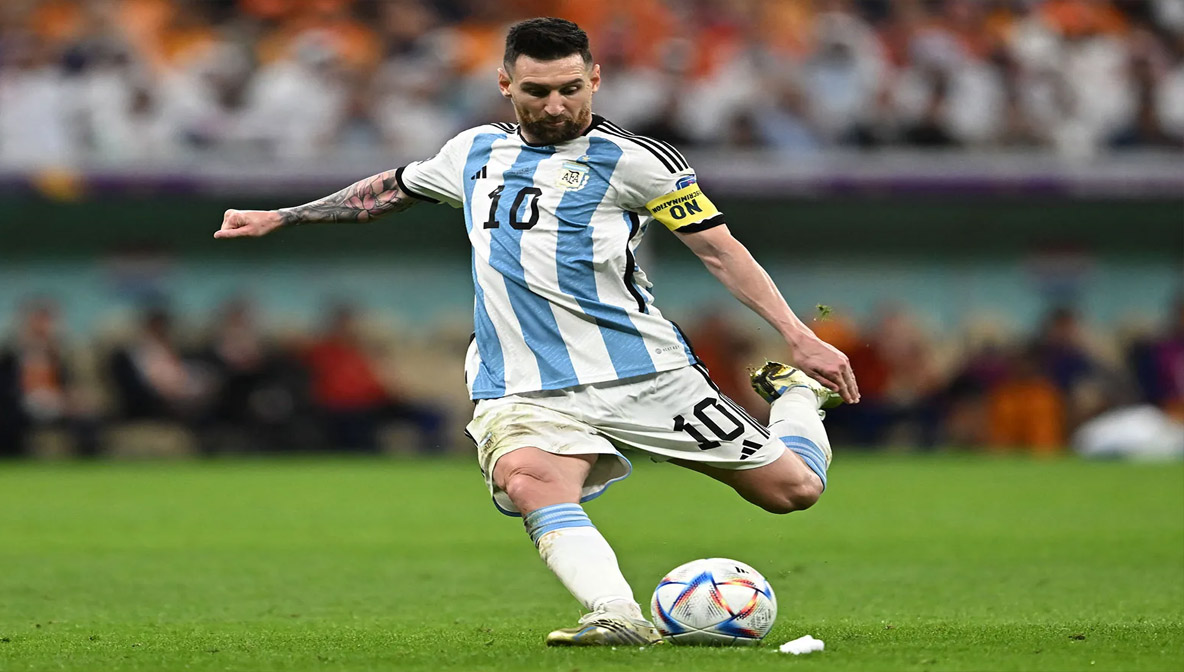
But the story didn’t end there. He came back. He lifted the Copa América in 2021, breaking Argentina’s long trophy drought . Then came the Finalissima in 2022. And then, the moment that changed everything: the 2022 FIFA World Cup in Qatar.
At 35, Messi orchestrated a campaign for the ages, leading Argentina to a dramatic penalty shootout victory over France in one of the most unforgettable finals ever played . He was the tournament’s best player, scoring crucial goals and delivering performances that defined greatness. Finally, he had the one trophy that had eluded him all his career.
He wasn’t done. In 2024, he won another Copa América, cementing his legacy as Argentina’s greatest-ever player and one of the greatest athletes in history . In June 2026, he became only the third footballer to make 200 international appearances for his country .
The Individual Accolades: Untouchable
Messi’s individual trophy cabinet is the most decorated in the history of the sport. He holds a record eight Ballon d’Or awards—a number that seems impossible to surpass . He’s also won six European Golden Shoes , two World Cup Golden Balls, and countless Player of the Year awards. He holds the record for most goals for Barcelona, most La Liga goals and assists, most career trophies (46 total), and the most goals scored for club and country in a single calendar year: 91 in 2012 .
Personal Life: The ‘Boring’ Superstar
Antonela Roccuzzo: The Childhood Sweetheart
Messi’s personal life is remarkably stable, especially for a global superstar. He’s been with his wife, Antonela Roccuzzo, since they were children in Rosario . She was the cousin of his best friend, and they grew up together. They finally married in 2017, and the wedding was a massive event, featuring many of Messi’s Barcelona teammates and their families.
Together, they have three sons: Thiago, Mateo, and Ciro . Messi has described his home life as pleasantly chaotic, with the boys running around and turning the house into a mini football pitch . He loves those moments, but he’s also honest about the exhaustion: “The mess at home with the three kids running around everywhere ends up saturating me and I like a moment of solitude” .
The Man Who Likes Being Alone
Messi is famously private. He doesn’t like going out, doesn’t like texting, and doesn’t use social media apps like TikTok for anything other than entertainment . He told Argentine channel LUZU, “I’m weirder than sh*t. I really like being alone, I enjoy being alone” . He’s a creature of habit, structured and routine-driven, and he admits that small changes to his schedule can throw him off.
He’s also surprisingly emotional. He admitted that he’s “a crybaby” when it comes to movies, especially those based on real-life stories . He doesn’t believe in horoscopes and doesn’t use artificial intelligence applications like ChatGPT . He seems almost old-fashioned in his habits—the opposite of the flashy, social-media-obsessed modern athlete.
Therapy and Mental Health
In a revealing interview, Messi spoke about his mental health struggles. He admitted that he went to therapy while at Barcelona to deal with the pressures of fame . “I don’t do therapy now. At the time I did, in Barcelona,” he said. “I’m a lot of eating things myself, keeping problems to myself. I changed a lot” .
He’s someone who internalizes his problems, preferring to keep things to himself rather than share them . This insight into his personality—the quiet, internal struggle beneath the serene exterior—makes the intensity of his on-field performances even more remarkable.
Net Worth: The Billionaire Next Door
How He Built a Fortune
Lionel Messi isn’t just a soccer legend; he’s a financial juggernaut. According to Forbes, his net worth is estimated at a staggering $1.1 billion . He’s one of only four active athletes to cross the billionaire mark .
His total career earnings are estimated at around **$1.8 billion**. Of that, approximately $1.2 billion has come from football contracts, while endorsements and business ventures have contributed an estimated $600 million .
His current contract with Inter Miami carries a base salary of $25 million** . Club owner Jorge Mas has revealed that Messi’s overall compensation package, including commercial agreements, could be worth between **$70 million and $80 million annually . He also has an option to acquire an ownership stake in Inter Miami after retirement .
The Endorsement Empire
A massive chunk of Messi’s wealth comes from his endorsement deals. He has signed a lifetime partnership with Adidas—one of the most lucrative sponsorship agreements in sports . He also works with Anheuser-Busch (Budweiser), PepsiCo, Gatorade, Hard Rock Cafe, Konami, Jacob & Co., Lay’s, and Lowe’s .
Business Ventures
Beyond endorsements, Messi has diversified his portfolio. He owns MiM Hotels, a chain of luxury hotels, and The Messi Store, a clothing brand . He runs 525 Rosario Media Company and has a stake in the Play Time Sports-Tech Investment Firm . He also invested in the El Club de la Milanesa restaurant chain in Argentina and launched the Mas+ by Messi energy drink in 2024 . He also owns a waterfront mansion in Fort Lauderdale valued at around $10.5 million .
Legacy & Impact: More Than Just a Player
The GOAT Debate (Now Settled)
For the better part of two decades, the “Greatest of All Time” debate was a two-horse race between Messi and Cristiano Ronaldo. Ronaldo had the Champions League titles and the goals; Messi had the artistry and the Ballon d’Ors. The debate raged on.
But the 2022 World Cup victory settled it for most people. It gave Messi the one trophy that Ronaldo (and Pelé, and Maradona) all had. It completed the picture. As one pundit put it, the victory “cemented Messi as the best player of all time” . The retirement announcement he made after the 2016 Copa América loss, where he said the national team wasn’t for him, feels like a distant memory . He came back, he conquered, and he finally got his crowning moment.
The American Legacy
Messi’s move to MLS wasn’t just a retirement tour. He signed with Inter Miami three years before North America hosts the 2026 World Cup, and stakeholders are hopeful his presence will prompt another spike in passion for the sport . He’s helped popularize soccer in the U.S. in ways few had imagined. He’s become more than just a player; he’s become a movement .
At 38, he’s still playing, still winning, and still defying age . Even if he doesn’t win the MLS Cup again, his legacy in the U.S. will likely relate more to how he helped grow soccer interest in the country than how he used his still-entrancing on-field skills .
The Record Book
His legacy is written in the record books. He holds the record for most trophies won by any player in history (46) . He’s the all-time top goalscorer for FC Barcelona and Argentina. He holds the record for most La Liga goals and assists. He’s won more Ballon d’Or awards than anyone. The list is essentially infinite.
What We Learn from Lionel Messi
So, what can a billionaire athlete from Argentina teach us?
1. Resilience is the key to everything.
Messi was diagnosed with a growth hormone deficiency at 10. He was told he might never grow. But he didn’t give up. He gave himself injections every night and fought for his dream.
2. You can be shy and still be a leader.
Messi is famously quiet and reserved. He doesn’t give rousing speeches. But he leads by example. He shows up, works hard, and lets his talent do the talking.
3. Don’t be afraid to be “boring.”
Messi values his privacy. He’d rather stay home with his kids than go to a nightclub. And he’s happy with that. You don’t have to be flashy to be successful.
4. It’s okay to seek help.
Messi went to therapy to deal with the pressures of fame. There’s no shame in that.
5. Keep striving, even when you’ve won it all.
Messi has won literally everything. But he’s still playing, still pushing, and still winning trophies in MLS. He doesn’t rest on his laurels. He just keeps going.
10 Unknown Facts About Lionel Messi
-
He started his career with a napkin contract. Messi’s first contract with Barcelona was signed on a paper napkin . It was sold at auction for nearly $1 million in 2024.
-
He gave himself daily injections as a child. At 12, Messi began injecting himself in the legs every night to treat a growth hormone deficiency .
-
He’s a crybaby. Messi admitted that he’s emotionally affected by films, especially those based on real-life stories, and feels no embarrassment about crying while watching them .
-
He doesn’t like texting. Messi prefers not to text much, even with friends or family. He described himself as a “weirder than sh*t” individual who likes being alone .
-
He doesn’t use ChatGPT. Messi has said he doesn’t use artificial intelligence applications or programs such as ChatGPT .
-
He watches a lot of TikTok. He admitted to spending a considerable amount of time watching videos on TikTok .
-
He has over 500 million Instagram followers. Messi’s fan base has generated more than enough enthusiasm to keep him near the center of popular culture worldwide .
-
He was almost a one-club man. Messi wanted to stay at Barcelona forever, but financial issues at the club forced his departure in 2021 .
-
His 2025 goal contribution record with Inter Miami. He shattered MLS records with an astonishing 66 goal contributions in 2025 .
-
He played for “La Máquina del ’87.” As a kid, Messi was part of a legendary Newell’s Old Boys youth team, named after their birth year, that scored nearly 500 goals .
Social Media Links
Here’s where you can follow Leo Messi online:
-
Instagram: @leomessi (over 500 million followers)
-
Facebook: @leomessi
-
Official Website: https://messi.com/
Frequently Asked Questions
Q: How old is Lionel Messi?
A: Lionel Messi was born on June 24, 1987, making him 38 years old as of 2026 .
Q: What is Lionel Messi’s net worth?
A: According to Forbes, Messi’s net worth is estimated at $1.1 billion .
Q: How many trophies has Messi won?
A: Messi has won a record 46 trophies in his career, including 10 La Liga titles, 4 UEFA Champions Leagues, 2 Ligue 1 titles, 2 Copa Américas, and the 2022 FIFA World Cup .
Q: Does Messi have a growth hormone deficiency?
A: Yes, Messi was diagnosed with a growth hormone deficiency at age 10, which is why he is 5-foot-7 today. The treatment was funded by Barcelona after they signed him .
Q: How many Ballon d’Ors has Messi won?
A: Messi has won a record eight Ballon d’Or awards .
Q: Is Lionel Messi married?
A: Yes, he is married to his childhood sweetheart, Antonela Roccuzzo. They have three children together .
Q: What team does Messi play for in 2026?
A: Messi currently plays for Inter Miami in Major League Soccer (MLS), where he is under contract until 2029 . He is still the captain of the Argentina national team.
Q: Will Messi play in the 2026 World Cup?
A: He has not officially confirmed it, but he is expected to captain Argentina during the 48-team tournament in 2026 .
Q: Did Messi ever go to college?
A: No, Messi never went to college. He completed his high school diploma at age 17 before focusing entirely on his football career .
Q: Why did Messi leave Barcelona?
A: Messi left Barcelona in 2021 due to the club’s severe financial issues, which prevented them from offering him a new contract that complied with La Liga’s financial regulations .
Conclusion: The Undisputed Great
On the world stage, the debate about who is the greatest of all time often feels settled. Lionel Messi conquered everything. He won the World Cup. He won the Copa América (twice). He won a record eight Ballon d’Ors. He’s the all-time leading scorer for his club and his country. He’s arguably the most famous athlete on the planet.
But what makes Messi’s story so special isn’t just the trophies. It’s the journey. It’s the story of a quiet kid who had to fight for his dream, who overcame a physical condition that could have ended his career, and who never lost his humility along the way.
He’s still the same shy boy from Rosario. He’d rather be at home with his wife and kids than at a party. He gets emotional watching movies. He doesn’t use ChatGPT. He’s just… normal. And that’s what makes him so beloved.
His legacy is cemented. He’s no longer just a player; he’s a symbol of perseverance, dedication, and talent. For millions of fans around the world, he’s the greatest to ever do it. And in a world that often feels cynical, Messi reminds us that sometimes, the nice guy does finish first.