
Introduction
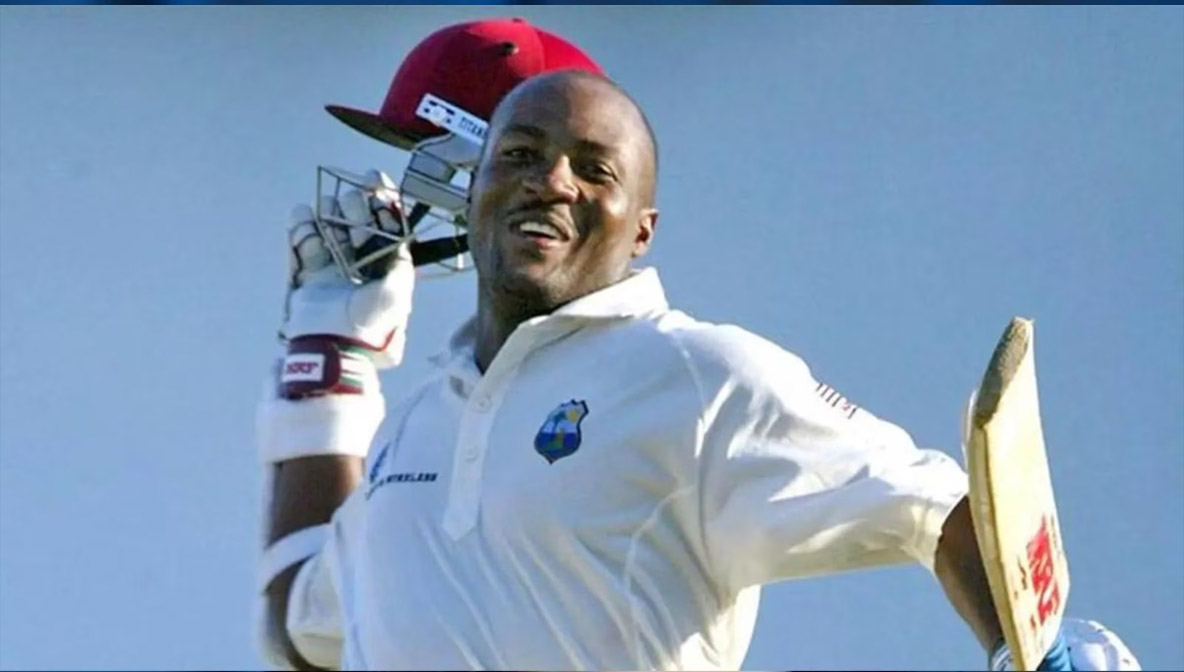
There are great batsmen, and then there is Brian Lara. To watch him bat was to witness poetry in motion—the high backlift, the elegant whip through mid-wicket, the ability to find gaps that didn’t seem to exist. For a generation of cricket fans, Lara wasn’t just a player; he was the reason you stayed up late, the reason you crowded around television sets, the reason you believed that anything was possible with a bat in hand.
Born in Trinidad, the tenth of eleven children, Lara rose from humble beginnings to become the most prolific run-scorer of his era. He holds two of the most hallowed records in cricket: the highest individual score in Test cricket (400 not out) and the only quintuple century in first-class history (501 not out) . These aren’t just numbers—they’re monuments to concentration, skill, and an almost supernatural appetite for runs.
But Lara’s story is more than statistics. It’s the tale of a small-island boy who carried the hopes of an entire region on his shoulders during West Indies cricket’s decline. It’s about breathtaking highs and frustrating lows, about genius and inconsistency, about a man who could single-handedly win a Test match or scratch around for single figures. This is the story of Brian Charles Lara—the Prince of Port of Spain—and how he became one of the most beloved cricketers the world has ever seen.
Early Life & Background
Brian Charles Lara was born on May 2, 1969, in the small town of Santa Cruz, Trinidad and Tobago . He arrived as the tenth child in a family of eleven children—or as he later joked, he “came in at No 10,” far lower down the order than he would ever find himself once he picked up a bat . His father, Bunty Lara, worked hard to provide for the large family, while his mother, Pearl, managed the bustling household .
Cricket was in the Lara blood from the beginning. His family was devoted to music as well, but it was the game that captured young Brian’s imagination . He was inspired by three great batsmen: Colin Cowdrey, Roy Fredericks, and Gus Logie. Legend has it that he would come home and ask his father, godfather, and brothers to bowl to him while he practiced shots until he had mastered them . This relentless dedication, even as a child, hinted at the champion he would become.
The defining moment of his early development came at age six, when his father enrolled him in the local Harvard Coaching Clinic for weekly Sunday sessions . It was here that Lara received his early education in correct batting technique, learning the fundamentals that would serve him for two decades. His father would take a stool to every practice session and watch his son hone his craft—a quiet presence that meant everything to the young boy .
The great tragedy of Lara’s life is that his father only saw him represent West Indies in a Test match as 12th man and never lived to see him actually play for his country. Bunty Lara died of a heart attack in 1989, just as Brian was on the cusp of international selection . One can only hope he saw enough in those training sessions to die content in the knowledge that little Brian was going to be just fine .
His mother Pearl, who succumbed to cancer in 2002, lived to see her son become a global superstar . The Lara family’s support system, with ten siblings cheering him on, provided the foundation for everything that followed.
Education
Lara’s educational journey began at St. Joseph’s Roman Catholic Primary school, followed by San Juan Secondary School . But it was when he transferred to Fatima College in Port of Spain at age fourteen that his cricketing talent truly blossomed .
Under the watchful eye of cricket coach Harry Ramdass, Lara transformed from a promising youngster into a prodigious talent. That same year, at just fourteen, he amassed 745 runs in the schoolboys’ league at an astonishing average of 126.16 per innings . This wasn’t just good—it was otherworldly. These performances earned him selection for the Trinidad and Tobago national under-16 team.
Perhaps most telling about Lara’s ambition was something he told his coach at this young age: he believed Sir Garfield Sobers’ Test record of 365, which had stood since 1958, was there for the taking . Here was a fourteen-year-old kid, already dreaming of breaking the most revered batting record in cricket. Fast forward a decade, and Sobers was on hand to congratulate Lara in person as he scored 375 against England in Antigua .
At fifteen, Lara was already playing in West Indian under-19 youth tournaments, and he represented West Indies in Under-19 cricket that same year . His formal education effectively ended there—cricket had claimed him, and he was ready to answer the call.
Career & Achievements
The Ascent (1987-1990)
The year 1987 was Lara’s breakthrough. In the West Indies Youth Championships, he scored a record-breaking 498 runs, surpassing Carl Hooper’s mark of 480 from the previous year . He captained Trinidad and Tobago to victory in the tournament, contributing a match-winning 116 in the final .
In January 1988, Lara made his first-class debut for Trinidad and Tobago against the Leeward Islands . In only his second first-class match, he faced a Barbados attack containing Joel Garner and Malcolm Marshall—two giants of West Indies cricket—and swashbuckled 92 runs . Years later, Marshall still remembered with a gleam in his eyes the way young Lara had batted with such valour .
Later that year, Lara captained the West Indies team in Australia for the Bicentennial Youth World Cup, where the West Indies reached the semi-finals. An innings of 182 as captain of the West Indies Under-23s against the touring Indian team further elevated his reputation .
His first selection for the full West Indies team followed, but tragically coincided with his father’s death. Lara withdrew from the team, putting family before cricket . In 1989, he captained a West Indies B Team in Zimbabwe and scored 145, showing his readiness for the highest level .
At age 20 in 1990, Lara became Trinidad and Tobago’s youngest-ever captain, leading them to victory in the one-day Geddes Grant Shield . Later that year, he finally made his Test debut against Pakistan, scoring 44 and 5. He had made his ODI debut a month earlier against the same opponent, scoring 11 .
Breaking Through (1993)
January 1993 marked the moment Lara emerged from promising talent to bona fide superstar. At the Sydney Cricket Ground, he smashed 277 against Australia—his maiden Test century in his fifth Test . This innings was the turning point of the series, as West Indies won the final two Tests to take the series 2–1. Lara was so moved by the experience that he named his daughter Sydney, born in 1996, after the ground where he announced himself to the world .
The Miracle Summer of 1994
If 1993 was Lara’s arrival, 1994 was his coronation. In April, playing against England in Antigua, he surpassed Sir Garfield Sobers’ 36-year-old Test record of 365, scoring 375 . Sobers was there to congratulate him personally—a passing of the torch from one Caribbean legend to another.
But Lara wasn’t finished. That same summer, playing for Warwickshire in English county cricket, he achieved something that still defies belief. On June 6, 1994, against Durham at Edgbaston, Lara scored 501 not out . It remains the only quintuple century in first-class cricket history . He reached the milestone in 474 minutes off just 427 balls, hitting 308 runs in boundaries—62 fours and 10 sixes .
The story of how this happened is almost comical. Warwickshire had initially targeted India’s Manoj Prabhakar as their overseas signing, but an ankle injury meant Prabhakar failed his fitness test . A couple of days later, Lara signed as perhaps the greatest “rebound” signing in professional sports history. Membership at Warwickshire tripled .
On the final day of the match, with rain having washed out the previous day, Lara had a full day to bat. As word spread through Birmingham that he was approaching Hanif Mohammad’s first-class record of 499, crowds began streaming into Edgbaston. In the nervous 490s, Lara was struck on the helmet by a bouncer and seemed momentarily dazed. He regained his composure and, two balls later, struck the boundary that ensured he’d forever be linked to the number 501 .
Earlier that same season, Lara had scored six centuries in seven innings for Warwickshire . It remains the most dominant individual summer in cricket history.
Captaincy and Comebacks (1998-1999)
Lara first captained West Indies from 1998 to 1999, a period when the team’s long-standing dominance was fading. After a whitewash at the hands of South Africa, they faced Australia in a four-Test series that finished 2–2 . Lara scored 546 runs in that series, including three centuries and one double hundred.
In the second Test at Kingston, he scored 213. In the third Test at Bridgetown, Barbados, he produced what many consider his finest innings: 153 not out in the second innings as West Indies chased down 311 with just one wicket remaining . Wisden rated this the second-best batting performance in Test history, behind only Sir Donald Bradman’s 270 in 1937 . Muttiah Muralitharan, the greatest spin bowler of all time, has consistently hailed Lara as his toughest opponent .
Reclaiming the Record (2004)
After Matthew Hayden scored 380 against Zimbabwe in 2003, Lara’s 375 was no longer the Test record. Characteristically, he responded in the most dramatic fashion possible. In April 2004, again against England, again at the Antigua Recreation Ground, Lara scored 400 not out . He became the first and only batsman to score 400 in Test cricket, and the only man to reclaim the Test record after having lost it .
This innings also made him just the second player (after Bradman) to score two Test triple-centuries, and the second (after Bill Ponsford) to score two first-class quadruple-centuries .
Champions Trophy Victory (2004)
Later that year, Lara captained West Indies to victory in the 2004 ICC Champions Trophy in England—the first time the team had won any major ICC trophy since the 1979 Cricket World Cup . It was a moment of immense pride for Lara and for Caribbean cricket.
Later Career and Retirement
Lara continued scoring runs prolifically into his late thirties. In November 2005, he surpassed Allan Border’s record for the highest total runs in a Test career during an innings of 226 at Adelaide Oval . He finished his career with 11,953 Test runs at an average of 52.88, with 34 centuries and 48 fifties . In ODIs, he scored 10,405 runs at 40.48, with 19 centuries and 63 fifties .
His last Test was against Pakistan in November 2006. He played his final ODI in the 2007 World Cup against England, scoring 18 . In 2011, he had a brief stint in the IPL with the Mumbai Indians .
Personal Life
Brian Lara has always been a private person when it comes to his personal relationships, though certain details are public knowledge.
He has never married, but has been in a long-term relationship with Leasel Rovedas, a Trinidadian journalist, television personality, and former Miss Trinidad and Tobago . The couple has been together for over two decades and has two daughters: Sydney, born in 1996, and Tyla, born in 2010 . Sydney was named after Lara’s record-breaking 277 against Australia at the Sydney Cricket Ground in 1993 .
According to some sources, Lara is also father to two sons, Zende and Bryson, though this information is less consistently reported . Regardless, he has openly expressed that his family remains his greatest gift, and he has demonstrated fierce protectiveness over his children’s privacy while remaining actively involved in their upbringing .
In his personal life, Lara is known for his charismatic yet reserved persona. A devout Christian, he often speaks of his faith guiding his life . He stands 5 feet 8 inches tall, and even in retirement, maintains the athletic build that served him so well .
Beyond cricket, Lara is an avid golfer who has won titles in golf tournaments in the Caribbean . He also worked in the marketing department at Angostura Ltd. early in his career, before cricket consumed his life .
Lara has been linked romantically to other women over the years, including British lingerie model Lynnsey Ward and, more recently, former Miss Scotland Jamey Bowers . However, his enduring relationship with Leasel Rovedas has remained the constant in his personal life.
Net Worth
As of 2026, Brian Lara’s net worth is estimated to be approximately $60 million USD . This substantial fortune has accumulated through multiple revenue streams during and after his playing career.
His cricket earnings from 131 Tests and 299 ODIs, including match fees and central contracts with the West Indies Cricket Board, generated significant income . His stint with Warwickshire in 1994, plus his brief IPL appearance with Mumbai Indians in 2011, added to his playing wealth .
Endorsements have been a major contributor. Lara has represented major brands including MRF (tires), Angostura (rum), Nike, Pepsi, Digicel, and more recently, W88 . His global brand appeal, particularly in the Caribbean and Indian subcontinent, has kept endorsement income flowing long after retirement.
Since retiring, Lara has built a successful second career in broadcasting and commentary, working with networks like Sky Sports, Star Sports, and Fox Cricket . These rolling contracts serve as his primary “salary” in 2026 .
He has also taken on coaching roles. Lara served as Head Coach of Sunrisers Hyderabad in the IPL for the 2023 season, with his contract reportedly worth approximately ₹4 Crores (about $500,000) . He continues as a Performance Mentor for West Indies international teams, working with Test and Academy players to improve tactical awareness .
Other income streams include speaking engagements, golf course design ventures, real estate investments, and his cricket academies . Lara also serves as a brand ambassador for various corporations and runs the Brian Lara Cricket Academy in Trinidad, mentoring young talent .
Legacy & Impact
Brian Lara’s legacy extends far beyond the numbers he accumulated. He is woven into the fabric of West Indian identity and remains a symbol of Caribbean excellence on the world stage .
Statistical Greatness
His records speak for themselves. Lara’s 400 not out remains the highest individual score in Test cricket history, and his 501 not out is the only quintuple century ever recorded in first-class cricket . He is the sixth-highest run-scorer in Test history with 11,953 runs, and his 34 Test centuries place him among the elite company of batsmen who have dominated the game’s longest format .
The Wisden 100 rated his 153 not out against Australia in 1999 as the second-best innings in Test history, behind only Bradman’s 270 in 1937 . Muttiah Muralitharan, who dismissed almost everyone, has repeatedly stated that Lara was the most dangerous batsman he ever bowled to .
The Aesthetic Genius
But numbers don’t capture the full picture. Lara batted with a grace that few have ever matched. His strokeplay came naturally—the high backlift, the nimble footwork, the ability to pierce the most crowded fields . As one fan at an English ground reportedly called out, “This is not a cricketer, this is an artist” .
When Barack Obama visited Trinidad in 2013 and Lara showed him how to swing a bat, the President compared him to Michael Jordan—another iconic figure who transcended his sport through sheer excellence . Another apt comparison might be Lionel Messi: a diminutive prodigy playing the game in the most aesthetically pleasing way, with an almost divine ability to make the ball do exactly what he wishes .
Carrying a Region
Lara’s career coincided with West Indies cricket’s decline from world dominance. For two decades, he carried the hopes of millions on his shoulders—and the weight was immense . There were times he clashed with cricket boards, stepped down from captaincy, and faced calls for retirement. Injuries slowed him down, and his team’s frequent defeats meant his brilliance suffered great dry spells .
What truly makes Lara unforgettable is not just his records, but his resilience. Every setback seemed to fuel a comeback. When critics questioned his place in international cricket, he answered with monumental innings. When people said his best days were over, he produced 400 not out in 2004 .
Beyond the Game
Off the field, Lara has invested in youth programs, authored his autobiography, and engaged in philanthropy through the Pearl and Bunty Lara Foundation, which supports underprivileged children in Trinidad and Tobago . The Brian Lara Cricket Academy in Tarouba, Trinidad, stands as a physical monument to his commitment to developing the next generation of Caribbean cricketers .
He was inducted into the ICC Cricket Hall of Fame in September 2012 . He received an honorary membership in the Order of Australia in 2009, and Honorary Life Membership of the MCC in 2013 . He is one of only three cricketers to receive the BBC Overseas Sports Personality of the Year award, joining Sir Garfield Sobers and Shane Warne .
What We Learn
Brian Lara’s journey teaches us:
-
Dream Beyond Your Years: At fourteen, Lara told his coach he would break Sobers’ record. He didn’t wait until it seemed realistic—he declared it before anyone believed it was possible. Vision precedes achievement.
-
Resilience Defines Greatness: His career had more ups and downs than most. Criticism, captaincy struggles, team defeats—yet he kept coming back. The 400 in 2004, five years after many wrote him off, is the ultimate example.
-
Style and Substance Can Coexist: Lara was breathtaking to watch, but he was also ruthlessly effective. He proved that playing beautifully doesn’t mean playing less seriously.
-
Carry Your Culture: Lara never forgot he was Caribbean. His batting reflected the calypso spirit—joyful, creative, and defiant. He represented more than himself, and he honored that responsibility.
-
Family is Foundation: From his father’s stool at practice sessions to naming his daughter Sydney after his breakthrough innings, Lara kept his family close. They were his anchor through every storm.
Social Media Links
Brian Lara maintains an active presence on social media, engaging with fans worldwide:
-
Instagram: @briancharleslara (also @brianlaraofficial)
-
Twitter/X: @BrianLara
-
Facebook: Brian Lara
10 Unknown Facts About Brian Lara
-
He Was the 10th of 11 Children: Lara often jokes he “came in at No 10,” far lower down the batting order than he’d ever find himself as a professional .
-
He Cried When He Didn’t Make Centuries: His first coach noted that as a youngster, Lara would weep any time he batted and did not make a hundred. Perfectionism started early .
-
He Almost Wasn’t Warwickshire’s Signing: The county initially wanted India’s Manoj Prabhakar, but an ankle injury scuppered that deal. Lara signed as a replacement—perhaps the greatest “rebound” in sports history .
-
His Daughter is Named After a Cricket Ground: Sydney Lara was named after the SCG, where he scored 277 against Australia in 1993 .
-
He Worked in Marketing: Before cricket consumed his life, Lara had a job in the marketing department at Angostura Ltd. in Trinidad .
-
He’s a Champion Golfer: Lara has won multiple golf tournaments in the Caribbean and is a scratch golfer who plays whenever he can .
-
The 501 Almost Didn’t Happen: On the morning of his record 501, Lara was hit on the helmet by a bouncer in the nervous 490s. He regrouped and hit the next scoring shot for four .
-
He Bowled Leg-Spin: Lara took four wickets in ODIs with his occasional right-arm leg-breaks .
-
Muralitharan’s Toughest Opponent: Sri Lanka’s Muralitharan, the greatest wicket-taker in Test history, has consistently named Lara as the hardest batsman he ever bowled to .
-
He’s the Only Man to Reclaim the Test Record: After Matthew Hayden surpassed his 375 in 2003, Lara came back and scored 400 not out in 2004—the only batsman to regain the Test record after losing it .
FAQ’s
Q: What was Brian Lara’s highest Test score?
A: Brian Lara’s highest Test score is 400 not out, scored against England in Antigua in April 2004. It remains the highest individual score in Test cricket history .
Q: Is 501 not out a real score?
A: Yes. On June 6, 1994, playing for Warwickshire against Durham at Edgbaston, Lara scored 501 not out. It is the only quintuple century in the history of first-class cricket .
Q: How many Test runs did Brian Lara score?
A: Lara scored 11,953 Test runs in 131 matches at an average of 52.88, with 34 centuries and 48 half-centuries .
Q: Did Brian Lara ever win the World Cup?
A: Lara never won the Cricket World Cup, but he captained West Indies to victory in the 2004 ICC Champions Trophy—the team’s first major ICC trophy since 1979 .
Q: Who is Brian Lara’s daughter?
A: Lara has a daughter named Sydney, born in 1996, named after the Sydney Cricket Ground where he scored 277 against Australia in 1993. He also has a younger daughter, Tyla, born in 2010 .
Q: Is Brian Lara married?
A: No, Lara has never married, but has been in a long-term relationship with Leasel Rovedas, a Trinidadian journalist and former Miss Trinidad and Tobago, for over two decades .
Q: What is Brian Lara doing now?
A: Lara works as a cricket commentator and analyst for various networks, serves as a Performance Mentor for West Indies cricket, and runs the Brian Lara Cricket Academy in Trinidad. He also makes occasional coaching appearances, including with IPL teams .
Q: How old is Brian Lara?
A: Brian Lara was born on May 2, 1969. As of 2026, he is 57 years old .
Q: Did Brian Lara play in the IPL?
A: Yes, Lara played briefly for the Mumbai Indians in the 2011 IPL season. He later served as Head Coach of Sunrisers Hyderabad for the 2023 season .
Q: What awards has Brian Lara won?
A: Lara was inducted into the ICC Cricket Hall of Fame in 2012. He received the Wisden Leading Cricketer in the World award in 1994 and 1995, and the BBC Overseas Sports Personality of the Year—one of only three cricketers ever to do so .
Brian Lara walked to the crease like a prince entering his kingdom. With every cover drive, every flick through mid-wicket, every record-breaking innings, he reminded us why we fell in love with cricket in the first place. In the Caribbean, they say the sea is salty from the tears shed when he finally walked off the field for the last time. But those tears were bittersweet—because for nearly two decades, we were all privileged to watch the Prince of Port of Spain reign supreme.