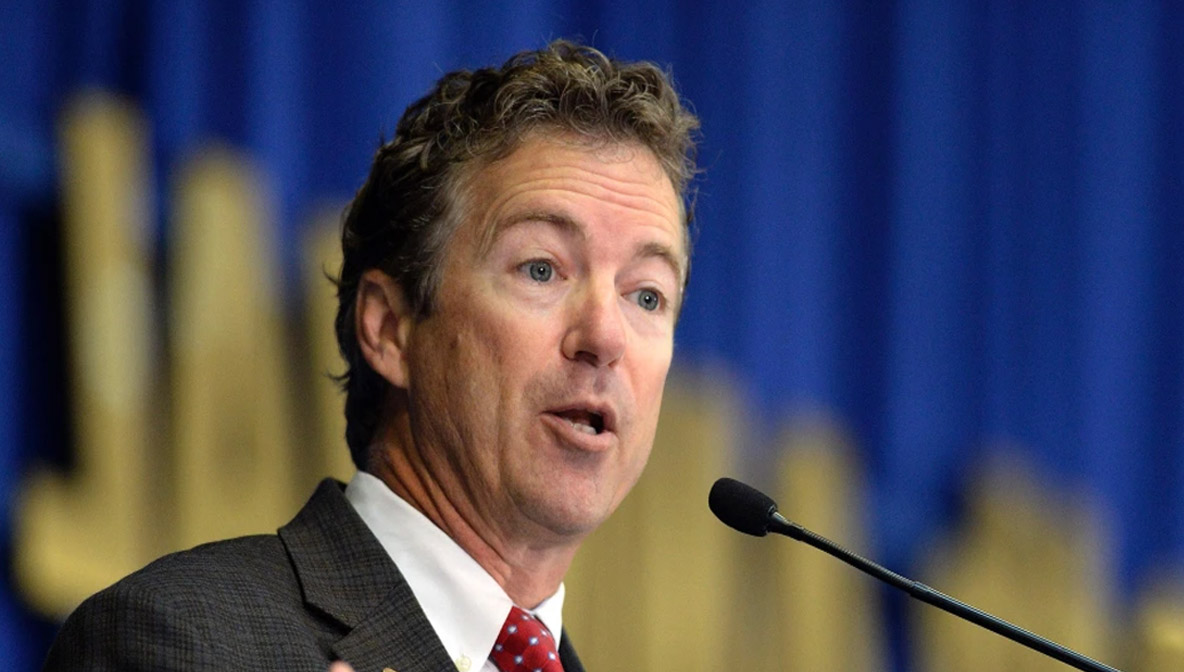

If you’ve turned on the news anytime in the last decade, you’ve likely seen him. He’s the senator from Kentucky with a distinct air of intellectual defiance, the one who holds up government reports on the Senate floor for hours on end, and the guy who can debate monetary policy with the same ease as he can discuss corneal transplants.
That’s Rand Paul. He is one of the most intriguing, and sometimes controversial, figures in American politics. He’s a medical doctor who decided that the best way to heal the country was to move from the operating room to the halls of Congress. He’s the son of a libertarian icon who carved out his own path to become a power player in the Republican establishment he once railed against.
Today, Rand Paul isn’t just a senator; as of 2025, he is the Chairman of the powerful Senate Homeland Security Committee . It is a position that places him at the epicenter of American governance, giving him oversight of everything from the Secret Service to FEMA. He has evolved from a Tea Party insurgent to a committee chairman, yet he still maintains that rebel streak that first got him noticed. This is the story of how Randal Howard Paul went from the swimming pools of Texas to the center of American power.
Introduction: The Original Disrupter
When Rand Paul first burst onto the national scene in 2010, the Republican Party didn’t quite know what to make of him. He was handsome, articulate, and clearly brilliant. But he was also talking about things “establishment” Republicans had ignored for years: ending the wars, auditing the Federal Reserve, and defending privacy from government surveillance.
He was, in many ways, the original disruptor of the modern GOP—years before that term became fashionable. He didn’t just want to cut taxes; he wanted to question the very legitimacy of vast swaths of the federal government. He was a fresh face with an old soul, quoting Friedrich Hayek and Ayn Rand on the campaign trail in Bowling Green.
Now, sitting as the head of one of the most important committees in the Senate, Paul has proven that consistency is a superpower in Washington. He may not always win the vote, but he always wins the argument on principle. Whether you agree with him or not, you have to respect that he believes what he says and says what he believes.
Early Life & Background: Growing Up Paul
Randal Howard Paul was born on January 7, 1963, in Pittsburgh, Pennsylvania, but he isn’t really a Pennsylvanian at heart . He is the son of Ron Paul, a physician and future long-time congressman from Texas, and Carol Paul. He is the middle child of five siblings, growing up in the shadow of a father who would become a legend in libertarian circles .
When Rand was just five years old, the family moved to Lake Jackson, Texas, a small town south of Houston . This is where he really grew up—swimming, playing football, and soaking up the Texas sun. His father set up a medical practice there and for a time was the only obstetrician in the county, delivering thousands of babies .
Politics was always part of the dinner table conversation. When Rand was 13, his father was elected to the U.S. House of Representatives . That same year, young Rand attended the 1976 Republican National Convention, where his father helped lead the Texas delegation for Ronald Reagan . It was a formative experience: watching conservatives fight for the soul of the party.
During his teenage years, while other kids were listening to rock music, Rand was diving into the works of Austrian economists like F.A. Hayek and Ludwig von Mises. He also read the novels of Ayn Rand, the philosopher who celebrated individualism and capitalism . Contrary to popular belief, he wasn’t named after the author—he was called “Randy” as a kid, and his wife later shortened it to Rand . Still, the intellectual alignment is hard to miss.
He attended Brazoswood High School, where he was a defensive back on the football team and a standout on the swimming team . He was athletic, competitive, and clearly very bright.
Education: The Making of a Physician
Paul attended Baylor University in the fall of 1981 . He was in the honors program and got involved in campus politics as the head of the Young Conservatives of Texas chapter. He also joined the NoZe Brotherhood, a satirical, somewhat secretive campus group known for its humor and pranks .
He was in a hurry, though. He finished his pre-med requirements in just two and a half years and left Baylor without completing his bachelor’s degree . It sounds odd today, but at the time, Duke University School of Medicine did not require an undergraduate degree for admission to its graduate school.
So, off to Duke he went. He earned his Doctor of Medicine degree in 1988 . From there, he completed a general surgery internship in Atlanta and then returned to Duke for his residency in ophthalmology, finishing in 1993 . He was now officially Dr. Rand Paul, trained at one of the best medical institutions in the country.
Medical Career: Healing Eyes in Bowling Green
After finishing his grueling residency, Rand and his new wife, Kelley, made a pivotal decision. They didn’t stay on the East Coast. Instead, they moved to Bowling Green, Kentucky, a charming college town south of Louisville. It was a place where they could raise a family and where Rand could build a practice from the ground up .
For the next 18 years, Rand Paul was an ophthalmologist. He was a surgeon who specialized in cataract and glaucoma surgeries, LASIK procedures, and corneal transplants . He worked hard, first for a large practice, then for a group, and finally opening his own private clinic in 2008 .
He wasn’t just in it for the money. In 1995, he founded the Southern Kentucky Lions Eye Clinic through the local Lions Club . This clinic provided eye exams and surgery to poor and uninsured families. He performed pro-bono surgeries for seniors and even traveled to Guatemala on medical missions to restore sight to the blind . He won the Melvin Jones Fellow Award from Lions Clubs International for his humanitarian work . This is a side of Rand Paul that often gets lost in the political noise: he is a healer.
The National Board of Ophthalmology Controversy
However, his medical career wasn’t without a splash of the rebelliousness that would define his politics. In the 1990s, the American Board of Ophthalmology (ABO) changed its rules. Old members got lifetime certifications, but new docs had to recertify every ten years. Paul thought this was unfair and elitist.
So, in 1999, he did something very Rand Paul: he started his own board. He incorporated the National Board of Ophthalmology (NBO) to offer a cheaper, alternative certification . He staffed the board with his wife and father-in-law . He estimated about 50 or 60 doctors got certified by it . However, the mainstream medical community never accepted the NBO. Hospitals and insurance companies considered its certification invalid. Paul eventually let the organization dissolve, and he later let his own ABO certification lapse . It didn’t affect his ability to practice in Kentucky, but it gave critics a talking point for years to come.
Despite that hiccup, his reputation as a skilled surgeon remained intact. He maintained hospital privileges in Bowling Green and was well-respected by his peers .
Political Career & Achievements: From the Tea Party to the Chairman’s Gavel
Rand Paul’s political career is a fascinating study of how to leverage a name, a philosophy, and perfect timing.
The 2010 Senate Run
In 2009, Kentucky’s Republican Senator Jim Bunning was struggling. He wasn’t raising money, and the national party was looking for an exit . Rand Paul saw his opening. He was a complete unknown in politics, but he had a famous last name and a burning desire to fight for limited government.
He entered the Republican primary against Trey Grayson, the hand-picked candidate of Senate Minority Leader Mitch McConnell. This was a direct challenge to the establishment. Riding the wave of the nascent Tea Party movement, Paul crushed Grayson by 23 points . He went on to win the general election, and in January 2011, he was sworn in as the junior senator from Kentucky, serving alongside the very man whose candidate he had defeated: Mitch McConnell .
The 13-Hour Filibuster
If you ask most people to name one thing Rand Paul did, they will point to March 2013. President Obama had nominated John Brennan to be the CIA director. Paul was deeply concerned about the Obama administration’s use of drone strikes and the legal justification for killing American citizens on U.S. soil without due process.
So, he talked. And he talked. And he kept talking. For 12 hours and 52 minutes, Rand Paul held the Senate floor . He read the names of drone strike victims. He questioned the limits of executive power. He was joined by colleagues who came to give him a break, but he never left. It was a modern-day filibuster that electrified conservatives and libertarians across the country . It cemented his reputation as a defender of the Constitution.
The 2016 Presidential Run
In April 2015, Paul jumped into the race for the Republican nomination for president . He tried to build a “big tent” coalition of libertarians, anti-war Republicans, and young people. It was a tough slog. The rise of Donald Trump changed the dynamics of the race, and Paul’s more cerebral, reserved style got lost in the noise. He suspended his campaign in February 2016 after a fifth-place finish in Iowa . However, he later became a key supporter of Trump in the Senate, finding common ground on issues like ending foreign entanglements and criminal justice reform .
Chairman of Homeland Security
Fast forward to 2025. After winning re-election to a third term in 2022, Paul’s seniority and persistence paid off . With Republicans taking control, he assumed the chairmanship of the Senate Homeland Security and Governmental Affairs Committee .
This is a massive role. He now oversees the Department of Homeland Security, the TSA, the Secret Service, and FEMA. He has the power to investigate the Biden administration, probe the origins of COVID-19, and push for massive reforms in how the government operates. It is a long way from a small eye clinic in Bowling Green, but in many ways, it is the perfect perch for a man who has spent his career questioning federal overreach.
Key Legislative Positions
Throughout his career, Paul has been consistent:
-
Audit the Fed: He has long fought to bring transparency to the Federal Reserve’s monetary decisions .
-
Criminal Justice Reform: He has worked across the aisle to reform mandatory minimum sentences and restore voting rights to non-violent felons.
-
Privacy: He has been a staunch opponent of the Patriot Act’s bulk data collection, arguing it violates the Fourth Amendment .
-
Foreign Policy: He is a non-interventionist, arguing that the U.S. should avoid “forever wars” and focus on national defense rather than nation-building .
Personal Life: Faith, Family, and a Notorious Neighbor
Rand married Kelley Ashby in 1990 . Kelley is a force in her own right—a former Democrat who became a key political adviser and a strong advocate for Lyme disease research. They have three sons: William, Duncan, and Robert .
The Pauls are devout Christians and are active in their local Presbyterian church in Bowling Green . Rand has coached his sons in Little League, soccer, and basketball, trying to be a present father despite the demands of Washington .
The 2017 Assault
In November 2017, Paul was the victim of a shocking attack. While mowing his lawn at his home in Bowling Green, his neighbor, Rene Boucher, tackled him from behind . The attack was brutal. Paul suffered five broken ribs and contusions on his lungs . Boucher later pleaded guilty, claiming the attack was the result of a dispute over yard maintenance—specifically, Paul piling yard debris near their property line. It was a bizarre and painful chapter in his life.
COVID-19 Diagnosis
In March 2020, Paul became the first U.S. senator to announce he had tested positive for COVID-19 . He recovered in isolation and, showing his dedication to his medical roots, later volunteered at a Bowling Green hospital to help during the pandemic surge .
Net Worth: A Comfortable but Not Lavish Fortune
When we talk about the net worth of senators, it’s always a mix of public salary, investments, and family history. For Rand Paul, the numbers paint a picture of a man who is comfortable, but not in the billionaire club.
It is estimated that Rand Paul’s net worth is approximately $4 million .
Here is the breakdown:
-
Senate Salary: He earns the standard congressional salary of around $174,000 to $181,000 per year .
-
Inheritance: A significant portion of his wealth comes from inheritance. Reports suggest he received over $6 million through inheritance from his family, which likely includes assets from his father, Ron Paul, and other family holdings .
-
Medical Practice: Before entering politics, he was a successful surgeon. He owned his own practice and would have earned a solid upper-middle-class income.
-
Investments: He and Kelley have invested in real estate and other assets. They own a home in Bowling Green and have reportedly owned property in the Bahamas, which is often rented out .
In terms of lifestyle, he drives a nice car (including a reported Bentley and a few SUVs) and owns a comfortable home, but he doesn’t flaunt wealth like some political figures . His net worth reflects a lifetime of hard work as a doctor and prudent financial management, boosted by family inheritance.
Legacy & Impact: The Fusionist
Rand Paul’s legacy is still being written as he chairs the Homeland Security Committee. But his impact is already clear.
He successfully fused three often-warring factions of the right: the national security hawks, the fiscal conservatives, and the libertarian-leaning civil libertarians. He made it cool to question the Republican orthodoxy on the drug war and prisons. He brought a doctor’s precision to the often-sloppy arguments of politics.
He has mentored a new generation of liberty-minded politicians and proven that you can be a serious senator without sacrificing your principles. His 13-hour filibuster will be taught in political science classes for decades as a masterclass in messaging and endurance.
What We Learn: The Power of Persistence
The life of Rand Paul teaches us that you don’t have to be the loudest person in the room to be the most impactful. He is often quiet, measured, and intellectual. But when he speaks, he has done his homework.
We also learn that you can evolve without abandoning your core. He went from an outsider protesting against the “establishment” to the chairman of a major committee working within that establishment. He didn’t change his philosophy; he changed his tactics. He proved that the only way to drain the swamp is to first get a seat at the table.
Finally, we learn the value of service. He could have stayed in Bowling Green, performing surgeries and living a comfortable life. Instead, he chose the chaos of politics because he genuinely believes the country is on the wrong track. Whether you vote for him or not, you have to admire that conviction.
Social Media Links
Want to follow Senator Paul? Here is where he is most active:
-
Official Senate Website: www.paul.senate.gov
-
Twitter/X: @RandPaul
-
Facebook: /SenatorRandPaul
-
Instagram: @randpaul
-
YouTube: @SenRandPaul
10 Unknown Facts About Rand Paul
-
He was a competitive swimmer. He swam for Baylor University and was on the Brazoswood High School state championship team .
-
He was a member of a secret society. In college, he joined the NoZe Brotherhood, a notorious campus group known for satire and stunts .
-
He can’t stand broccoli. Or at least, he has joked about it. He once said, “If I’m president, I will never eat broccoli, and I won’t make you eat it either.”
-
His favorite book is Atlas Shrugged. He has frequently cited Ayn Rand’s epic novel as a major influence on his thinking .
-
He has performed surgery in Guatemala. He has gone on medical mission trips to help blind children in Central America see for the first time .
-
He was once a Democrat. In his youth, he was a member of the Young Democrats of America, a fact that shocks his current supporters.
-
He was the first senator to quarantine for COVID-19. Before his own diagnosis, he self-quarantined after coming into contact with an infected individual, showing early caution.
-
He co-authored a book with his father. In 2015, he and Ron Paul co-wrote a book titled Our Revolution: A Future to Believe In.
-
He set a record for the longest speech in the modern Senate. His nearly 13-hour filibuster in 2013 is one of the longest on record .
-
He has a “Repeal the 17th Amendment” past. He has flirted with the idea of repealing the direct election of senators, arguing it would give states more power.
Frequently Asked Questions (FAQs)
1. Who is Rand Paul?
Rand Paul is the junior United States Senator from Kentucky, a Republican, and a medical doctor (ophthalmologist). He is the son of former Congressman Ron Paul and has been a leading voice for libertarian principles in the Senate. As of 2025, he is the Chairman of the Senate Homeland Security Committee .
2. Is Rand Paul related to Ron Paul?
Yes, Ron Paul is his father. Ron Paul served as a U.S. Congressman from Texas for many years and ran for president three times .
3. What is Rand Paul’s net worth?
His net worth is estimated to be around $4 million. This includes his Senate salary, investments, and inheritance from his family .
4. What is Rand Paul famous for?
He is famous for his libertarian-leaning politics, his 13-hour filibuster against the use of drones in 2013, his 2016 presidential campaign, and his advocacy for auditing the Federal Reserve and criminal justice reform .
5. What happened to Rand Paul in 2017?
He was physically assaulted by his neighbor, Rene Boucher, while mowing his lawn. He suffered five broken ribs and lung damage .
6. Is Rand Paul a doctor?
Yes, he is a medical doctor specializing in ophthalmology. He graduated from Duke University School of Medicine and practiced eye surgery in Bowling Green, Kentucky, for 18 years before entering politics .
7. Does Rand Paul support Donald Trump?
During the 2016 primaries, he was critical of Trump. However, after Trump became the nominee, Paul supported him and voted in line with his administration on many key issues, particularly regarding foreign policy and deregulation .
8. What is Rand Paul’s stance on the war in Ukraine?
Rand Paul is generally non-interventionist. He has been a vocal opponent of sending unlimited aid to Ukraine, arguing that the U.S. has its own priorities, such as securing the border and managing the national debt.
9. How many children does Rand Paul have?
He and his wife Kelley have three sons: William, Duncan, and Robert .
10. Did Rand Paul really start his own medical board?
Yes, in the late 1990s, he founded the National Board of Ophthalmology as an alternative to the established American Board of Ophthalmology, which he felt was unfair. The alternative board was short-lived and not widely accepted by the medical establishment .