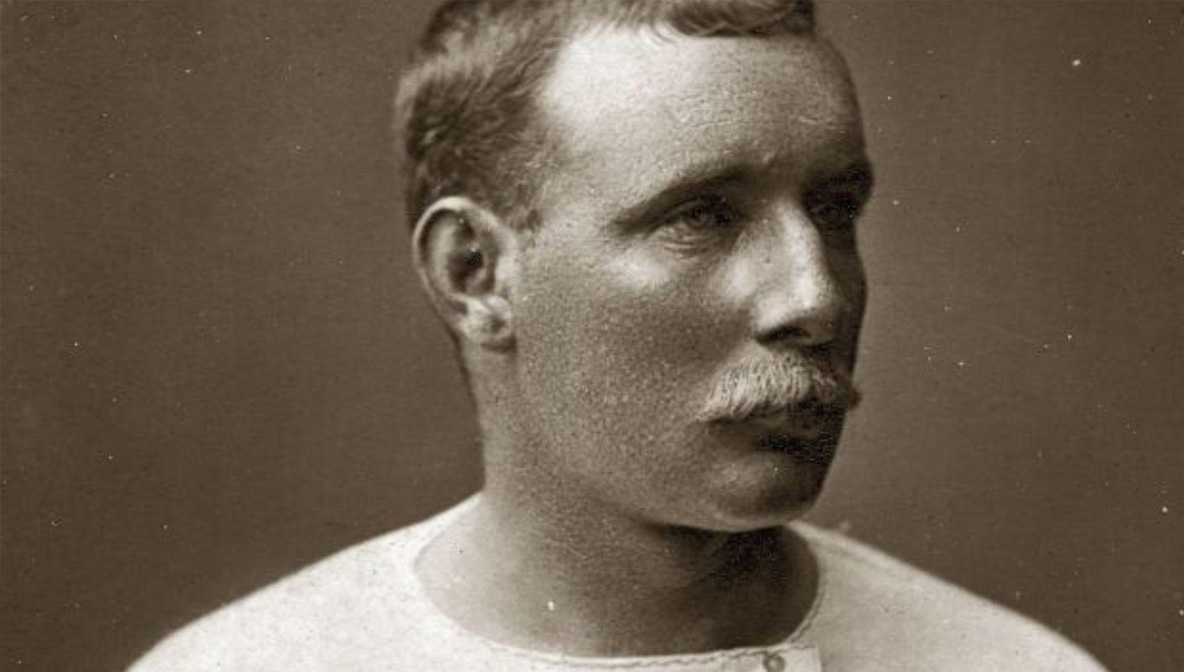

In the pantheon of human endurance, there are names that echo through time, setting a benchmark for what is considered possible. Today, we have ultra-marathoners, free-solo climbers, and astronauts. But in the smoky, gas-lit world of the Victorian era, one man captured the global imagination not by climbing a peak or running a race, but by swimming. Captain Matthew Webb was the first person to successfully swim the English Channel, a feat that, in 1875, seemed less like a sporting achievement and more like a myth.
Before wetsuits, GPS, or scientific training regimens, Webb plunged into the cold, treacherous waters of the Channel armed with little more than indomitable willpower, a robust constitution, and a swimsuit made of silk. His 21-hour battle against the cold, the currents, and sheer exhaustion was not just a sporting first; it was a monumental moment in the history of human ambition. It transformed him from an unknown ship’s captain into an international celebrity, a symbol of the Victorian era’s belief in progress, grit, and the triumph of the human spirit. This is the story of his remarkable life, his glorious peak, and his tragic fall—a tale of a man who conquered the world’s most famous stretch of water, but ultimately could not conquer his own need to keep pushing the limits.
Early Life & Background: A Child of the Severn
Matthew Webb was born on January 19, 1848, in Dawley, Shropshire, a part of England known as the Ironbridge Gorge, the birthplace of the Industrial Revolution. He was one of twelve children born to a country doctor, and from the very beginning, water was a central character in his story. The family home, called ‘The Limes’, was situated near the River Severn, a powerful and often dangerous tidal river.
It was in the Severn that Webb learned to swim, a skill his father insisted upon after a near-tragedy. The story goes that as a young boy, Matthew fell into a deep pond and was saved from drowning only by the quick action of his brother. In response, his father threw all his sons into the river, decreeing they must learn to swim for their own survival. This sink-or-swim approach was Webb’s first introduction to the water, and he took to it with a natural affinity. He developed a powerful, if unorthodox, breaststroke, the dominant swimming style of the era.
His connection to the sea was forged early. At just age twelve, he followed the path of many young men from coastal towns and joined the merchant navy, signing on as an apprentice on the square-rigger Crimea. For the next several years, he learned the ropes—literally and figuratively—sailing on trading ships to the Far East, the Americas, and around the British Isles. He proved himself a capable and hardy seaman, steadily rising through the ranks.
A pivotal moment, a prelude to his future fame, occurred in 1866 while he was serving as second mate on the ship Emerald. A sailor fell overboard into the churning Atlantic. Without a second’s hesitation, Webb dove into the treacherous sea in a daring rescue attempt. Tragically, he was unable to save the man, but his incredible bravery did not go unnoticed. The Royal Humane Society awarded him a medal for his valor, a testament to his fearlessness in the water. This act cemented his reputation for courage, but his life as a sailor was about to take an unexpected turn.
Career & Achievements: The Path to the Channel
Webb’s career as a merchant seaman was steady, but it was the reading of a newspaper article that set him on his legendary path. In 1873, he read about an unsuccessful attempt by the renowned British swimmer J.B. Johnson to swim the English Channel. Johnson had failed, but the article sparked something in Webb. He reportedly turned to his brother and declared, “I can do that.”
The challenge of the Channel was the ultimate test. It was not merely a distance of about 21 miles (34 km) at its narrowest point; it was a gauntlet of unpredictable challenges. The water was frigid, rarely exceeding 60°F (16°C). The currents were powerful and complex, changing with the tides, capable of sweeping a swimmer miles off course. And then there was the marine life, the storms, and the sheer physical and mental torture of prolonged exposure. Many had tried; all had failed. It was considered the Mount Everest of its day, an impossible barrier between England and France.
Webb, now a Captain, left the merchant service and dedicated himself wholly to the goal. He began a period of intense training and self-promotion. He needed to prove he was a serious contender. His first step was to establish his credentials. In the summer of 1875, he undertook a series of spectacular swims to capture public attention and test his limits.
His most famous warm-up act was a swim from Blackwall Pier in London to Gravesend in Kent—a distance of over 20 miles down the busy and polluted River Thames. He completed it in under 5 hours. A few weeks later, he swam from Dover to the South Foreland lighthouse and back, a round trip of about 10 hours, battling the same Channel currents he would soon face. These feats were widely reported in the press, generating the publicity he needed to secure financial backing. A London newspaper, The Daily Telegraph, even contributed to a fund to support his attempt, seeing the potential for a great story.
The First Successful Attempt: August 24-25, 1875
On the morning of August 24, 1875, Captain Webb covered himself in porpoise oil (a primitive attempt at insulation against the cold) and waded into the water from Admiralty Pier in Dover. He was accompanied by three small boats carrying his brother, a navigator, and a small crew for support. They carried brandy, hot coffee, beef tea, and cod-liver oil for sustenance—a far cry from the energy gels and electrolyte drinks of modern athletes.
His strategy was simple: a steady, powerful breaststroke, pacing himself for the long haul. The first few hours were promising, but as day turned to night, the real ordeal began. The cold became bone-chilling. He was stung by jellyfish, adding searing pain to his numbing fatigue. The tides turned against him, and for hours he swam with furious effort only to make little forward progress, at one point even being pushed backwards.
His crew urged him to give up, fearing for his life. But Webb’s determination was absolute. He later recounted that he kept himself going by singing songs and reciting poetry to maintain a rhythm and distract his mind from the agony. The breaking dawn on August 25th revealed the French coast, but it was still agonizingly far. The final stretch was a brutal battle of will against the current. After 21 hours and 45 minutes of continuous swimming, he finally waded ashore near Calais. He was exhausted, battered, but triumphant. He had done it. He was the first.
The news electrified the world. Telegraph wires carried the story across continents. Webb was an instant international hero. He returned to England to a hero’s welcome, with brass bands and cheering crowds. He had achieved the impossible.
Life After the Channel: The Perilous Path of the Celebrity Endurance Athlete
The problem with achieving the impossible is what you do next. Webb was now a global celebrity, but he had no clear profession. He capitalized on his fame by embarking on a lecture tour, writing a book about his experience (The Art of Swimming), and lending his name to various products, becoming one of the first-ever athletic endorsers. He even staged exhibition swimming matches and endurance stunts.
But the public’s appetite was for ever-greater spectacles. The quiet dignity of his Channel swim was replaced by a need for continuous, and increasingly dangerous, performances. He participated in grueling 24-hour swimming races in indoor pools, surrounded by a paying public, a bizarre and unhealthy spectacle that highlighted the shift from pure adventure to commercialized entertainment. The man who had swum for a historic goal was now swimming for a paycheck, and the stakes kept getting higher.
Personal Life: The Man Behind the Legend
Behind the public persona of the heroic Captain was a complex man. In 1880, Webb married Madeline Kate Chaddock, and they had two children. By all accounts, he was a devoted husband and father who sought to provide a stable life for his family. The income from his lectures and endorsements was substantial but unpredictable, and the pressure to maintain their lifestyle was immense.
Friends and contemporaries described him as genial, modest about his achievements, and possessing a quiet determination. He was not a boastful man, but rather someone who saw his feats as a matter of personal resolve. This very resolve, however, became a double-edged sword. His success was built on an inability to quit, a trait that served him well in the Channel but would ultimately lead him to take risks that others would wisely avoid. He was, in essence, a victim of his own legendary courage.
Legacy & Impact: The Ripple Effect of a Single Swim
Matthew Webb’s impact is profound and can be felt to this day.
-
The Birth of Marathon Swimming: Webb single-handedly created the sport of marathon swimming. His Channel swim proved that ultra-distance swimming was a viable, if extreme, human endeavor. It inspired generations of swimmers to test themselves against the water, leading to the establishment of the Channel Swimming Association and making the crossing the iconic goal it remains today.
-
A Symbol of the Victorian Age: Webb was the perfect hero for his time. His achievement embodied the Victorian ideals of perseverance, self-reliance, and conquering nature through sheer force of will. In an age of rapid technological advancement, he was a reminder that the human body and spirit were still the ultimate engines of progress.
-
Inspiring Human Potential: Beyond swimming, Webb’s story became a universal parable for overcoming obstacles. He showed that limits are often psychological, and that with enough determination, barriers considered insurmountable could be broken. He inspired explorers, athletes, and ordinary people to dream bigger.
-
The Dark Side of Fame: Webb’s life also serves as an early cautionary tale about the nature of celebrity and the pressure to constantly top one’s own greatest achievement. His story highlights the precarious transition from celebrated hero to professional stuntman.
The Final Act: A Tragedy at Niagara
Unable to replicate the singular glory of his Channel swim, Webb sought a new, even more spectacular feat to restore his financial fortunes and public stature. His gaze fell upon the most terrifying rapids in the world: the Whirlpool Rapids below Niagara Falls.
The stunt was simple in concept and insane in execution: to swim through the Whirlpool Rapids, a maelstrom of water that had claimed countless lives. On July 24, 1883, before a small crowd of spectators, Webb plunged into the Niagara River. He was last seen battling the immense waves before being pulled under by a vortex. His body was recovered four days later.
The man who had conquered the English Channel was defeated by the raw, unfettered power of Niagara. The world mourned, but the tragedy also cemented his legend. He died as he had lived—pushing the very boundaries of human endurance.
Final Thoughts, and What We Learn
The story of Captain Matthew Webb is more than a historical footnote; it is a rich narrative filled with timeless lessons about ambition, success, and the human condition.
What We Learn:
-
The Power of a Single Decision: Webb’s entire life changed because he read a newspaper article and said, “I can do that.” It reminds us that great journeys often begin with a simple, personal commitment to try.
-
Preparation Meets Opportunity: Webb didn’t just decide to swim the Channel on a whim. His entire life—his childhood in the Severn, his bravery at sea, his physical strength—had prepared him for that moment. Success is where preparation meets a once-in-a-lifetime opportunity.
-
True Grit is Mental: Webb’s victory was not primarily physical. It was mental. It was his ability to ignore the pleas of his crew to quit, to push through the cold and the pain, and to maintain focus for nearly 22 hours that made the difference. The body achieves what the mind believes.
-
The Problem with Peak Success: Webb’s story forces us to ask a difficult question: what do you do after your greatest achievement? He struggled to find a second act that could match the purity and glory of his first. This is a challenge for all high achievers—how to build a life beyond the one defining moment.
-
A Legacy of Inspiration: Ultimately, Matthew Webb’s greatest achievement was not just swimming from England to France. It was showing the world that impossible is a temporary condition. Every time a swimmer enters the water at Dover today, they are following in the wake of the original ironman, a testament to the enduring power of one man’s dream.
Captain Matthew Webb was a pioneer, a hero, and a tragic figure. He dared to do what no one else had done, and in doing so, he left an indelible mark on history, reminding us that the greatest voyages are not just across oceans, but into the depths of our own potential.