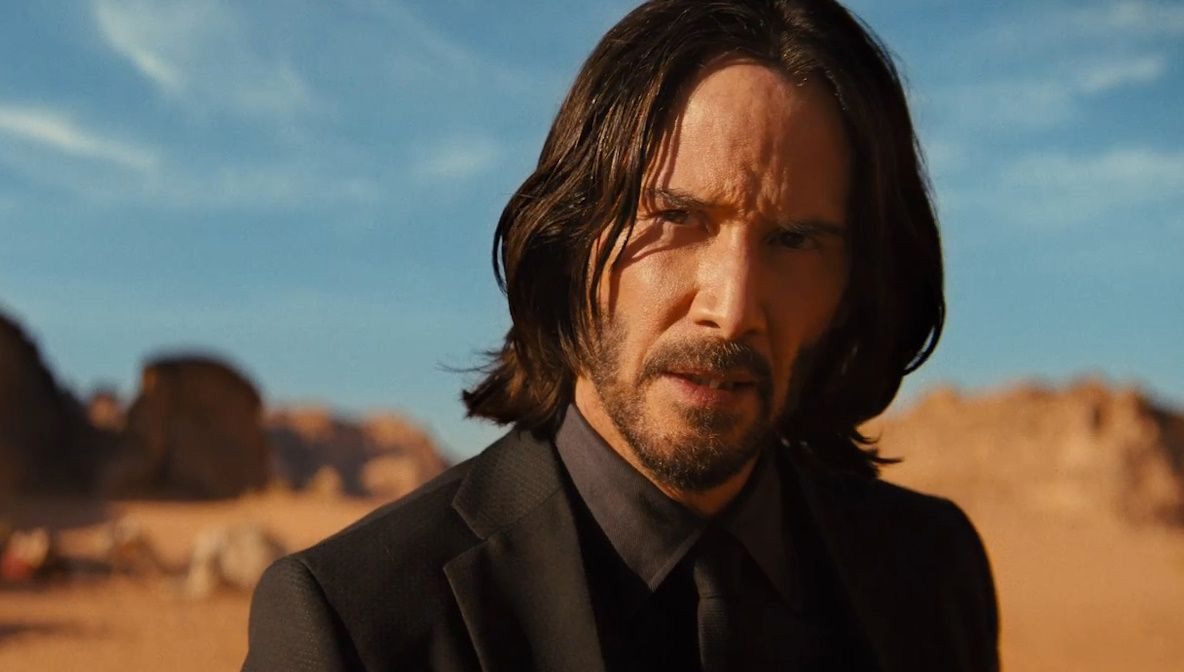

In the high-gloss, often cynical world of Hollywood, where fame is fleeting and scandals are currency, the existence of Keanu Reeves feels like a beautiful anomaly. He is a blockbuster action star who rides the subway. A billionaire-level actor photographed eating lunch alone on a park bench. A man whose name, in ancient Hawaiian, means “cool breeze over the mountains,” and who has embodied that very sense of calm in the storm of his own tumultuous life. For decades, he has been the subject of memes, not for outrageous behavior, but for simple acts of profound decency.
But to view Keanu Reeves solely through the lens of “the internet’s boyfriend” or a benevolent meme is to overlook the depth of the man and the artistry of his career. His story is not one of effortless cool; it is a narrative forged in profound personal tragedy, professional rejection, and a quiet, unwavering resilience that borders on the heroic. From the goofy time-traveler in Bill & Ted to the stoic action hero of John Wick, his filmography is a map of his own growth. This is the biography of a man who looked into the abyss, learned its lessons of impermanence and grief, and chose to respond not with bitterness, but with an extraordinary, gentle strength that has made him a global icon for our time.
Early Life & Background: A Foundation of Instability and Loss
Keanu Charles Reeves was born on September 2, 1964, in Beirut, Lebanon. His early life was marked by transience and disruption, setting a pattern of rootlessness that would both haunt and define him. His father, Samuel Nowlin Reeves Jr., was a Hawaiian-born geologist of Chinese-Hawaiian descent, and his mother, Patricia Taylor, was an English costume designer and performer.
The instability began early. His father abandoned the family when Keanu was just three years old. He would later be sentenced to ten years in prison for selling heroin at an airport, a shadowy figure who remained largely absent from his son’s life. Patricia moved Keanu and his younger sister, Kim, first to Australia and then to New York City, before finally settling in Toronto, Canada.
Life in Toronto was a struggle. Patricia worked tirelessly, remarrying several times, which meant Keanu attended four different high schools in five years. He was a bright but disengaged student, more interested in hockey—where he was a standout goalie, earning the nickname “The Wall”—and the drama club than in academics. He was diagnosed with dyslexia, which made school a constant challenge. At 15, he found his first true sense of belonging on the stage, performing in a school production of Damn Yankees. The stage was a place where he could be someone else, a refuge from the chaos of his home life.
He eventually dropped out of high school altogether to pursue acting full-time. He took odd jobs—as a landscaper, a video archivist, and even working in a pasta shop—to support himself while he auditioned for roles. His early life had taught him two things: that nothing is permanent, and that you have to rely on yourself to keep moving forward. These were hard lessons, but they built a foundation of resilience that would prove unshakable.
Career & Achievements: The Slow Burn of a Reluctant Star
Keanu’s career did not follow a typical trajectory. It has been a series of reinventions, marked by both massive commercial hits and long periods of critical dismissal.
The Early Years and Breakthrough: Bill & Ted (1986-1991)
After small roles in Canadian television and films, he moved to Los Angeles. His first notable role was as a teenage football player in the Rob Lowe drama Youngblood (1986). But his true breakthrough was utterly unexpected. He was cast as Ted “Theodore” Logan in Bill & Ted’s Excellent Adventure (1989). With his airhead California surfer diction and genial stupidity, Ted was a character of pure, joyful innocence. The film was a surprise hit, and Keanu became an instant, if unlikely, star. The role typecast him for years as a lightweight, but it gave him the financial freedom and name recognition to begin building a career.
The Action Star and Critical Respect (1991-1999)
Determined to prove his range, he made a series of bold and diverse choices. He played a slimy hustler in the indie film My Own Private Idaho (1991) opposite River Phoenix, showcasing a raw, dramatic talent that surprised critics. He then pivoted to action, starring as an FBI agent in the blockbuster Point Break (1991), where his earnest intensity was the perfect foil for Patrick Swayze’s zen criminal.
The mid-90s cemented his status as a versatile leading man. He played a conflicted lawyer in The Devil’s Advocate (1997) and a grieving husband in the beloved romance A Walk in the Clouds (1995). But his most iconic role of the decade was as Neo in The Matrix (1999). The role required immense physical and philosophical commitment. He underwent grueling martial arts training and embraced the film’s deep, existential themes. The Matrix was a cultural earthquake, redefining science fiction and action cinema and making Keanu Reeves one of the biggest movie stars on the planet.
The Setbacks and the Renaissance (2000-Present)
The 2000s were a mixed bag. While he starred in successful films like The Matrix sequels and Constantine, he also faced a series of critical and commercial failures, such as The Day the Earth Stood Still remake. For a period, he was unfairly labeled as having a limited emotional range, a “sad” or “wooden” actor.
His career renaissance is a testament to his passion and perseverance. He returned to his action roots with the John Wick franchise in 2014. The role of the retired, grieving hitman who is pulled back into the underworld was a perfect match for his stoic, physical acting style. The films were praised for their world-building and meticulously choreographed action, and they resurrected his career, making him more popular than ever. He had proven that talent, when combined with genuine passion for the craft, could outlast any trend or criticism.
Personal Life: The Sanctuary of Solitude and the Weight of Loss
Keanu Reeves’s personal life is the quiet, somber counterpoint to his loud, explosive film career. It is a story marked by almost unimaginable loss, which he has borne with a dignity that has become legendary.
The tragedies are a heavy catalog:
-
1993: His best friend and My Own Private Idaho co-star, River Phoenix, died of a drug overdose outside a Hollywood nightclub. Keanu was devastated, and the event is said to have solidified his aversion to the hard-partying Hollywood lifestyle.
-
1999: His girlfriend, Jennifer Syme, gave birth to their daughter, Ava Archer Reeves, who was stillborn. The loss shattered their relationship.
-
2001: Just 18 months after losing their daughter, Jennifer Syme was killed in a car accident. Keanu was once again plunged into profound grief.
These events, happening in such quick succession, would have broken many people. Instead, Keanu seemed to internalize the pain, allowing it to deepen his empathy and his perspective on life. He never speaks about these losses in detail, protecting their sacredness and his own privacy.
He has never married and has no other children. He lives a famously modest and private life, eschewing the trappings of celebrity. He is often photographed riding the New York City subway, eating alone, or simply talking to homeless people on the street. These are not staged photo ops; they are glimpses of a man who, despite his wealth and fame, has chosen to remain connected to the simple, human realities of the world.
His greatest personal passion is motorcycles. He co-founded Arch Motorcycle Company, building custom, high-performance bikes. It is a pursuit that requires focus, precision, and a love for the journey—a perfect metaphor for his approach to life. He is also a dedicated reader, with a well-documented love for poetry and philosophy, interests that feed the thoughtful, introspective soul that exists behind the action-hero exterior.
Legacy & Impact: The Breathtaking Power of Decency
In an age of curated social media personas and celebrity narcissism, Keanu Reeves’s legacy is built on something far more substantial: his character.
-
The Anti-Celebrity Celebrity: He has systematically rejected the modern fame playbook. He doesn’t have a social media presence, he rarely gives interviews, and he avoids the red-carpet circus. In doing so, he has become the ultimate anti-celebrity, a man whose appeal is based entirely on his work and his authentic, off-screen behavior.
-
A Symbol of Resilience: His life story is a public lesson in enduring profound grief without being consumed by it. He is a quiet testament to the human capacity to absorb loss and still find meaning, purpose, and even joy in life.
-
Generosity as a Way of Life: The stories of his kindness are the stuff of legend, and they are almost all corroborated. He took a 90% pay cut so that the producers of The Matrix could afford to hire Al Pacino. He gifted the entire special effects and stunt teams on the Matrix sequels with brand new Harley-Davidson motorcycles. He secretly set up a trust fund for the family of his sister, Kim, who has battled leukemia for decades. This isn’t philanthropy for publicity; it is a fundamental expression of his character.
-
Longevity Through Reinvention: His career, spanning from the 1980s to today, shows a remarkable ability to adapt. He has survived being a teen idol, an action star, a critical punchline, and a resurgent icon. He teaches a masterclass in career longevity built on humility, hard work, and a genuine love for the craft of filmmaking.
-
The Redefinition of Masculinity: In an era re-evaluating traditional masculinity, Keanu presents an alternative. He is strong and stoic, but also gentle, kind, and emotionally intelligent. He is a warrior with a poet’s soul, proving that sensitivity is not incompatible with strength.
Final Thoughts, and What We Learn
Keanu Reeves is more than a movie star; he is a moral compass in a confused industry. His life offers a powerful, silent critique of the values we so often celebrate.
What We Learn from His Life:
-
Your Response to Pain Defines You: Life handed Keanu a series of devastating blows. He could have become bitter, reclusive, or self-destructive. Instead, he chose empathy, generosity, and a quiet appreciation for the moment. He teaches us that while we cannot control what happens to us, we have absolute control over how we respond.
-
Success and Humility Are Not Mutually Exclusive: He is one of the most successful actors in history, yet he lives with a modesty that is breathtaking. He demonstrates that true success is not about what you accumulate, but about the person you remain throughout the process.
-
Quiet Dignity is a Superpower: In a world that screams for attention, his power comes from his silence, his restraint, and his dignity. He proves that you don’t need to be the loudest voice in the room to have the greatest impact.
-
Art Can Be a Sanctuary: For Keanu, acting, motorcycles, and literature are not just jobs or hobbies; they are practices. They are ways to focus the mind, to process emotion, and to find meaning. He shows us the importance of finding our own sanctuaries.
-
Kindness is the Ultimate Legacy: Long after the box office numbers for John Wick are forgotten, people will remember the stories of Keanu Reeves sitting with a homeless man, or giving his salary away to cancer research. His legacy is a powerful reminder that at the end of the day, our wealth, our fame, and our achievements matter far less than the simple, human decency we show to others.
Keanu Reeves is the unbreakable gentleman. He is a cool breeze of integrity in the often-feverish climate of modern life. He is living proof that it is possible to navigate the darkest valleys and emerge not with a hardened heart, but with a more open one. He is not perfect, but in his enduring kindness, his quiet strength, and his profound resilience, he is something even better: he is genuinely good. And in our world, that might be the most radical act of all.