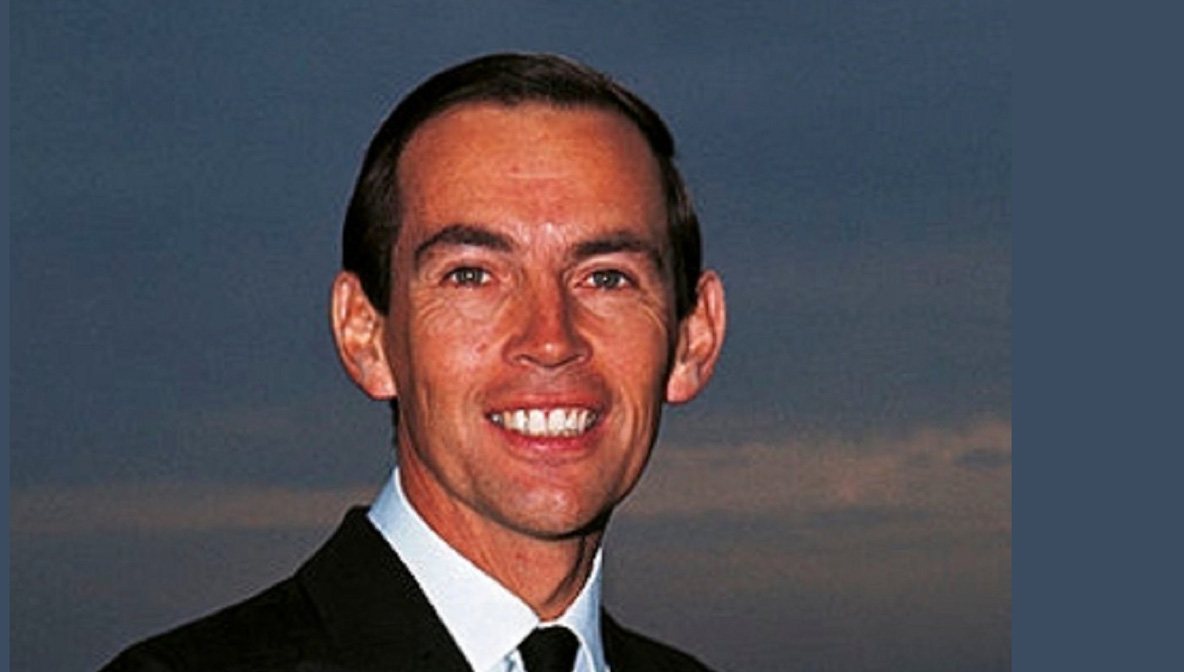

There are moments in history where the line between life and death, once considered an immutable frontier, is suddenly and dramatically redrawn. December 3, 1967, was one of those moments. In a operating theater in Cape Town, South Africa, a 53-year-old grocer named Louis Washkansky, dying from irreversible heart damage, was given the heart of a young woman, Denise Darvall, who had been killed in a car accident. For five hours, a team led by a handsome, ambitious, and fiercely determined surgeon named Dr. Christiaan Barnard performed a medical miracle that was, until that day, the stuff of science fiction. When Washkansky’s new heart began to beat in his chest, monitored by the world’s press camped outside, humanity crossed a threshold.
Christiaan Barnard instantly became the most famous doctor on the planet. His face was on the cover of every major magazine. He was feted by presidents and movie stars. But behind the glamorous, jet-setting persona was a complex and often contradictory figure: a brilliant surgeon from a poor, segregated South African town who battled racism, professional jealousy, and his own personal demons; a man who touched the divine yet was all too human. This is not just the story of a surgical first; it is the story of the man who dared to place his hands on the human heart, our most potent symbol of life and soul, and in doing so, ignited a global firestorm of hope, controversy, and ethical debate that continues to shape medicine to this day.
Early Life & Background: Forging Resilience in the Karoo Dust
Christiaan Neethling Barnard was born on November 8, 1922, in the small town of Beaufort West, a dusty, sun-baked settlement in South Africa’s Great Karoo region. His background was one of modesty and hardship, a world away from the international glamour that would later define his life. His father, Adam Barnard, was a missionary for the Dutch Reformed Church, a man of deep faith who served a mixed-race congregation. His mother, Maria, instilled in her children a fierce desire for education.
The Barnard family—Christiaan and his three brothers—were poor. They lived in a house with a dirt floor for a time, and Christiaan often went to school barefoot. One of the most profound tragedies of his childhood was the death of one of his younger brothers from a heart condition, an event that some biographers suggest may have subconsciously steered him toward cardiology. The poverty and the harshness of the Karoo landscape forged in him a relentless drive to escape and to achieve.
He was a bright and ambitious student, but his path was not straightforward. He attended the University of Cape Town, initially struggling with his studies. To help support his family, he worked a series of odd jobs, including as a mielie (corn) bag carrier. He eventually found his footing and graduated with a Master of Medicine degree in 1953. It was during his university years that he began to display the confidence—some would say arrogance—that would become his trademark. He was handsome, charismatic, and knew it, but he was also deeply affected by the systemic racial injustices of apartheid South Africa. His father’s work with a non-white congregation had given him a front-row seat to this prejudice, and though he would later be criticized for not speaking out more forcefully against the regime, it was a conflict that simmered within him.
After working as a general practitioner in the rural town of Ceres, where he gained a reputation for his skill and compassion, a burning desire for something greater took hold. He set his sights on the United States, a hotbed of surgical innovation. With a relentless drive for recognition and a thirst for cutting-edge knowledge, he secured a scholarship that would change the course of his life and, ultimately, the history of medicine.
Career & Achievements: The Path to Groote Schuur
Barnard’s time in the United States, from 1955 to 1958, was his true surgical awakening. He trained at the University of Minnesota under Dr. Owen Wangensteen, a legendary and innovative surgeon who ran a world-renowned program. It was here, in the frigid winters of Minneapolis, far from the Karoo sun, that Barnard’s ambition was fused with world-class technical skill.
He was immersed in the nascent field of open-heart surgery. He worked alongside other future giants like Walton Lillehei and observed the pioneering work on the heart-lung machine, a device that made complex cardiac procedures possible by temporarily taking over the function of the heart and lungs. Barnard was a quick and brilliant student, absorbing everything. He developed a particular interest in the anatomy of the heart and began pioneering research into the fatal birth defect known as intestinal atresia in babies, developing a new surgical technique that saved countless lives. This work alone would have secured his reputation as a leading surgeon.
But his mind was on a bigger prize. He became fascinated with the heart—not just repairing it, but replacing it. He witnessed early experiments in organ transplantation in dogs. The concept took root in his mind: if a kidney could be transplanted, why not a heart? He returned to South Africa in 1958, not to a prestigious university post, but to Groote Schuur Hospital in Cape Town. He was armed with American knowledge, a fierce ambition to put South Africa on the medical map, and a radical idea.
Back in Cape Town, Barnard established the hospital’s first heart unit. He quickly built a reputation as a brilliant, if demanding, surgeon. He assembled a talented team and began a rigorous program of research, practicing the intricate techniques of heart transplantation on hundreds of dogs in his laboratory. He mastered the surgical procedure itself—the act of cutting out a diseased heart and suturing in a healthy one. But the greatest obstacles were not technical; they were immunological and ethical. How could the body be stopped from rejecting the foreign organ? And when was a donor truly dead?
The race for the first human heart transplant was on, with teams in the United States, led by surgeons like Norman Shumway and Richard Lower, hot on the trail. Barnard, operating from what was considered the medical periphery of South Africa, was not the favorite. But he had a boldness that others lacked. On December 2, 1967, the stars aligned. A young woman, Denise Darvall, was brain-dead after a car accident. Her blood type matched that of Louis Washkansky, a diabetic with a ravaged heart who was days from death. Barnard saw his chance. He obtained permission from Darvall’s grieving father—”If you cannot save my daughter, you must try to save this man”—and assembled his team.
The surgery, which began on the night of December 2 and ended in the early hours of December 3, was a masterpiece of precision and nerve. The world held its breath. When Barnard emerged from the operating theater and announced, “It is beating,” he had irrevocably changed the world. Louis Washkansky lived for 18 days with his new heart, ultimately succumbing to pneumonia brought on by the heavy immunosuppressive drugs. But he had proven it was possible. The dam had broken. Barnard performed a second transplant on Philip Blaiberg a month later, who lived for 19 months, proving the procedure was not a fluke.
Personal Life: The Man Behind the Mask
The instant, stratospheric fame that followed the first transplant transformed Christiaan Barnard. He was no longer just a surgeon; he was a global celebrity. He was photographed with world leaders, dated movie stars like Gina Lollobrigida, and was mobbed wherever he went. He relished the spotlight, enjoying the wealth, the travel, and the adulation. This public persona—the charming, glamorous, “playboy surgeon”—often overshadowed his medical genius and created resentment among his peers, who saw him as an opportunist who had capitalized on the research of others.
His personal life was tumultuous. He was married three times and had a well-publicized series of affairs. His first marriage to Aletta Louw, a nurse he met in medical school and the mother of his two children, ended in divorce in 1969, strained by his fame and absences. He later married Barbara Zoellner, a wealthy 19-year-old heiress, a union that caused a media sensation due to their age difference. That marriage also ended in divorce, and he later married for a third time. He was a devoted, if often absent, father to his children.
Beneath the glittering surface, however, was a man grappling with the immense pressure of his fame and the physical toll of his work. In his later years, he developed crippling rheumatoid arthritis in his hands, effectively ending his surgical career. This was a devastating blow for a man whose identity was so tied to his technical skill. He became a medical consultant, a writer, and an advocate for health and anti-aging research, but he was never again the man who held a beating heart in his hands. He died on September 2, 2001, from a severe asthma attack while on holiday in Cyprus.
Legacy & Impact: The Unending Echo of a Single Heartbeat
Christiaan Barnard’s legacy is profound, complex, and ripples through every aspect of modern medicine.
-
The Birth of a New Field: His operation single-handedly launched the field of clinical heart transplantation. It proved that replacing a vital organ was not just a theoretical possibility but a clinical reality. Today, thousands of heart transplants are performed each year, giving terminally ill patients decades of extra life.
-
Igniting Global Bioethical Debates: The transplant forced the world to confront questions it had never seriously considered.
-
The Definition of Death: Until 1967, death was defined by the cessation of a heartbeat. But to transplant a healthy heart, it had to be taken from a donor whose heart was still beating. This led to the widespread medical and legal acceptance of brain death as the definitive criterion for death, a monumental shift in law and ethics.
-
Organ Donation: It created the concept of the “organ donor” and sparked global conversations about consent, ownership of the body, and the logistics of organ allocation.
-
Immunosuppression: It accelerated the frantic search for better drugs to prevent organ rejection, leading to the development of the powerful immunosuppressants that make all modern transplantation possible.
-
-
A Symbol of Hope and Controversy: Barnard became a symbol of South African achievement at a time when the nation was becoming a global pariah due to apartheid. For the white minority government, he was a propaganda tool. His relationship with the regime was complex; he operated on patients of all races at Groote Schuur (which was a “whites-only” hospital but made exceptions for his non-white patients) and was quietly critical of apartheid, but he never became the vocal activist some wished him to be.
-
The “Race” and the Question of Credit: There is a persistent debate about whether Barnard “stole” the glory from American researchers like Norman Shumway, who had done the foundational work. The truth is that the first transplant was an inevitability, built upon a global pyramid of research. Barnard’s genius was not in inventing the procedure, but in having the courage, the surgical skill, and the audacity to be the first to perform it on a human being. He was the right man, in the right place, with the right team, at the right moment in history.
Final Thoughts, and What We Learn
The story of Christiaan Barnard is a quintessential human drama of brilliance, ambition, triumph, and frailty. He was neither a saint nor a mere opportunist; he was a profoundly gifted and deeply flawed man who found himself at the epicenter of a medical and cultural earthquake.
What We Learn from His Life:
-
Ambition is a Double-Edged Sword: Barnard’s relentless drive propelled him from poverty to world fame and allowed him to achieve the impossible. That same ambition, however, strained his personal relationships and fueled professional rivalries. It teaches us that the very traits that enable great achievement often come with a significant personal cost.
-
Courage is Acting in the Face of the Unknown: The first transplant was an unimaginable risk. Failure would have been a very public, career-ending catastrophe. Barnard’s courage was not the absence of fear, but the willingness to proceed with a technically perfect operation despite the immense ethical and clinical uncertainties.
-
A Single Act Can Redefine Reality: One surgery did not just save one life; it redefined the boundaries of life and death for all of humanity. It demonstrates how a single, focused act of courage and skill can shatter paradigms and force the entire world to evolve its thinking.
-
Legacy is Multi-Layered: Barnard’s legacy is not just the thousands of lives saved by transplantation. It is also the ethical frameworks, the definition of brain death, and the global organ donor systems that his act necessitated. His impact is woven into the very fabric of modern medical law and morality.
-
Genius and Humanity Coexist: We often want our heroes to be perfect. Barnard reminds us that the hands capable of a miracle can be attached to a heart filled with very ordinary, human desires and flaws. His story is a powerful lesson in separating the achievement from the achiever, allowing us to celebrate the world-changing breakthrough while acknowledging the complexity of the man who made it happen.
Dr. Christiaan Barnard reached into the chest of a dying man and performed an act that was, for a moment, godlike. In doing so, he forced humanity to grow up, to confront its own mortality and its own power. He taught us that the human heart is not an untouchable shrine, but a muscle, a pump, a thing of wonder that can, with skill, courage, and a touch of audacity, be given as the ultimate gift.