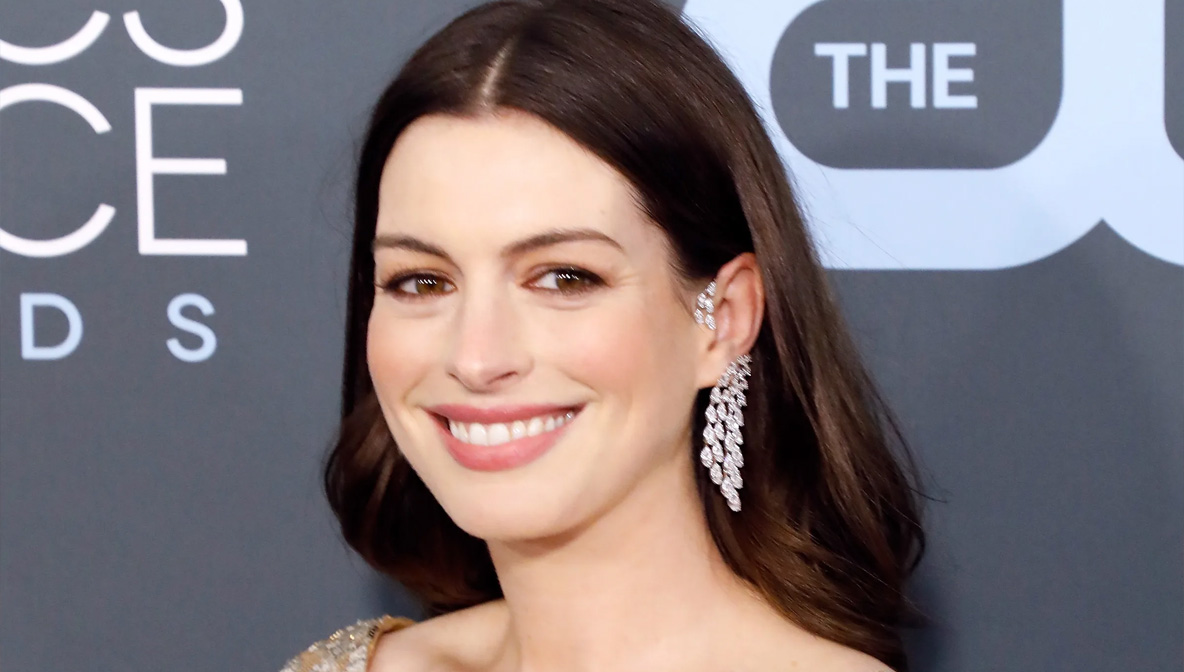

In the glittering, often ruthless world of Hollywood, where public perception can shift with a single tweet, Anne Hathaway has experienced the full spectrum of modern fame. She has been the beloved princess, the Oscar-winning darling, the internet’s favorite punchline, and finally, the respected, resilient artist who earned her way back into our hearts. Her journey is not a simple, upward trajectory of success. It is a far more human and compelling story of talent, ambition, and the profound challenge of being a woman in the public eye who dares to be both successful and sincere.
For a time, “Hathahate” was a genuine cultural phenomenon—a puzzling wave of public animosity directed at an actress who seemed to be the epitome of grace and talent. But instead of crumbling, Hathaway did something remarkable: she quietly recalibrated, focused on her craft and her family, and slowly, masterfully, rebuilt her narrative. This is not just the biography of a movie star; it is the story of a woman who learned to armor her sensitive heart without losing her essential warmth, emerging as one of the most versatile and enduring actors of her generation, and a powerful, if unlikely, symbol of resilience.
Early Life & Background: A New Jersey Upbringing Forged in Theater
Anne Jacqueline Hathaway was born on November 12, 1982, in Brooklyn, New York, but she was raised in the suburban town of Millburn, New Jersey. Her background was a world away from the Hollywood chaos that would later define her life. Her father, Gerald Hathaway, was a lawyer, and her mother, Kate McCauley, was an actress who inspired Anne’s love for the stage. The family was educated, supportive, and culturally engaged.
From a very young age, Anne was drawn to performance. She was a voracious reader and a talented singer, and she found her true calling on the stage of the Paper Mill Playhouse, a prestigious regional theater in New Jersey. Her early ambitions were not for film stardom, but for the Broadway stage. She once stated her dream was to be a “serious stage actress,” perhaps even winning a Tony Award one day.
Her upbringing was also deeply influenced by her mother’s progressive values and her own Catholic faith, which she has described as a source of comfort and moral guidance. However, this faith also created an early conflict when, at the age of 15, she discovered her older brother, Michael, was gay. The Catholic Church’s stance on homosexuality created a crisis for her, and she has said that from that moment, she considered herself not a “religious” person, but a “spiritual” one, prioritizing love and acceptance over doctrine. This early experience of reconciling personal belief with family love instilled in her a deep sense of empathy and a nuanced worldview.
She attended Millburn High School, where she was a standout performer in school productions. Her talent was undeniable, and it earned her a place in the prestigious 1998 acting intensive at the Barrow Group Theatre Company in New York City. It was here, as a teenager, that she was discovered by a scout. The fairytale was about to begin, but it would come with a set of challenges no one could have predicted.
Career & Achievements: From Princess to Prodigy
Hathaway’s career is a fascinating study in deliberate evolution, marked by sharp left turns and a relentless pursuit of challenging roles.
The Princess Diaries Era (2001-2005): The G-Rated Star
Her big break was almost mythical. At the age of 18, she was cast by the legendary director Garry Marshall as Mia Thermopolis in The Princess Diaries (2001). The story of her audition is now Hollywood lore: she fell off the chair during a scene, and Marshall, charmed by her unpretentious clumsiness, declared, “You’re the princess!” The film was a massive hit, and Hathaway became an instant star, the new face of wholesome, Disney-fied young womanhood.
She followed this with a string of family-friendly hits, including a sequel, The Princess Diaries 2: Royal Engagement (2004), and Ella Enchanted (2004). She was typecast as the sweet, slightly awkward, but ultimately graceful ingenue. It was a comfortable box, but one she was determined to break out of.
The Pivot to Drama and the Oscar (2005-2013)
Her first major declaration of intent was Brokeback Mountain (2005). As Lureen Newsome, the neglected, sharp-tongued wife of Jake Gyllenhaal’s character, she shed her princess image in a single, heartbreaking performance. It was a small but pivotal role that signaled to the industry that she was a serious actress.
She then dove headfirst into a series of demanding dramatic roles. She played a recovering addict in Rachel Getting Married (2008), a performance of raw, nerve-shredding intensity that earned her her first Academy Award nomination. She held her own against Meryl Streep in The Devil Wears Prada (2006), delivering a nuanced portrayal of a young woman losing and finding her moral compass. She then took on the monumental task of playing Fantine in Tom Hooper’s film adaptation of Les Misérables (2012). Her commitment was absolute: she cut her hair, lost a drastic amount of weight, and performed the iconic “I Dreamed a Dream” in a single, live take. The performance was punishing, but it won her the Academy Award for Best Supporting Actress.
This should have been her coronation, the moment she was universally celebrated. Instead, it marked the beginning of her most difficult period.
The “Hathahate” Backlash and the Quiet Comeback (2013-Present)
For reasons that are still debated, a significant portion of the public turned on her. Critics accused her of being “inauthentic,” “too earnest,” and “trying too hard.” Her acceptance speeches were picked apart. The vitriol, amplified by the nascent power of social media, was intense and deeply personal.
Hathaway’s response was not to fight back publicly, but to retreat. She took a step back from the spotlight, married actor and jeweler Adam Shulman, and started a family. She began choosing roles more carefully, often in smaller, independent films or in supporting parts that showcased her range without putting her at the center of the media storm.
Her comeback was slow, strategic, and brilliant. She delivered a hilarious, self-deprecating hosting stint on Saturday Night Live. She stole scenes in films like Interstellar (2014) and Ocean’s 8 (2018). And in 2019, she delivered a tour-de-force performance as the self-destructive, recovering alcoholic in the Amazon series Modern Love, reminding everyone of the profound depth she could bring to a role. She had weathered the storm not by changing who she was, but by letting her work speak for itself, and in doing so, she won back the public’s admiration and respect.
Personal Life: The Sanctuary of a Private World
In stark contrast to the public scrutiny of her career, Anne Hathaway has built a fiercely private and stable personal life that serves as her anchor.
She met her husband, Adam Shulman, in 2008. Shulman, an actor and jewelry designer, was described by friends as grounded, kind, and completely outside the Hollywood bubble. Their relationship provided the stability and normalcy she craved. They married in a private ceremony in Big Sur, California, in 2012, and have two sons: Jonathan, born in 2016, and Jack, born in 2019.
Her family is her sanctuary. She has spoken openly about the challenges of balancing motherhood with a demanding career, and about her struggles with infertility and the pain of miscarriage. This vulnerability about universal female experiences has helped humanize her in the public eye, connecting her with women around the world in a way her red-carpet persona never could.
She is also a dedicated activist and philanthropist. She has served as a UN Women Goodwill Ambassador since 2016, advocating for gender equality, paid parental leave, and the redistribution of unpaid care work. Her advocacy is not superficial; it is deeply researched, passionate, and informed by her own experiences as a working mother.
Legacy & Impact: More Than an Oscar Winner
Anne Hathaway’s legacy is complex and extends far beyond her filmography.
-
A Case Study in Navigating Modern Scrutiny: Her experience with “Hathahate” and her subsequent, graceful recovery is a masterclass for any public figure in the digital age. She demonstrated that the best response to irrational criticism is often not a loud defense, but quiet, consistent excellence and a commitment to one’s personal values.
-
Versatility as a Vocation: She has refused to be pigeonholed. Her filmography is a wild ride from family comedy to intense drama, from big-budget sci-fi to quirky indie romance. She has proven that an actress can be both a bankable star and a fearless artist.
-
Championing Women’s Issues: Her work with the UN has given a powerful platform to critical, often overlooked issues like the “motherhood penalty” and the need for paid leave. She uses her fame to advocate for systemic change, lending her voice to those who are often unheard.
-
Redefining the “It” Girl: The traditional “It Girl” is often defined by a cool, detached, almost careless aura. Hathaway is the antithesis of this. She is warm, earnest, and deeply committed. In her success, she has redefined what a leading woman can be—someone who is allowed to care deeply, to try hard, and to be both strong and sensitive.
-
The Power of Resilience: Her entire career arc is a testament to resilience. She has faced the fickleness of public opinion, the intense pressure of awards season, and the personal challenges of motherhood, and has emerged not just intact, but stronger, wiser, and more respected than ever.
Final Thoughts, and What We Learn
The story of Anne Hathaway is a powerful narrative about the double standards applied to ambitious women and the profound strength found in authenticity.
What We Learn from Her Life:
-
Earnestness is Not a Flaw: The very quality for which she was criticized—her earnest, wholehearted commitment to her work and her causes—is actually her greatest strength. She teaches us that caring deeply and trying hard are virtues, not weaknesses to be ashamed of.
-
The Importance of a Private Sanctuary: In a world that demands constant public performance, her ability to build and protect a private, loving family life has been her key to survival. It is a reminder that our worth is not determined by public perception, but by the love and stability we cultivate off-screen.
-
You Can Control the Narrative Through Your Work: When words failed her, when public opinion turned, she didn’t give lengthy interviews to explain herself. She let her performances do the talking. She proved that consistent, high-quality work is the most powerful rebuttal to criticism.
-
Vulnerability is a Form of Strength: By speaking openly about her struggles with infertility, miscarriage, and the pressures of new motherhood, she broke down taboos and connected with millions. She showed that sharing our vulnerabilities does not make us weak; it makes us relatable and human.
-
Growth Requires Pivots: She could have had a long, comfortable career making family films. But she chose the harder path, constantly challenging herself and risking failure. Her career is a lesson in the necessity of creative risk for personal and professional growth.
Anne Hathaway is more than an actress who won an Oscar. She is a woman who survived the bizarre and specific crucible of modern fame with her spirit not just intact, but refined. She is the princess who didn’t need saving, the queen who built her own castle, and the artist who reminded us that grace under fire is the most powerful performance of all. Her legacy is one of talent, tenacity, and the quiet, unassailable power of a woman who never stopped believing in her own worth, even when the world seemed to forget it.