
Introduction
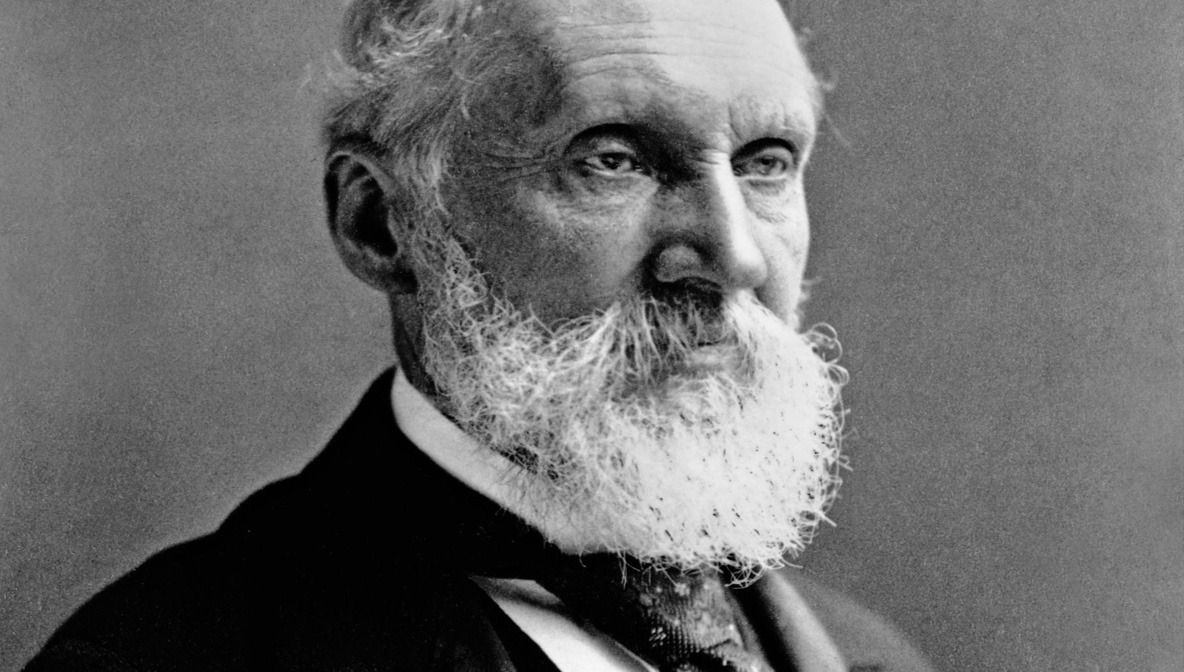
William Thomson, better known as Lord Kelvin, was one of the most influential scientists of the 19th century. His groundbreaking work in thermodynamics, electrical engineering, and physics laid the foundation for modern science and technology. From formulating the Kelvin scale of temperature to contributing to the success of the transatlantic telegraph cable, Kelvin’s genius shaped the world we live in today.
This biography explores his early life, remarkable career, personal struggles, and enduring legacy—revealing the man behind the scientific legend.
Early Life & Background
Born on June 26, 1824, in Belfast, Ireland, William Thomson was the fourth child in a large, intellectually stimulating family. His father, James Thomson, was a respected mathematician and professor, which deeply influenced young William’s passion for science.
At just 10 years old, he began attending the University of Glasgow, showcasing his extraordinary intellect. By 17, he had published his first scientific paper. Later, he studied at Cambridge University and then in Paris under renowned physicist Henri-Victor Regnault, where he developed a keen interest in heat and energy.
Career & Achievements
1. The Kelvin Scale & Thermodynamics
Kelvin’s most famous contribution was the absolute temperature scale (now called the Kelvin scale), which starts at absolute zero (−273.15°C), the coldest possible temperature. This was crucial in advancing thermodynamics.
He also worked alongside James Joule, refining the first and second laws of thermodynamics, which describe how energy transforms and why perpetual motion is impossible.
2. Transatlantic Telegraph Cable
Kelvin played a key role in laying the first successful transatlantic telegraph cable (1858), revolutionizing global communication. His work on signal transmission and electrical resistance earned him a knighthood in 1866.
3. Innovations in Physics & Engineering
-
Developed theories on electromagnetism, influencing future inventors like Nikola Tesla.
-
Invented the mirror galvanometer, improving long-distance telegraphy.
-
Contributed to marine navigation, inventing a more accurate compass for ships.
His relentless curiosity led to over 70 patents, making him not just a scientist but also a prolific inventor.
Personal Life
Despite his professional success, Kelvin faced personal tragedies. His first wife, Margaret Crum, died after 17 years of marriage, leaving him heartbroken. He later married Fanny Blandy, who provided companionship until his death.
Kelvin was deeply religious and saw no conflict between science and faith. He believed that studying nature revealed God’s design, a view that sometimes put him at odds with emerging scientific theories like Darwin’s evolution.
Legacy & Impact
Lord Kelvin’s influence is everywhere:
-
The Kelvin scale remains the standard in scientific temperature measurement.
-
His work on thermodynamics is fundamental in engineering, climate science, and space exploration.
-
Modern electrical engineering and telecommunications owe much to his innovations.
Universities, awards, and even a crater on the Moon are named in his honor. His ability to bridge theory and practical invention set a benchmark for future scientists.
Final Thoughts & What We Learn
Lord Kelvin’s life teaches us:
✔ Curiosity drives progress – His relentless questioning led to world-changing discoveries.
✔ Science serves humanity – He applied theory to real-world problems (telegraphs, navigation).
✔ Legacy is built on persistence – Despite setbacks (like early telegraph cable failures), he kept improving.
Kelvin once said, “If you can’t measure it, you can’t improve it.” This mindset not only defined his career but also inspires innovators today.
Why Lord Kelvin Still Matters
In an age of AI and quantum physics, Kelvin’s principles remain relevant. Whether it’s climate science, energy efficiency, or telecommunications, his work continues to shape our understanding of the universe.
Final Word: Lord Kelvin wasn’t just a scientist—he was a visionary who turned abstract ideas into realities that transformed the world.