
Introduction: A Troubadour Who Changed Music Forever
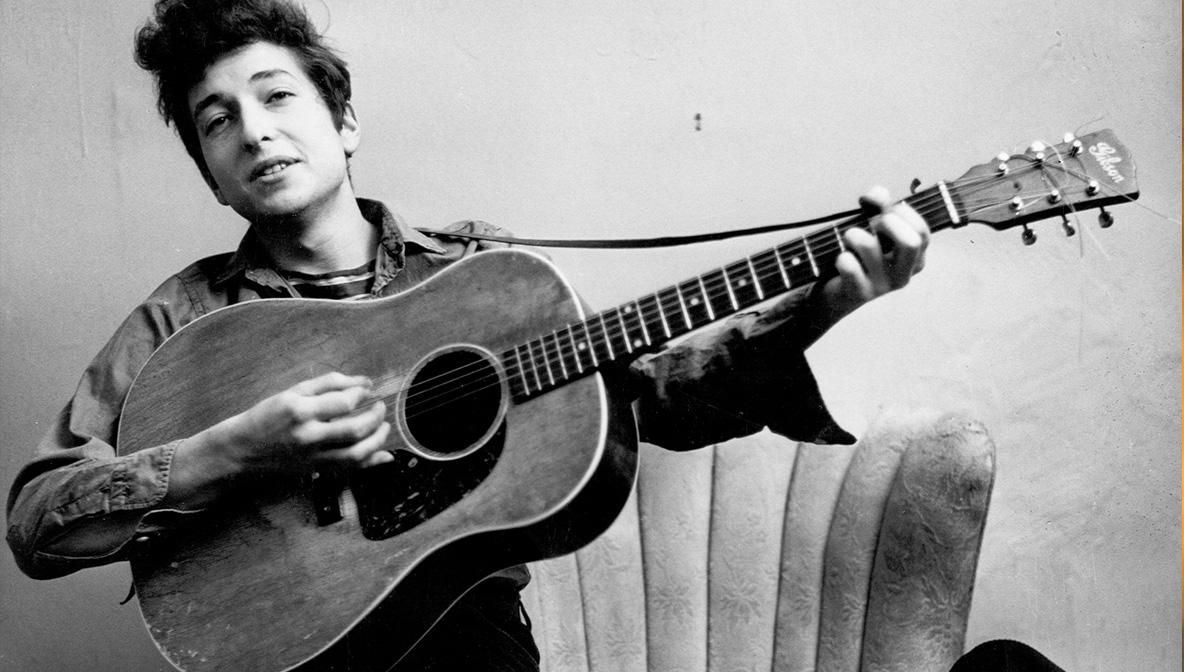
Music has always had the power to inspire, protest, and unite. But in the 1960s, one man emerged as a voice for change, weaving poetry into songs and turning folk music into a weapon of truth. That man was Bob Dylan—a singer, songwriter, poet, and Nobel Prize winner whose lyrics defined an era.
This is the story of Robert Allen Zimmerman, the small-town boy who became Bob Dylan, one of the most influential artists in modern history.
Early Life: From Minnesota to Music
Bob Dylan was born Robert Allen Zimmerman on May 24, 1941, in Duluth, Minnesota. He grew up in the small mining town of Hibbing, where he developed an early passion for music.
As a teenager, Dylan devoured rock and roll records by Elvis Presley, Little Richard, and Buddy Holly. He even formed small garage bands, playing at school dances and local events. But deep inside, Dylan was drawn to a different kind of music—folk and blues, with their stories of struggle and truth.
Reinventing Himself: Becoming Bob Dylan
In 1959, Dylan enrolled at the University of Minnesota, where he immersed himself in the growing folk scene. Around this time, he abandoned his birth name, choosing “Bob Dylan,” inspired by the poet Dylan Thomas.
Armed with a guitar and harmonica, he set out for New York City in 1961. His destination: Greenwich Village, the heart of America’s folk revival.
Breakthrough in Greenwich Village
New York in the early 1960s was buzzing with young musicians, poets, and activists. Dylan quickly made a name for himself in small clubs, where his raw voice and soulful lyrics stood out.
He drew inspiration from folk legends like Woody Guthrie, often visiting Guthrie in the hospital to play songs for him. Guthrie’s spirit of protest and compassion deeply shaped Dylan’s style.
In 1962, Dylan released his self-titled debut album, but it was his second album, “The Freewheelin’ Bob Dylan” (1963), that made him a star. With songs like Blowin’ in the Wind and A Hard Rain’s A-Gonna Fall, Dylan became the voice of a generation searching for justice and peace.
The Protest Singer of the 1960s
Dylan’s songs became anthems of the Civil Rights Movement and the anti-war movement. His lyrics were poetic yet powerful, asking tough questions about society, politics, and humanity.
-
The Times They Are A-Changin’ captured the mood of social change.
-
Masters of War condemned the military-industrial complex.
-
Blowin’ in the Wind became a universal song of hope and struggle.
By the mid-1960s, Dylan was no longer just a folk singer—he was a cultural icon.
Going Electric: A Bold Transformation
In 1965, Dylan shocked fans by performing with an electric guitar at the Newport Folk Festival. Many purists booed, accusing him of betraying folk traditions.
But Dylan refused to be boxed in. His albums Highway 61 Revisited and Blonde on Blonde showcased a new sound—rock infused with poetry, surrealism, and raw energy.
Songs like Like a Rolling Stone and Just Like a Woman became classics, cementing Dylan as one of the greatest songwriters of all time.
Challenges, Reinventions, and Resilience
Dylan’s career has been marked by constant reinvention.
-
In the late 1960s, he retreated from fame after a motorcycle accident.
-
In the 1970s, he returned with albums like Blood on the Tracks, considered one of his finest works.
-
In the 1980s and 1990s, he explored different styles, from gospel to country.
Despite ups and downs, Dylan never stopped creating. His “Never Ending Tour,” launched in 1988, kept him on the road for decades, performing for millions worldwide.
Nobel Prize and Later Years
In 2016, Bob Dylan made history by receiving the Nobel Prize in Literature for “creating new poetic expressions within the great American song tradition.” It was the first time a songwriter had ever won the award, proving that his lyrics were not just songs—they were literature.
Even into his 80s, Dylan continues to release music, paint, and perform. He remains a restless artist, always searching for new forms of expression.
Interesting Facts About Bob Dylan
💡 Bob Dylan’s birth name is Robert Allen Zimmerman.
💡 He has sold more than 125 million records worldwide.
💡 Dylan is also a painter and author, with exhibitions of his artwork shown globally.
💡 His song Like a Rolling Stone was named the greatest song of all time by Rolling Stone magazine.
💡 Dylan has won 10 Grammy Awards, an Academy Award (Oscar), and a Golden Globe.
FAQs About Bob Dylan
Q1: Why is Bob Dylan famous?
He is famous as a singer, songwriter, and poet who revolutionized music by blending folk, rock, and poetry, becoming a voice of social change in the 1960s.
Q2: What is Bob Dylan’s most famous song?
Some of his most iconic songs include Blowin’ in the Wind, Like a Rolling Stone, and The Times They Are A-Changin’.
Q3: Did Bob Dylan win the Nobel Prize?
Yes, in 2016, he was awarded the Nobel Prize in Literature.
Q4: Is Bob Dylan still alive?
Yes, as of today, Bob Dylan continues to perform and release new work.
Q5: How did Bob Dylan impact society?
Through his songs, Dylan gave voice to civil rights, anti-war movements, and cultural revolutions, making him a symbol of truth and change.
Conclusion: The Legacy of Bob Dylan
From a small town in Minnesota to the world’s biggest stages, Bob Dylan has remained a symbol of creativity, courage, and constant reinvention.
He is not just a musician—he is a storyteller, a poet, and a chronicler of human struggles and dreams. His songs remind us that music is more than entertainment—it is a force that can inspire, protest, and heal.
Bob Dylan will forever be remembered as the voice of a generation and one of the greatest artists in history.