
Introduction
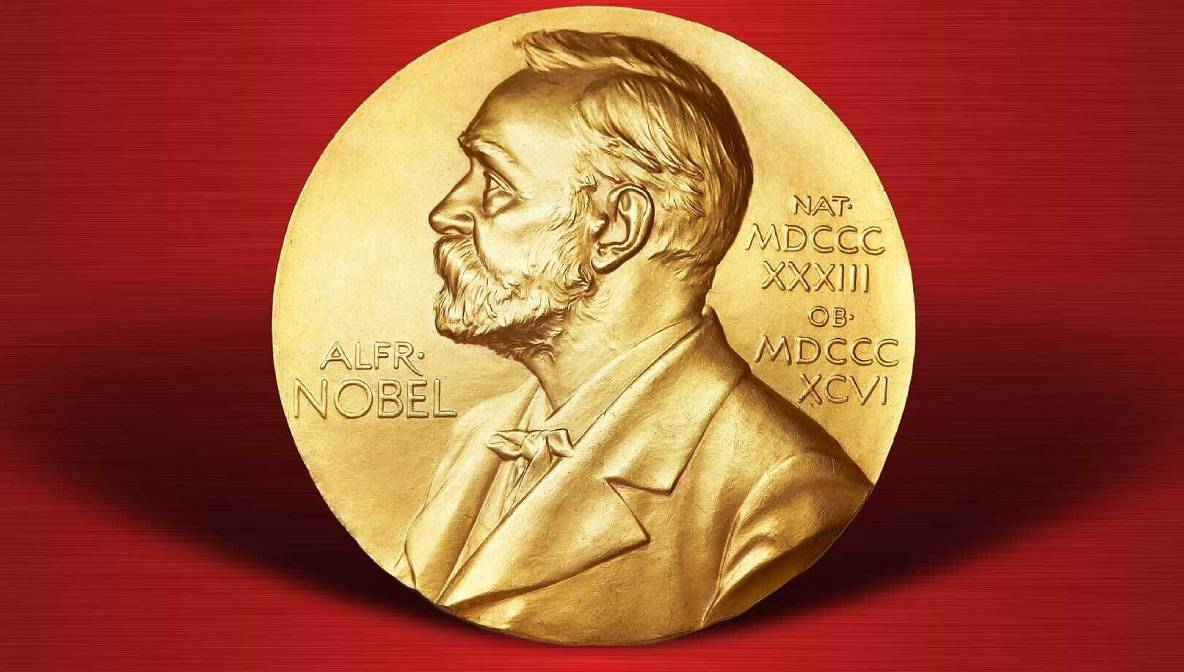
Since its inception in 1901, the Nobel Prize has honored exceptional contributions in fields like Physics, Chemistry, Medicine, Literature, Peace, and Economic Sciences. While men have historically dominated the awards, women have broken barriers, proving their brilliance in science, activism, and the arts. From Marie Curie’s groundbreaking discoveries to Malala Yousafzai’s fearless advocacy, female laureates have shaped history. Let’s explore their inspiring journeys.
Early Life & Background
Many female Nobel laureates faced societal resistance but persevered due to supportive families or sheer determination. Some grew up in war-torn regions, while others defied gender norms to pursue education. For example:
-
Marie Curie (Physics, 1903 & Chemistry, 1911) was born in Russian-occupied Poland, where women were barred from universities. She moved to France to study.
-
Malala Yousafzai (Peace, 2014) survived a Taliban assassination attempt as a teenager for advocating girls’ education.
Their struggles molded their resilience, fueling their later achievements.
Career & Achievements
These women didn’t just excel—they revolutionized their fields:
Science & Medicine
-
Marie Curie – Discovered radium and polonium, pioneering radioactivity research.
-
Tu Youyou (Medicine, 2015) – Saved millions by developing artemisinin, a malaria treatment derived from traditional Chinese medicine.
Peace & Activism
-
Mother Teresa (Peace, 1979) – Dedicated her life to serving the poor in Kolkata.
-
Wangari Maathai (Peace, 2004) – Founded the Green Belt Movement, combating deforestation in Kenya.
Literature & Economics
-
Toni Morrison (Literature, 1993) – Wove African-American experiences into powerful novels like Beloved.
-
Esther Duflo (Economics, 2019) – Transformed development economics with real-world poverty solutions.
Personal Life
Behind their accolades, these women balanced personal struggles:
-
Marie Curie faced sexism and financial hardship but remained devoted to science.
-
Dorothy Hodgkin (Chemistry, 1964) raised three children while decoding molecular structures.
-
Malala Yousafzai continued her activism despite threats, later studying at Oxford.
Their stories remind us that greatness often comes with sacrifice.
Legacy & Impact
Their influence extends beyond awards:
✔ Inspired Generations – Young girls now see STEM, activism, and literature as attainable fields.
✔ Policy Changes – Wangari Maathai’s environmental work led to global reforestation efforts.
✔ Scientific Breakthroughs – Curie’s research laid the foundation for cancer treatments.
What We Learn
These women proved that intelligence, courage, and compassion know no gender. Their lessons?
-
Perseverance pays off – Despite obstacles, they never gave up.
-
Education is power – Many fought for learning opportunities, changing societies.
-
One person can change the world – Whether through science or activism, their impact is timeless.
As we celebrate their achievements, let’s continue supporting women in all fields—because the next Nobel laureate could be a young girl dreaming big today.
Did You Know?
Only 65 women have won Nobel Prizes (as of 2025), compared to over 900 men. The gap is closing, but there’s still work to do!
Would you like a detailed list of all female Nobel winners? Let us know in the comments!
Here’s the complete list of all 65 female Nobel Prize winners (1901–2025) with a brief description of each laureate’s achievement.
Physics
-
Marie Curie (1903) – First woman Nobel laureate; discovered radioactivity.
-
Maria Goeppert Mayer (1963) – Developed the nuclear shell model of atomic nuclei.
-
Donna Strickland (2018) – Pioneered laser physics, co-invented chirped pulse amplification.
-
Andrea Ghez (2020) – Discovered a supermassive black hole in the Milky Way.
Chemistry
-
Marie Curie (1911) – First person to win Nobel Prizes in two fields (Physics & Chemistry).
-
Irène Joliot-Curie (1935) – Synthesized new radioactive elements (daughter of Marie Curie).
-
Dorothy Hodgkin (1964) – Determined structures of penicillin and vitamin B12 using X-ray crystallography.
-
Ada Yonath (2009) – Mapped the structure of ribosomes, advancing antibiotic research.
-
Frances Arnold (2018) – Pioneered directed evolution of enzymes.
-
Emmanuelle Charpentier & Jennifer Doudna (2020) – Developed CRISPR-Cas9 gene-editing technology.
Physiology or Medicine
-
Gerty Cori (1947) – First American woman Nobel laureate in science; discovered glycogen metabolism.
-
Rosalyn Yalow (1977) – Developed radioimmunoassay for hormone detection.
-
Barbara McClintock (1983) – Discovered genetic transposition (“jumping genes”).
-
Rita Levi-Montalcini (1986) – Discovered nerve growth factor.
-
Gertrude B. Elion (1988) – Developed drugs for leukemia, herpes, and organ transplants.
-
Christiane Nüsslein-Volhard (1995) – Discovered genetic control of embryonic development.
-
Linda Buck (2004) – Uncovered odorant receptors and olfactory system organization.
-
Françoise Barré-Sinoussi (2008) – Co-discovered HIV.
-
Elizabeth Blackburn & Carol Greider (2009) – Discovered telomerase (key to aging & cancer).
-
May-Britt Moser (2014) – Found brain’s “GPS system” (grid cells).
-
Tu Youyou (2015) – Developed artemisinin, a malaria treatment saving millions.
-
Katalin Karikó (2023) – mRNA research enabling COVID-19 vaccines.
Literature
-
Selma Lagerlöf (1909) – First female Literature laureate; Swedish novelist.
-
Grazia Deledda (1926) – Italian writer exploring Sardinian life.
-
Sigrid Undset (1928) – Norwegian novelist, wrote Kristin Lavransdatter.
-
Pearl S. Buck (1938) – Wrote The Good Earth, depicting Chinese rural life.
-
Gabriela Mistral (1945) – Chilean poet, first Latin American woman laureate.
-
Nelly Sachs (1966) – German-Swedish poet, Holocaust survivor.
-
Nadine Gordimer (1991) – South African anti-apartheid writer.
-
Toni Morrison (1993) – Wrote Beloved, exploring African-American history.
-
Wislawa Szymborska (1996) – Polish poet, philosophical reflections.
-
Elfriede Jelinek (2004) – Austrian novelist, critiqued societal oppression.
-
Doris Lessing (2007) – British-Zimbabwean writer, feminist themes.
-
Herta Müller (2009) – Romanian-German novelist, exposed dictatorship horrors.
-
Alice Munro (2013) – Master of short stories, Canadian literary icon.
-
Svetlana Alexievich (2015) – Belarusian oral historian of Soviet life.
-
Olga Tokarczuk (2018) – Polish writer, explored myth and history.
-
Louise Glück (2020) – American poet, introspective and mythic themes.
-
Annie Ernaux (2022) – French memoirist, explored class and gender.
Peace
-
Bertha von Suttner (1905) – First female Peace laureate; anti-war activist.
-
Jane Addams (1931) – Social reformer, founded Hull House for the poor.
-
Emily Greene Balch (1946) – Pacifist, co-founded Women’s International League for Peace.
-
Betty Williams & Mairead Corrigan (1976) – Co-founded Peace People in Northern Ireland.
-
Mother Teresa (1979) – Dedicated life to serving Kolkata’s poorest.
-
Alva Myrdal (1982) – Disarmament advocate, worked against nuclear weapons.
-
Aung San Suu Kyi (1991) – Burmese democracy leader (later controversial).
-
Rigoberta Menchú (1992) – Indigenous Guatemalan rights activist.
-
Jody Williams (1997) – Campaigned to ban landmines.
-
Shirin Ebadi (2003) – Iranian lawyer, fought for human rights.
-
Wangari Maathai (2004) – Kenyan environmentalist, Green Belt Movement founder.
-
Ellen Johnson Sirleaf, Leymah Gbowee & Tawakkol Karman (2011) – Peacebuilders in Liberia & Yemen.
-
Malala Yousafzai (2014) – Youngest laureate; advocated girls’ education.
-
Nadia Murad (2018) – Yazidi activist against sexual violence in war.
-
Maria Ressa (2021) – Filipino journalist, fought for press freedom.
Economic Sciences
-
Elinor Ostrom (2009) – First female Economics laureate; studied community resource management.
-
Esther Duflo (2019) – Poverty alleviation through experimental economics.
Final Thoughts
These women defied norms, advanced human knowledge, and fought for justice. From Marie Curie’s lab to Malala’s classroom, their legacies inspire future generations.
Which laureate’s story motivates you the most? Let us know in the comments!