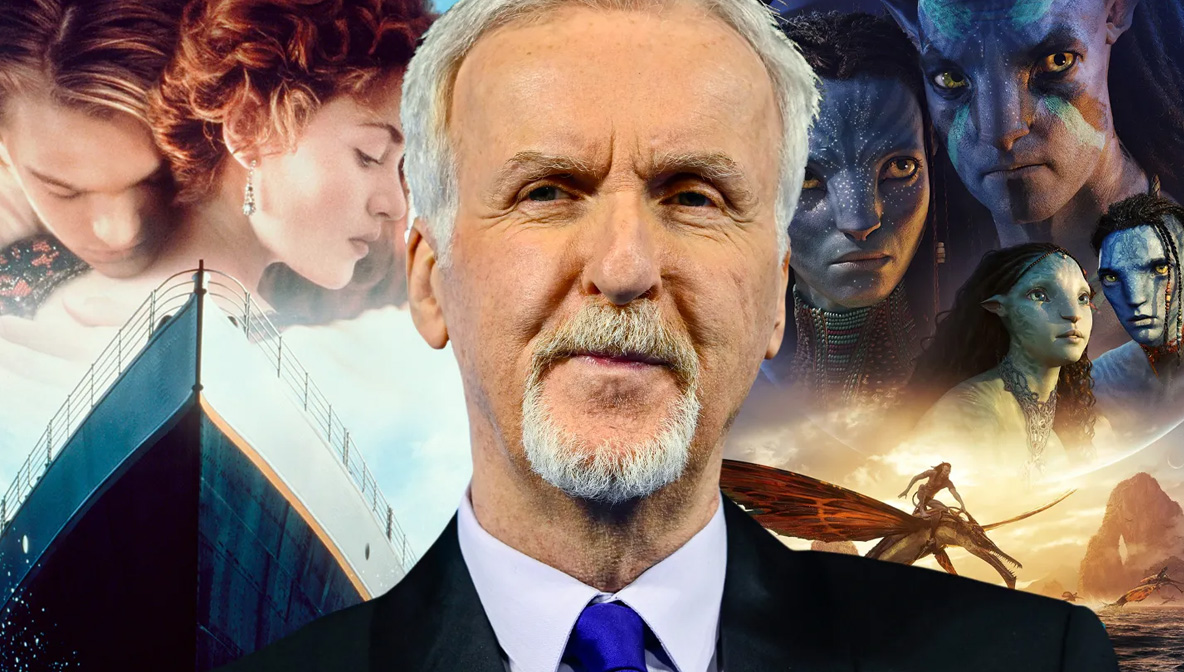

If you’ve ever held your breath during the sinking of the Titanic, felt your heart race as the T-800 declared “I’ll be back,” or marveled at the glowing world of Pandora, you’ve been under the spell of James Cameron. More than just a filmmaker, Cameron is a modern-day explorer, a relentless innovator, and a storyteller who pushes the boundaries of what cinema can be. He’s the man who turned “I’m the king of the world!” from a movie line into a box office reality, not once but multiple times. His journey isn’t just about making movies; it’s about a near-fanatical pursuit of blending cutting-edge technology with timeless human stories. This is the biography of a man who dreams in epic scale and possesses the sheer, stubborn will to make those dreams a tangible reality.
Early Life & Background
James Francis Cameron was born on August 16, 1954, in Kapuskasing, Ontario, Canada. He was the first of five children to Phillip, an electrical engineer, and Shirley, a nurse and artist. This combination of analytical precision and creative flair would become the bedrock of Cameron’s future.
The family moved to Niagara Falls, Canada, when James was young. His childhood was a fertile ground for a budding imagination. He was an avid reader, devouring science fiction by the likes of Arthur C. Clarke and Frank Herbert. He also displayed a fierce, DIY ingenuity from an early age. Inspired by Clarke’s novel 2001: A Space Odyssey, the 14-year-old Cameron and a friend attempted to build a functional dive suit to explore a local river—an early, dangerous precursor to his deep-sea obsessions. He fashioned a rudimentary camera crane to shoot model spaceships, and even turned his parents’ basement into a chaotic science lab for various experiments.
This hands-on tinkering was balanced by a deep love for nature. Family camping trips in the forests of Ontario instilled in him a profound respect for the environment, a theme that would later dominate his work. His father’s engineering mind gave him a framework for problem-solving, while his mother’s artistic spirit encouraged him to visualize. Long before Hollywood, James Cameron was already learning to build his own worlds.
Education
Cameron’s formal education path was unconventional, ultimately taking a backseat to his self-directed learning. After high school, he enrolled at Fullerton College, a junior college in California, where his family had moved. He initially pursued a major in physics but quickly switched to English. However, he found the academic structure stifling and dropped out.
His real education came from voracious reading—not just sci-fi, but technical manuals, engineering textbooks, and any material on optics, photography, and film. He taught himself the principles of cinematography, special effects, and storytelling by watching and dissecting films, notably the visually stunning work of director Stanley Kubrick.
Cameron’s “university” was a series of odd jobs that fed his technical knowledge. He worked as a machinist, and famously, as a truck driver for the local school district. During this time, he spent his nights writing, sketching, and designing. In 1977, after seeing George Lucas’s Star Wars, he had an epiphany. He realized that the fantastical images in his head could be a career. With relentless self-study, he began crafting his own scripts and teaching himself how to direct by making a short film with borrowed equipment. James Cameron is, in many ways, a quintessential autodidact—a graduate of the School of Relentless Curiosity.
Career & Achievements
Cameron’s career is a masterclass in climbing the ladder by sheer force of will, starting from the very bottom rung.
The Ascent (1978-1983): He broke into the industry by building miniatures for Roger Corman’s low-budget studio. His big break came when he was hired as a production designer and second-unit director on Battle Beyond the Stars (1980). His work ethic and technical prowess caught attention. In 1981, he made his directorial debut with Piranha II: The Spawning, a troubled production from which he was allegedly fired. The experience, though brutal, hardened his resolve for creative control.
Becoming a Force (1984-1990): Everything changed with The Terminator (1984). Cameron sold the rights to his script for one dollar on the condition he could direct. Made on a modest $6.4 million budget, the film was a massive hit, grossing over $78 million. It established his signature themes: strong female characters (Sarah Connor), fearsome technology, and relentless pacing.
He followed this with Aliens (1986), a sequel that transformed horror into an all-out action masterpiece, earning Sigourney Weaver an Oscar nomination and cementing Cameron’s reputation. The Abyss (1989) was a technological leap, pioneering CGI water effects and pushing cast and crew to physical extremes. Though not an immediate box office smash, it is now considered a classic.
Peak of Blockbuster Power (1991-1999): Cameron then unleashed Terminator 2: Judgment Day (1991). With its groundbreaking “liquid metal” T-1000 effects, it became a cultural phenomenon and the highest-grossing film of the year. But this was merely a prelude.
In 1997, he released Titanic. Plagued by notorious production delays, budget overruns, and intense media skepticism, the film was deemed “Cameron’s Folly.” He famously gave up his salary and backend points to keep it afloat. The result? Titanic sailed to become the first film to gross over $2 billion worldwide. It won 11 Academy Awards, including Best Picture and Best Director for Cameron, who declared “I’m the king of the world!” from the podium.
The Explorer and Visionary (2000-Present): Cameron stepped back from feature films to indulge his passion for deep-sea exploration, making documentaries like Ghosts of the Abyss. He then spent over a decade developing the technology to tell his next story.
Avatar (2009) was a gamble of Titanic-scale proportions. Cameron invented new motion-capture and 3D filmmaking techniques to create the world of Pandora. Again, critics doubted him. Again, he made history. Avatar soared past Titanic to become the highest-grossing film of all time, a title it has reclaimed multiple times.
He is currently deep in production on multiple Avatar sequels, promising yet another revolution in cinematic experience.
Personal Life
Cameron’s personal life has been as intense as his film sets. He has been married five times. His first marriage was to Sharon Williams (1978-1984), a waitress he met while truck driving. He then married Terminator producer Gale Anne Hurd (1985-1989). During the making of The Abyss, he met director Kathryn Bigelow, to whom he was married from 1989-1991.
His fourth marriage was to actress Linda Hamilton (1997-1999), his Terminator muse and mother of his daughter, Josephine. Since 2000, he has been married to actress Suzy Amis, who appeared in Titanic. They have three children and live primarily on a ranch in New Zealand.
Cameron is a strict vegan, a decision driven by environmental and ethical concerns. His personality is often described as demanding, perfectionist, and notoriously difficult to work for—a “tyrant” in some accounts. Yet, those who endure often speak of unparalleled loyalty and a shared commitment to excellence. He is also a passionate environmentalist and advocate for the transition to renewable energy.
Net Worth
James Cameron’s net worth is as monumental as his box office returns. Estimates consistently place it in the range of $700 million to $800 million. This fortune isn’t just from directing fees. Cameron is a savvy businessman who often retains significant backend points (a percentage of profits) on his films. His deals on Titanic and Avatar, after he forgave his upfront fees, made him hundreds of millions. He also co-founded the production company Lightstorm Entertainment and the visual effects powerhouse Digital Domain. His wealth affords him the ability to self-finance his passion projects, most notably his deep-sea exploration endeavors, which he funds personally.
Legacy & Impact
James Cameron’s legacy is multi-layered:
-
Technological Pioneer: He has repeatedly pushed film technology forward—from the CGI of The Abyss and T2, to the digital filmmaking of Avatar, to his advancements in 3D and high-frame-rate cinematography.
-
Box Office Redefiner: He directed the first film to break $1 billion (Titanic) and the first to break $2 billion (Avatar). He holds the top two spots for highest-grossing films of all time.
-
The Modern Epic Storyteller: He fused grand, old-fashioned romantic storytelling with futuristic spectacle, making the “event film” a global cultural moment.
-
The Explorer: His work in deep-ocean exploration, including solo dives to the Mariana Trench, has contributed to marine science and positioned him as a real-life figure of adventure.
What We Learn
Cameron’s life teaches us:
-
Self-Education is Power: Formal degrees are not the only path. Relentless curiosity and self-directed learning can build an unparalleled skillset.
-
Vision Requires Persistence: He faced constant doubt, financial crises, and physical danger to realize his visions. The will to see it through is as important as the idea itself.
-
Embrace the Nerd: His success is the ultimate vindication of the sci-fi loving, model-building, technical-manual-reading kid. Passion is fuel.
-
Balance Art and Science: True innovation happens at the intersection of creative imagination and technical execution.
Social Media Links
James Cameron is famously not active on social media. He prefers to communicate through his work, rare interviews, and public appearances. For official news, follow:
-
Lightstorm Entertainment: The production company behind his films.
-
The Avatar Franchise Official Pages: For all updates on Pandora.
-
Oceanic Preservation Society: A non-profit he co-founded, reflecting his environmental activism.
10 Unknown Facts About James Cameron
-
Truck Driver to Director: He was literally driving a truck for a school district when he decided to quit and pursue filmmaking after seeing Star Wars.
-
The Terminator Fever Dream: He claims the iconic image of the Terminator’s metal endoskeleton rising from fire came to him in a fever dream while sick in Rome during the troubled Piranha II production.
-
He Drew The Terminator: To secure the deal, Cameron sketched the now-famous image of the Terminator for producer Gale Anne Hurd.
-
Documentarian First: His first professional film work was for a documentary short called Xenogenesis (1978), which he made with two friends to showcase his effects skills.
-
Scuba Pioneer: He got his scuba certification at age 17 and has logged thousands of dives. Over 3,000 hours of his life have been spent underwater.
-
He Almost Directed Spider-Man: In the early 1990s, Cameron wrote a treatment for a Spider-Man film featuring organic web-shooters and a mature storyline. It was never made but influenced later films.
-
The Titanic Dive Threat: When studio executives pressured him to shorten Titanic, he reportedly threatened to cut the film only if they fired him, and even then, the editor would have to do it “with a chainsaw.”
-
Academic Honors: Despite being a college dropout, he holds several honorary doctorate degrees from universities for his contributions to film and science.
-
Patent Holder: He holds or co-holds several patents related to camera and deep-sea exploration technology, including for the revolutionary 3D fusion camera system used on Avatar.
-
Potato Salad Sabotage: On the set of The Abyss, to maintain the tense, claustrophobic mood, he allegedly banned laughter and once had the craft service table cleared of all food except for potato salad after hearing crew members joking around.
FAQ’s
Q: How many Oscars has James Cameron won?
A: He has won 3 competitive Academy Awards: Best Director, Best Film Editing, and Best Picture for Titanic (all in 1998). He has been nominated for several others.
Q: Is James Cameron a scientist?
A: Not formally. He is a “fellow” of several scientific societies and has led deep-sea expeditions that have resulted in published scientific papers. He is considered an “explorer-in-residence.”
Q: Why did it take so long for the Avatar sequels?
A: Cameron waited for technology to advance enough to film the complex underwater performance-capture scenes he envisioned. He also spent years developing the stories for a multi-film saga.
Q: What’s the next James Cameron movie?
A: Avatar 3 is currently slated for a December 2025 release, with further sequels planned through 2031.
Q: What is his deepest dive?
A: On March 26, 2012, Cameron piloted the Deepsea Challenger submersible to the bottom of the Challenger Deep in the Mariana Trench, reaching a depth of 35,787 feet—the deepest solo dive in history.
Q: Does he do his own camera work?
A: He frequently operates the camera himself, especially on his documentaries. He is a highly skilled cinematographer and underwater cinematographer.
James Cameron’s story proves that the biggest dreams, when powered by indomitable will and sharp intellect, can reshape reality—both on the screen and in the world beneath the waves. He remains, truly, in a league of his own.