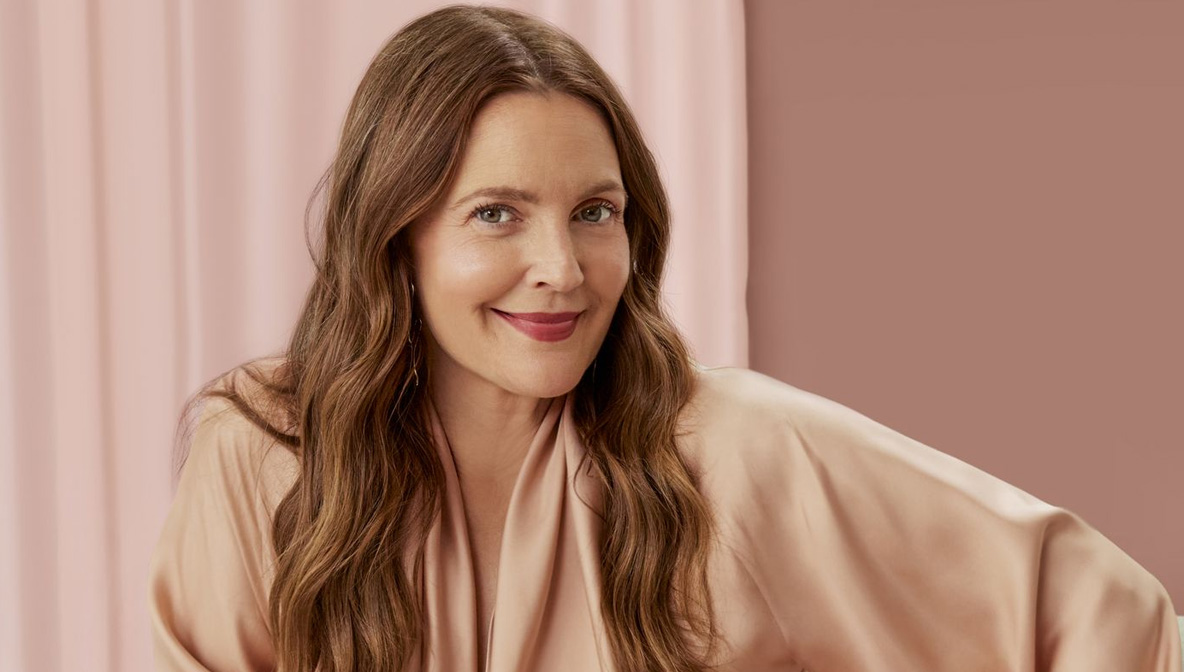

Let’s be honest. Most of us remember Drew Barrymore before we even understood who she was. That grinning, gap-toothed little girl in a red coat being held by a confused alien. The child star with the famous last name and the big, precocious eyes. But if you think you know Drew Barrymore from E.T. or her wild teenage years splashed across tabloids, you’re missing the best part of the story. The real story isn’t about how she started; it’s about what she did after the world had written her off.
Drew Barrymore is Hollywood’s ultimate survivor and its most radiant comeback story. She is a living, breathing example of public redemption. She didn’t just survive a notoriously chaotic childhood, teen stardom, addiction, and rehab; she metabolized it. She turned her pain into empathy, her chaos into creativity, and her need for connection into a brand built on genuine joy. From a child star who partied too hard to a beloved talk show host who starts her day by hugging her audience, her journey is a masterclass in resilience, reinvention, and the hard, beautiful work of building a happy life on your own terms.
Introduction: America’s Little Sister, All Grown Up
There is something profoundly relatable about Drew Barrymore. Unlike distant, untouchable stars, her life has played out in real-time, warts and all, in front of us. We saw her as the magical child, the troubled teen, the quirky rom-com queen, the entrepreneurial mogul, and now, the comforting, sometimes-goofy best friend in our living rooms via her hit daytime talk show.
Her superpower is authenticity. In an industry of curated images, Drew feels real. She cries easily, laughs loudly (that signature cackle!), and speaks with an emotional transparency that disarms everyone. She isn’t trying to be perfect; she’s trying to be happy, and she’s inviting us along for the ride. This wasn’t a PR strategy. It was forged in the fires of a very public meltdown and a conscious decision to choose a different path.
She rebuilt her career not by running from her past, but by embracing its lessons. She founded a production company, Flower Films, that championed female-driven stories like Never Been Kissed and Charlie’s Angels. She launched a beauty brand, Flower Beauty, with a mission to make high-quality makeup accessible. And in 2020, during the global pandemic, she launched The Drew Barrymore Show, a talk show that feels like a warm, supportive conversation—a direct reflection of her hard-won optimism. Drew Barrymore is proof that you can fall from the very top, climb back up a different mountain, and enjoy the view even more the second time around.
Early Life & Background: Born in a Trunk
Drew Blyth Barrymore was literally born into the spotlight on February 22, 1975, in Culver City, California. She is the heir to the most famous acting dynasty in America, the Barrymore family. Her father, John Drew Barrymore, was a troubled actor, and her mother, Jaid Barrymore (née Ildiko Jaid Mako), was an aspiring actress. Her godfather is the legendary Steven Spielberg.
But this pedigree was not a fairy tale. Her childhood was unstable from the start. Her parents split when she was an infant, and her father was largely absent. Her mother’s approach to parenting was unconventional, to say the least. Drew has described a childhood of chaos, being taken to infamous nightclub Studio 54 as a toddler, and being encouraged to behave like a tiny adult. The boundaries between child and parent, work and play, were nonexistent. She was put on a diet at age six and was self-sufficient to an extreme degree, often taking care of herself.
The one place she found structure and love was on a movie set. Acting wasn’t a choice; it was the family business, and she was put to work almost as soon as she could walk. Her first commercial was at 11 months old. This set became her playground, her school, and her sanctuary. The crew members were her surrogates for a stable family. It was a pressurized, bizarre upbringing that produced a uniquely charismatic and emotionally aware little girl, but one completely unprepared for the real world.
Education: The School of Hard Knocks and Movie Sets
Formal education was never a priority in Drew’s early life. She attended school sporadically but was mostly tutored on set. Her real education came from the film industry. She learned to read cue cards before chapter books. She understood camera angles before geometry. Her social skills were honed by interacting with adults—directors, cinematographers, seasoned actors.
This “set-ducation” gave her an incredible professional instinct and work ethic, but it left massive gaps. She missed the mundane milestones of childhood: sleepovers, school dances, the slow, awkward process of growing up among peers. She was a commodity, a tiny, brilliant, emotionally perceptive worker in a world of grown-ups. This isolation and pressure would later contribute to her desperate search for identity and belonging in her teenage years.
She would eventually get her GED, but her most significant education has been lifelong—a process of therapy, self-help books, and learning how to be a person outside the glare of the cameras that had raised her.
Career & Achievements: The Three Acts of Drew
Act I: The Child Prodigy (1978-1985)
Drew’s career began, famously, with a dog food commercial. But it was her role as Gertie in Steven Spielberg’s E.T. the Extra-Terrestrial (1982) that made her a global icon at age seven. With her line “E.T., phone home,” she became the heart of the highest-grossing film of the decade. She was instantly beloved, the epitome of childhood innocence. She followed this with Firestarter (1984) and Irreconcilable Differences (1984), where she played a child suing her parents for divorce—a role eerily close to home. By age ten, she was a veteran, a millionaire, and emotionally adrift.
Act II: The Wild Child & The Reinvention (1986-1999)
This is the chapter the tabloids feasted on. With the pressures of fame, a non-existent home life, and early exposure to adult vices, Drew spiraled. By age nine, she was drinking; by twelve, smoking marijuana; by thirteen, using cocaine. She entered rehab at thirteen years old. She wrote a scandalous, tell-all memoir, Little Girl Lost, at fourteen. She was legally emancipated from her mother at fifteen. For a few years, she was the cautionary tale, the train-wreck headline.
But at her lowest point, she made a decision. She wanted to live. She got sober, focused on her mental health, and embarked on the nearly impossible task of rebuilding a career everyone thought was over. She took small, weird, interesting roles in independent films like Guncrazy (1992) and Bad Girls (1994). She showed she wasn’t just a cute kid; she had grit and talent.
The true reinvention came with the comedy The Wedding Singer (1998). As Julia Sullivan, she was sweet, funny, and utterly charming. America fell in love with her all over again. She followed this with the seminal hit Never Been Kissed (1999), which she also produced through her new company, Flower Films. She was no longer a victim of her story; she was the author.
Act III: The Mogul & The Mentor (2000-Present)
Drew leveraged her comeback into a new kind of power. Charlie’s Angels (2000) and its sequel were massive, female-empowering blockbusters she produced and starred in. She became the queen of the romantic comedy with 50 First Dates (2004) and Fever Pitch (2005). She showed dramatic chops in Donnie Darko (2001) and Grey Gardens (2009), earning a Golden Globe for the latter.
But she kept building. In 2013, she launched Flower Beauty, a drugstore cosmetics line with a philosophy of accessibility and joy, which found massive success at Walmart and Ulta. Then, in 2020, she launched The Drew Barrymore Show. Against all odds—during a pandemic, in a crowded talk show landscape—she created a genuine hit. The show’s ethos is pure Drew: empathetic, optimistic, community-focused. It won a Daytime Emmy, cementing her as a versatile, enduring force in entertainment. She had come full circle, from being interviewed as a troubled kid to holding the microphone and creating a space of kindness for others.
Personal Life: Building the Family She Always Wanted
Drew’s personal life has been a public search for the stability she never had. She has been engaged multiple times and was married to two men very briefly: bar owner Jeremy Thomas (1994, for 41 days) and comedian Tom Green (2001, for less than a year).
Her true anchor came with art consultant Will Kopelman, the son of former Chanel CEO Arie Kopelman. They married in 2012 and had two daughters, Olive and Frankie. For Drew, this was the dream: a loving partner, a stable home, and the chance to be the present, devoted mother she never had. She threw herself into parenting with joyful abandon. Although she and Kopelman divorced amicably in 2016, they have maintained a close, co-parenting relationship. Her daughters are her absolute world, and she speaks often about the healing power of giving them the childhood she craved.
She owns a beautiful home in New York, where she films her show, and her life revolves around her kids, her work, and her close circle of friends. She is famously an optimist, a lover of holidays, and someone who finds magic in the mundane. After a life of such public turbulence, her current chapter is one of hard-won, deeply cherished peace.
Net Worth: The Value of Resilience
Through her five-decade career—as a child star, a box office draw, a producer, an entrepreneur, and a talk show host—Drew Barrymore has built a substantial fortune. While exact figures fluctuate, reliable estimates consistently place her net worth at around $125 million.
This wealth is a testament to her business savvy and longevity. It’s not just acting paychecks; it’s the success of Flower Films’ productions, the value of Flower Beauty, and the lucrative syndication deal for her talk show. Her financial success is direct proof that her brand of relatable, resilient optimism is not just popular—it’s profitable.
Legacy & Impact: More Than a Movie Star
Drew Barrymore’s impact transcends her filmography.
-
The Blueprint for Reinvention: She is the ultimate example of how to rebuild a career and a life with grace and humility. She showed that your past doesn’t have to define your future; it can inform it and make you more empathetic.
-
Champion of Female-Centric Stories: Through Flower Films, she was a producer ahead of her time, pushing for fun, commercial films led by women (Never Been Kissed, Charlie’s Angels) when such projects were rarer.
-
The Personification of Emotional Intelligence on TV: Her talk show succeeded because it mirrored her personal growth. It’s not about hot takes or gossip; it’s about connection, mental health, and everyday struggles. She brought a therapeutic, compassionate energy to daytime TV.
-
Demystifying Sobriety and Mental Health: By being so open about her struggles with addiction and mental health from a young age, she helped normalize these conversations, especially for women.
What We Learn: The Enduring Lessons from Drew Barrymore
Her life is a playbook for overcoming personal turmoil.
-
Your Past is Not Your Prison: You can be a product of your environment without being a prisoner to it. Drew teaches us that we have the agency to examine our upbringing, heal from its wounds, and consciously choose a different path.
-
Reinvention is a Continuous Process: She didn’t reinvent herself once; she has done it multiple times across decades. Staying relevant and happy requires adaptability and the courage to start new chapters.
-
Vulnerability is a Strength: Her willingness to be open about her flaws and struggles is what makes her so relatable and trustworthy. It disarms people and forges real connection, both personally and professionally.
-
Build Your Own Family: Family isn’t just who you’re born to; it’s who you choose and nurture. Drew created a stable, loving family unit for her daughters and cultivated deep, lasting friendships that serve as her support system.
-
Choose Joy, Actively: After so much darkness, Drew made a deliberate choice to focus on the light. Her enthusiasm isn’t naive; it’s a hard-won philosophy. She shows that optimism is a practice, a daily decision to find the good.
Social Media Links
Drew is very active and authentic on social media, using it as an extension of her talk show’s joyful community.
-
Instagram: @drewbarrymore – A feed full of behind-the-scenes moments, family snippets, and inspirational messages.
-
TikTok: @drewbarrymore – Funny, relatable skits and show clips.
-
Facebook: The Drew Barrymore Show
-
Twitter/X: @DrewBarrymore (She uses this less frequently now but has a historic presence).
10 Unknown Facts About Drew Barrymore
-
She is named after her great-great-great aunt, Drew Blythe, who was an acclaimed stage actress in the 19th century.
-
She directed one of the earliest MTV “video diaries” in 1993, a raw, personal documentary about her life.
-
She published a book of photography, Find It in Everything, dedicated to her love of heart-shaped objects found in everyday life.
-
She was the first celebrity to pose for the cover of Playboy magazine and donate her entire fee to charity (specifically, the USO and the Afghan relief effort) in 1995.
-
She is terrified of birds, a condition known as ornithophobia.
-
She is a certified SCUBA diver and loves the ocean.
-
She bought the bridal gown she wore in The Wedding Singer at a flea market for $50.
-
She was considered for the role of Sally in When Harry Met Sally but was deemed too young at the time.
-
She has a tattoo of a tiny, cartoonish butterfly on her lower back, a remnant from her wilder youth.
-
She is an avid gardener and finds peace in tending to her plants, a hobby that directly inspired the name “Flower” for her films and beauty brand.
A Small FAQ Section
Q: How old was Drew Barrymore in E.T.?
A: She was six years old when she filmed E.T. the Extra-Terrestrial. It was released when she was seven.
Q: Is Drew Barrymore still sober?
A: Yes. Drew has been famously sober since she was a teenager, after her early struggles with addiction. She is a vocal advocate for sobriety and mental health.
Q: What is Drew Barrymore’s production company?
A: She co-founded Flower Films in 1995 with partner Nancy Juvonen. The company produced many of her biggest hits, including Never Been Kissed, Charlie’s Angels, 50 First Dates, and He’s Just Not That Into You.
Q: How did Drew Barrymore get her talk show?
A: After years of being a charismatic and empathetic interviewee, CBS television executives approached her. They believed her natural ability to connect and her life story made her perfect for daytime TV. She launched The Drew Barrymore Show in September 2020.
Q: What is Drew Barrymore’s most important piece of life advice?
A: She often says, “You have to be your own hero.” It reflects her journey of self-reliance, healing, and taking responsibility for crafting your own happy ending.
Drew Barrymore’s story is a powerful American narrative. It’s about falling from grace and climbing back up with your spirit not just intact, but magnified. She taught us that it’s okay to be a work in progress, that joy is a radical act of defiance against a painful past, and that sometimes, the happiest ending is the one you build for yourself, day by day, with grit, grace, and an open heart. She didn’t just survive her childhood; she rewrote its ending.