
“Wilhelm Röntgen: The Accidental Discovery That Revolutionized Medicine”
Early Life and Education
Wilhelm Conrad Röntgen was born on March 27, 1845, in Lennep, a small town in the Rhine Province of Prussia (now part of Remscheid, Germany). He was the only child of Friedrich Conrad Röntgen, a cloth merchant, and Charlotte Constanze Frowein, who came from a wealthy Dutch family. When Wilhelm was three years old, the family moved to Apeldoorn, Netherlands, where he attended the Institute of Martinus Herman van Doorn.
Despite showing promise in technical subjects, Röntgen had a turbulent academic start. He was expelled from the Utrecht Technical School after being wrongfully accused of drawing a caricature of a teacher. However, this setback did not deter him. In 1865, he enrolled at the Federal Polytechnic Institute in Zurich (now ETH Zurich), where he studied mechanical engineering and earned his Ph.D. in 1869 under the guidance of physicist August Kundt.
Scientific Career and the Discovery of X-Rays
Röntgen held various academic positions, including in Würzburg, Strasbourg, Hohenheim, and Giessen. In 1888, he became a professor of physics at the University of Würzburg, and later served as rector.
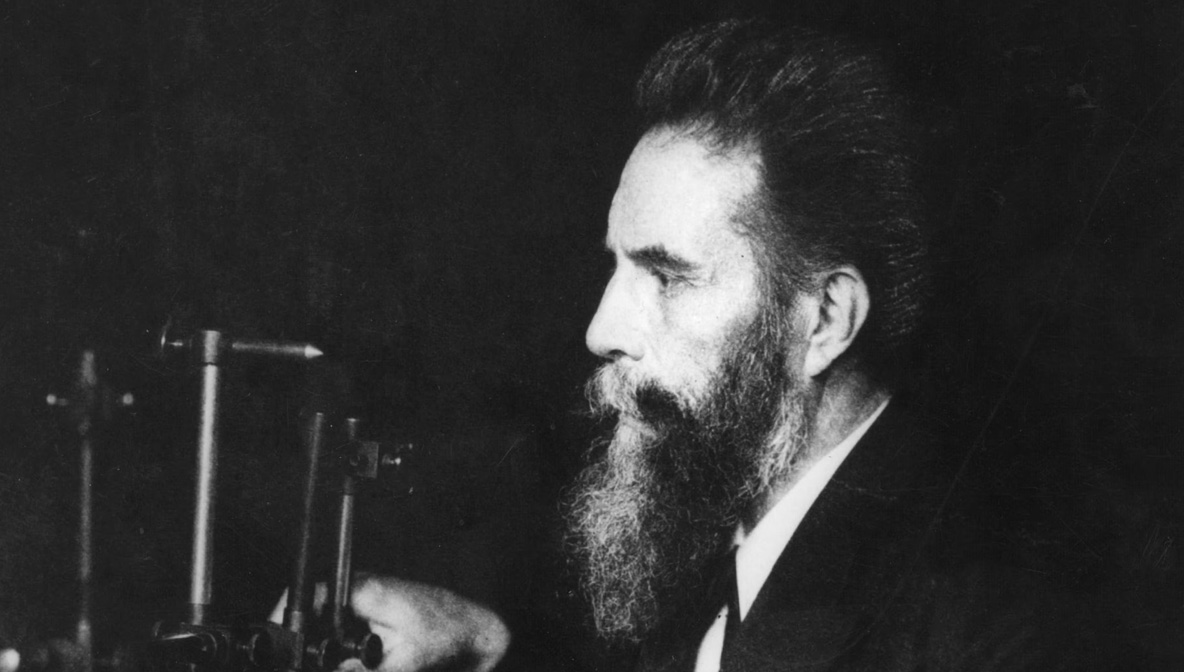
His most significant contribution came by accident on November 8, 1895, while experimenting with cathode rays using a Crookes tube. He noticed a fluorescent glow coming from a nearby screen coated with barium platinocyanide, even though the tube was shielded. The glow persisted even when he blocked the light, suggesting an unknown kind of radiation was penetrating opaque materials.
Röntgen called this mysterious radiation “X-rays”, with “X” signifying the unknown. He worked intensively over the next few weeks, documenting the properties of X-rays and producing the first X-ray photograph, an image of his wife Anna Bertha’s hand showing her bones and wedding ring. She is famously quoted as saying, “I have seen my death!”
Recognition and Legacy
Röntgen’s discovery made international headlines and earned him the first Nobel Prize in Physics in 1901. The Nobel Committee honored him “in recognition of the extraordinary services he has rendered by the discovery of the remarkable rays subsequently named after him.”
Although the rays became popularly known as Röntgen rays in many countries, especially in Germany, he modestly insisted that they be referred to as X-rays.
Other honors included:
-
Rumford Medal (1896) by the Royal Society of London
-
Barnard Medal (1900) by Columbia University
-
Numerous honorary doctorates and memberships in prestigious scientific societies
In 1900, he became the chair of physics at the University of Munich, where he continued to research until his retirement in 1920.
Personal Life
Röntgen married Anna Bertha Ludwig in 1872. The couple had no biological children but adopted Anna’s orphaned niece. Despite his monumental scientific achievements, Röntgen was known for his humility and reserved nature. He refused to patent his discovery, believing it should benefit humanity without personal profit.
He lost much of his savings due to post-World War I inflation and died on February 10, 1923, in Munich, from carcinoma of the intestine at the age of 77.
Impact on Science and Medicine
The discovery of X-rays transformed medical diagnostics, enabling doctors to see inside the human body without surgery. It laid the foundation for radiology, CT scanning, radiation therapy, and even influenced the development of quantum mechanics.
Today, Wilhelm Röntgen’s legacy lives on in:
-
Röntgen units (R) – a measure of ionizing radiation
-
Röntgen Memorial Sites – in Würzburg and Remscheid
-
Numerous institutions, awards, and streets named in his honor
-
Annual World Radiology Day (November 8), commemorating his discovery
Conclusion
Wilhelm Röntgen’s serendipitous discovery of X-rays not only changed the course of medical science but also exemplified the power of curiosity-driven research. His humility, scientific rigor, and commitment to public good mark him as a pioneer whose influence continues more than a century later.