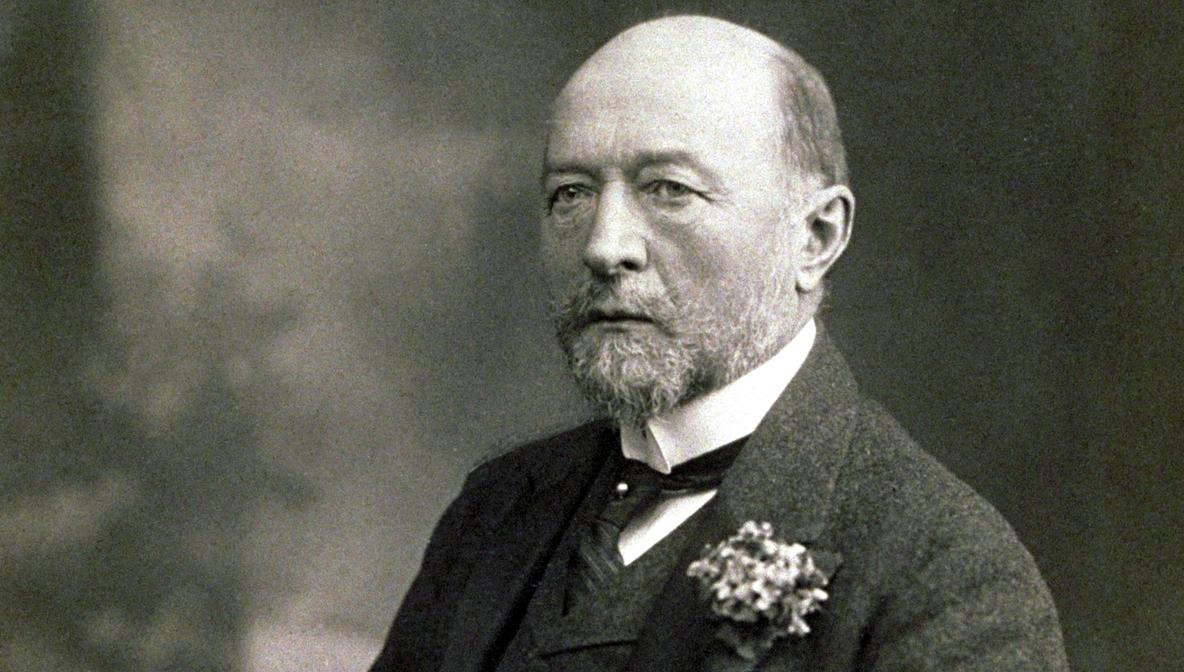

Emil von Behring (1854–1917)
1. Early Life & Education
Born Adolf Emil Behring on 15 March 1854 in Hansdorf, West Prussia (today Ławice, Poland). He was the eldest of 13 children in a financially constrained family—his father was a schoolmaster . Initially on track for priesthood, a family friend redirected him toward medicine.
2. Medical Training & Military Career
In 1874, Behring entered the Friedrich-Wilhelms- or Kaiser-Wilhelm-Army Medical Institute in Berlin—tuition-free but requiring military service upon graduation. He earned his medical degree in 1878 and passed state exams in 1880 He served as a military physician in Poland (Posen), studying septic diseases and early use of iodoform as an antiseptic and antitoxin in studies published around 1882
3. Research Under Koch
His excellence earned him placement at Bonn’s pharmacology institute. By 1888, Behring returned to Berlin to work at the Institute of Hygiene as an assistant to Robert Koch. There he collaborated with Kitasato Shibasaburo and Paul Ehrlich
4. Discovery of Serum Therapy
From 1889 to 1890, Behring and Kitasato pioneered serum therapy: demonstrating that injecting serum from toxin-immunized animals could confer passive immunity to diphtheria and tetanus . In 1890, they coined “antitoxin.” In 1892 he began human trials and by 1894 had optimized diphtheria antitoxin therapy
5. Academic Career & Honors
He became Professor of Hygiene at Halle in 1894, then at Marburg from 1895 onward In 1901, he was awarded the first Nobel Prize in Physiology or Medicine for serum therapy—earning him Prussian nobility and the title “von Behring”
6. Later Work & Legacy
Post-1901, Behring focused on tuberculosis research and toxin‑antitoxin vaccines for calves and possibly humans. In 1904, he founded the Behringwerke company in Marburg for mass serum and vaccine production. His serum therapy saved millions of children and soldiers against diphtheria and tetanus
7. Personal Life & Death
He married Else Spinola in 1896; they had six sons. Behring suffered health issues, including depression and mobility limits, but remained active until succumbing to pneumonia on 31 March 1917 in Marburg at age 63
8. Awards & Recognition
-
Cameron Prize, Edinburgh (1894)
-
Prussian nobility (1901)
-
Numerous international honors
-
Nobel Prize medal displayed at the International Red Cross and Red Crescent Museum in Geneva
✅ Key Contributions
-
Founded serum therapy; revolutionized immunology.
-
Discoverer of diphtheria and tetanus antitoxins.
-
Successfully applied passive immunity in humans.
-
Advanced early vaccine development and mass production.
-
His work laid foundations for modern immunology and vaccines.