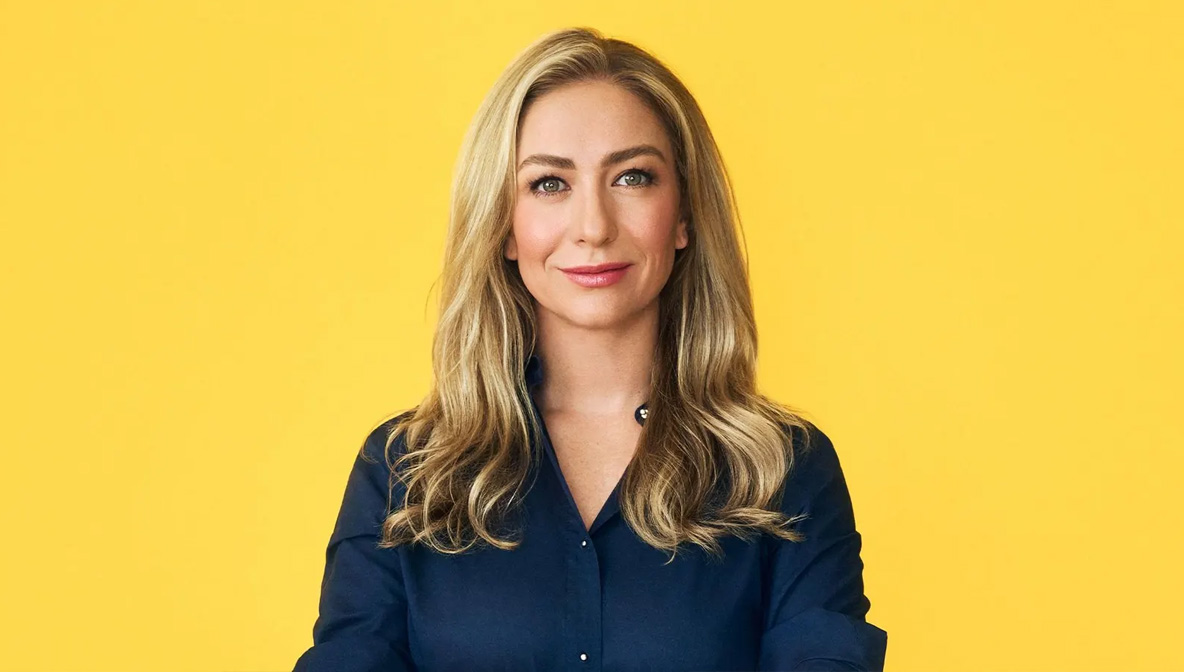

Let’s be real. The world of online dating can be exhausting. The ghosting, the awkward messages, the feeling of being a disposable profile in a sea of endless options. But what if an app could fundamentally shift that power dynamic? What if it put women in control, not as a gimmick, but as its core philosophy? This isn’t a hypothetical. It’s the reality built by Whitney Wolfe Herd, the visionary founder of Bumble.
Her story is more than just a tech success saga. It’s a narrative of resilience, of turning personal and professional trauma into fuel for a global movement. She didn’t just create another dating app; she launched a cultural corrective. At a time when she was being silenced, she built a platform that gave millions a voice. Whitney Wolfe Herd isn’t just a CEO; she’s the architect of a digital world where kindness is a feature, not a bug, and in the process, she became the world’s youngest self-made female billionaire. This is the story of how a woman who was pushed out of one tech giant came back to build a kinder, more equitable one in its image.
Introduction: The Architect of a Kinder Digital World
Before Bumble’s signature yellow hue became synonymous with female-first dating, the tech world, particularly the social and dating app space, was a notoriously boys’-club environment. It was a landscape built largely by men, with algorithms and interfaces that often overlooked—or worse, enabled—the negative experiences of women.
Into this world stepped Whitney Wolfe Herd, not with a louder voice, but with a smarter, more empathetic design. Bumble’s founding principle is deceptively simple yet revolutionary: On Bumble, women make the first move.
This single rule was a seismic shift. It wasn’t just about dating; it was about resetting archaic social norms for the digital age. It was about challenging the expectation that men must always be the pursuers and women the pursued. It was about reducing the barrage of low-effort, and sometimes abusive, messages that women faced on other platforms. By giving women the “Bumble First Move,” Whitney created a environment designed to foster respect and intentionality from the very first interaction.
But her vision didn’t stop at dating. Bumble quickly expanded into Bumble BFF, for finding friends, and Bumble Bizz, for professional networking, creating a full ecosystem of connection all governed by the same ethos of kindness, accountability, and empowerment. She didn’t just build a company; she curated a community and sparked a global conversation about how we treat each other online. Her journey from a very public, painful exit at Tinder to ringing the opening bell at the Nasdaq is a modern business legend, a story of staggering comeback that cemented her status as one of the most influential entrepreneurs of her generation.
Early Life & Background: The Roots of a Connector
Whitney Wolfe was born on July 1, 1989, in Salt Lake City, Utah, but she spent much of her youth in Paris. Yes, Paris, France. Her father, Michael Wolfe, was a highly successful property developer, and the family enjoyed a life of international privilege. This exposure to different cultures from a young age likely honed her understanding of social dynamics and human connection across borders.
Even as a teenager, Whitney displayed the entrepreneurial spark that would later define her career. In high school, she noticed the devastation caused by the BP oil spill in the Gulf of Mexico. While others felt helpless, she saw an opportunity to help. She launched a nonprofit initiative, selling bamboo tote bags to help with cleanup efforts. She enlisted the help of celebrities and influencers to promote the cause, a prescient move that showed her innate understanding of marketing and social leverage long before “influencer marketing” was a common term.
This early venture wasn’t about profit; it was about purpose. It demonstrated a pattern that would repeat itself throughout her life: identifying a problem and mobilizing a community to be part of the solution. She wasn’t just waiting for someone else to fix things; she was building the tools to fix them herself.
Education: Forging a Path
After her international upbringing, Whitney returned to the United States for college. She enrolled at Southern Methodist University (SMU) in Dallas, Texas, where she studied International Studies.
Her time at SMU was formative. Texas, with its distinct culture and social scene, provided a fascinating contrast to her experiences in Europe. It was during these college years that she further developed her social savvy and her understanding of what would later become her core user base. While she wasn’t a computer science major hacking away in a lab, she was studying the most important element of her future business: people, culture, and how they interact.
College is also where many young people first navigate the complex world of dating and relationships. It’s not a stretch to imagine that her own observations and experiences during this time subconsciously laid the groundwork for her future critique of the dating landscape. She graduated from SMU, armed not with a tech degree, but with something perhaps more valuable for what was to come: a deep, intuitive understanding of social connection.
Career & Achievements: From Tinder to Bumble
Whitney’s career trajectory is the stuff of Silicon Valley legend, precisely because it’s so un-Silicon Valley.
The Tinder Chapter: The Spark and the Storm
After college, she moved to Los Angeles and, almost by accident, found herself involved in the earliest days of a startup called Cardify. It was through this world that she reconnected with Sean Rad and Justin Mateen, whom she knew from her childhood. They were working on a new idea, a location-based dating app initially called “Matchbox.” Whitney was captivated.
She officially joined the team as a co-founder and VP of Marketing. Her title, however, belies her immense impact. Whitney was the heart and soul of Tinder’s early growth. She was the visionary behind its marketing strategy, particularly its crucial launch on college campuses. She understood that if you could win over the influential sororities on campus, the fraternities would follow. She would travel from campus to campus, handing out promo cards and leveraging her own social networks to make Tinder the cool, must-have app for young millennials. Her work was instrumental in creating the explosive growth that defined Tinder’s early years.
However, this period of professional triumph was marred by personal turmoil. What began as a professional partnership with Justin Mateen turned into a romantic relationship, and when it ended, the professional environment became toxic. She was subjected to horrific sexist abuse and harassment from her co-founder, who allegedly stripped her of her co-founder title because having a young female co-founder, and his ex-girlfriend, “made the company seem like a joke.” The situation escalated to the point where she felt she had no choice but to leave the company she helped build.
In 2014, she filed a sexual harassment lawsuit against Tinder and its parent company, IAC. The lawsuit detailed the misogynistic and abusive behavior she endured. It was a brave, incredibly public, and professionally risky move. In the tech world, which often quietly settles such matters, she chose to speak out. The case was settled for just over $1 million, but more importantly, it included a public apology from IAC and a commitment to valuing her contributions. It was a vindication, but it left her professionally adrift and personally scarred.
The Birth of Bumble: The Phoenix Rises
It was at this lowest point that Whitney’s resilience shone brightest. Instead of leaving the tech world in defeat, she decided to fix its problems from the inside out. She connected with Andrey Andreev, the founder of the European dating app Badoo. He saw her vision and her potential, becoming the primary investor in her new venture.
Originally conceived as “Merci,” a female-friendly social network, the idea quickly evolved. Drawing on her painful experiences at Tinder and the shared experiences of women everywhere, she and her team honed in on the dating space. The concept was simple but powerful: an app where women are empowered to make the first move.
They called it Bumble.
Launched in December 2014, Bumble was an instant sensation. The media loved the narrative: the female co-founder of Tinder creating a feminist alternative. Women flocked to an app that promised them control and safety. The “women-first” mantra wasn’t just marketing; it was baked into the product’s DNA. Features like photo verification to combat catfishing, a strict policy against hate speech and unsolicited lewd photos, and the 24-hour time limit for a first message (to encourage active, not passive, use) all reinforced a culture of accountability and respect.
The growth was astronomical. Bumble quickly became Tinder’s most serious competitor. But Whitney didn’t stop there. She understood that the principles of Bumble—kindness, empowerment, and making the first move—could apply to all forms of connection. This led to the launch of Bumble BFF (for finding friends) and Bumble Bizz (for professional networking), transforming the app from a dating tool into a holistic “connection” platform.
The ultimate capstone on this incredible comeback story came on February 11, 2021. On that day, Bumble Inc. went public in a stunning IPO that valued the company at over $13 billion. At 31 years old, Whitney Wolfe Herd, now a mother and CEO, rang the opening bell at the Nasdaq—from her living room, holding her young son. She became the youngest woman ever to take a company public and a self-made billionaire in the process. It was a powerful, iconic image that symbolized a new era of leadership in the tech industry.
Personal Life: Building her Own Hive
Amidst the whirlwind of building a billion-dollar company, Whitney has built a deeply fulfilling personal life. In 2017, she married Michael Herd, a Texas oil heir and grandson of the founder of the Whataburger fast-food chain. Their wedding was a lavish affair in the Italian countryside, a far cry from the stressful boardrooms of her professional life.
In 2020, she and Michael welcomed their first child, a boy. Her pregnancy and journey into motherhood became another platform for her message of female empowerment. She was transparent about the challenges of being a pregnant CEO and later, a working mother, using her platform to advocate for better parental leave policies and to normalize the conversation around motherhood in the C-suite.
She often speaks about how her husband has been her rock, providing unwavering support as she navigates the immense pressures of her career. Her life reflects the balance she promotes: ambitious and driven, but also centered on family, health, and personal well-being.
Net Worth: A Valuation of Values
Following Bumble’s blockbuster IPO in 2021, Whitney Wolfe Herd’s net worth skyrocketed. At the peak of the company’s market performance, her stake was valued at well over $1 billion, officially making her the world’s youngest self-made female billionaire. While the stock market fluctuates, and her net worth has adjusted with Bumble’s stock price since the initial IPO frenzy, she remains a billionaire and one of the wealthiest self-made women in tech.
What’s most significant about her wealth is what it represents. It’s not just the financial success of an app; it’s the market validation of a business model built on empathy and female empowerment. Her wealth is a testament to the fact that a company can be both purpose-driven and wildly profitable.
Legacy & Impact: More Than Matches
Whitney Wolfe Herd’s impact is profound and will be felt for generations.
-
She Redefined an Industry: She forced the entire online dating world to be better. In response to Bumble’s success, competitors like Tinder were forced to introduce similar safety and verification features. She raised the bar for user experience and safety for everyone.
-
She Proved “Conscious Capitalism” Works: Bumble is a case study in building a business with a social mission at its core. She demonstrated that you don’t have to choose between doing good and doing well; in fact, the former can drive the latter.
-
She Became a Symbol for Speaking Out: Her journey from a harassment victim to a triumphant CEO is a beacon of hope for women in toxic work environments everywhere. She showed that it is possible to leave, to speak your truth, and to use that experience to build something better.
-
She Expanded the Definition of a Tech Founder: She shattered the stereotype of the hoodie-wearing, male tech founder. She proved that empathy, emotional intelligence, and a focus on human relationships are not weaknesses but superpowers in the business world.
What We Learn: The Enduring Lessons from Whitney Wolfe Herd
Her story is a masterclass in modern entrepreneurship and personal resilience.
-
Your Pain Can Be Your Platform: The most powerful businesses often solve a problem the founder has personally experienced. Don’t run from your frustrations; lean into them. They might be hiding a billion-dollar idea.
-
Resilience is Your Greatest Asset: Failure and rejection are not endpoints; they are data points. Whitney’s ability to get back up after a very public and painful fall is the single biggest reason for her success.
-
Empathy is a Competitive Advantage: In a world of cold algorithms, human-centric design stands out. Building a product with genuine care for the user’s emotional experience isn’t just nice—it’s a brilliant business strategy.
-
Have the Courage to Reset the Rules: Don’t just play the existing game; change it. The “women make the first move” rule was considered risky, but it was exactly what a huge segment of the market was waiting for.
-
Build the Company You Wish Existed: She didn’t just want to work at a better company; she built one. This philosophy can apply to any venture. Create the culture, the product, and the environment you believe should exist in the world.
Social Media Links
You can follow Whitney’s journey and Bumble’s mission here:
-
Instagram: @whitneywolfeherd
-
Twitter/X: @whitney (She is less active here but has a historic presence)
-
Bumble’s Instagram: @bumble
10 Unknown Facts About Whitney Wolfe Herd
-
She has a fear of public speaking, which she has had to actively manage as a very public CEO.
-
The name “Bumble” was inspired by the bee. Whitney loved that in a bee hive, the queen bee is in charge, and the community works together productively and respectfully.
-
She was named one of Time magazine’s “100 Most Influential People” in 2018.
-
She is a major advocate for stricter laws against cyber-flashing (the unsolicited sending of lewd photos) and has lobbied for legislation to make it a crime.
-
She brought her infant son to high-level business meetings, consciously breaking down stigmas around motherhood in leadership.
-
The iconic Bumble yellow was meticulously chosen to evoke feelings of happiness, optimism, and warmth.
-
She is an avid art collector, with a particular interest in contemporary art.
-
After her Tinder settlement, she donated a significant portion of the money to charities dedicated to fighting sexual harassment.
-
She is a pescatarian and is passionate about animal welfare.
-
She hired a “Head of Kindness” at Bumble, a real executive position dedicated to ensuring the company’s core value is reflected in its internal culture and external product.
A Small FAQ Section
Q: How old was Whitney Wolfe Herd when she launched Bumble?
A: She was 25 years old when Bumble launched in December 2014.
Q: Is Whitney Wolfe Herd still the CEO of Bumble?
A: As of this writing, yes, she is the CEO of Bumble Inc. In late 2023, she stepped down from the CEO role at the parent company, Bumble Inc., to focus on the CEO role of the Bumble app itself, signaling a refocusing on the core product.
Q: What was the original name for Bumble?
A: The initial concept was called “Merci,” which focused on female-friendly social networking before pivoting specifically to dating.
Q: How much of Bumble does Whitney Wolfe Herd own?
A: Following the IPO, she owned approximately 12% of the company, which is what propelled her to billionaire status.
Q: What is Whitney Wolfe Herd’s most important piece of advice for young entrepreneurs?
A: She often says, “Don’t be afraid to make the first move,” both in business and in life. She emphasizes that resilience and the ability to embrace failure are more important than a perfect idea.
Whitney Wolfe Herd’s story teaches us that the wounds of our past don’t have to define our future; they can inform it. She saw a broken system, experienced its flaws firsthand, and mustered the courage not just to walk away, but to build a better one. In a digital world often criticized for its toxicity, she built a hive of kindness, and in doing so, she didn’t just find her own success—she created a platform for millions of others to find their own connection, on their own terms.