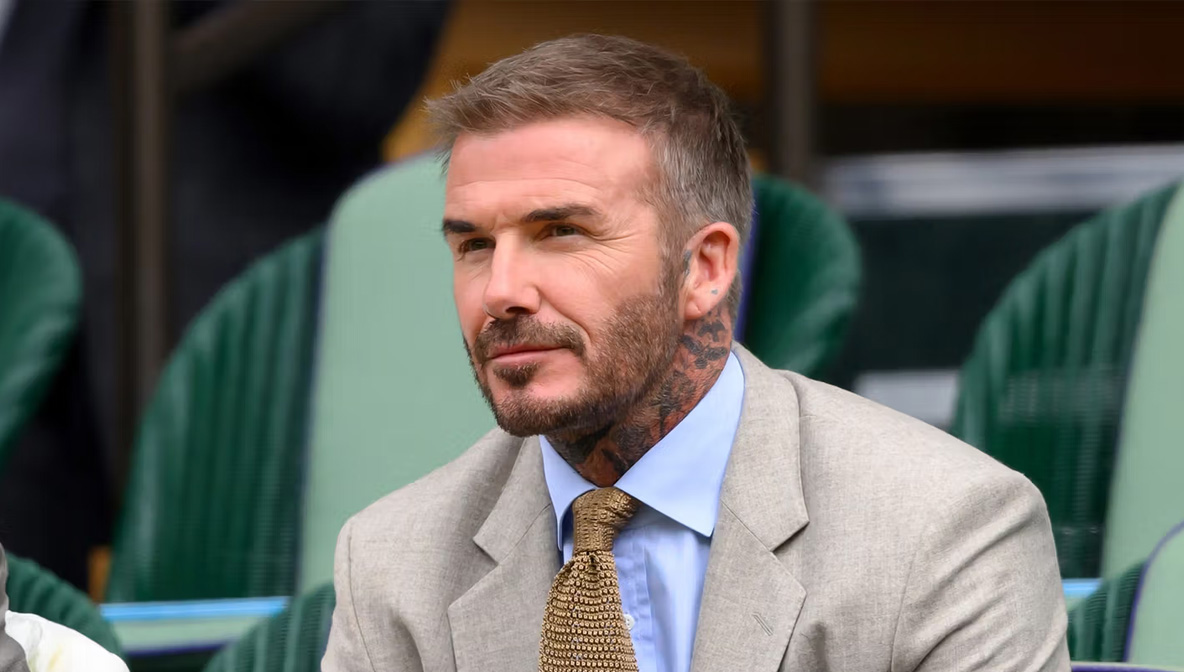

What does it mean to be a global icon? Is it the roar of a stadium chanting your name? Is it your face on a billboard in every major city? Or is it something more subtle, a quiet recognition that transcends your original craft and embeds you in the very fabric of global culture? David Beckham is the answer to that question. To call him a footballer feels almost reductive. Yes, he was one of the most gifted midfielders of his generation, a man whose right foot could bend the very laws of physics. But his story is so much grander.
He is the boy from a working-class London family who became a global brand, a husband to a pop star, a fashion icon, a philanthropist, and a sports franchise owner. His journey is a masterclass in transformation, a narrative that charts the evolution of modern celebrity itself. It’s a tale of breathtaking talent, relentless hard work, crushing public humiliation, and a phoenix-like ability to rise again and again. This is not just the biography of a sportsman; it’s the story of how an individual, through sheer force of will and a keen understanding of his own image, built a legacy that stretches far beyond the touchlines of a football pitch.
Early Life & Background: The Making of a Manchester United Fan
David Robert Joseph Beckham was born on May 2, 1975, in Leytonstone, East London. His world was a classic, working-class English one. His father, Ted Beckham, was a kitchen fitter and a passionate Manchester United supporter. His mother, Sandra, was a hairdresser. David was their only son, with two sisters, and from the earliest age, his life revolved around one thing: football.
His parents’ dedication was absolute. Recognizing their son’s prodigious talent, they sacrificed tirelessly. Ted would spend hours with a young David in the local parks, practicing for so long that his feet would bleed. He instilled in David a ferocious work ethic and a deep, almost spiritual, love for Manchester United. The family’s holidays weren’t to sunny beaches; they were pilgrimages to Old Trafford to watch their beloved team.
David’s talent was undeniable. He attended the Bobby Charlton Soccer School in Manchester and won a talent competition there at the age of 11. The prize was a trip to Barcelona to train at their famed La Masia academy, a tantalizing glimpse of a future that seemed inevitable. But his heart was set on United. At the age of 14, he was invited to join Manchester United’s youth system. This meant leaving his family and London behind to move to the club’s academy in Manchester. It was a difficult transition for a teenager, marked by intense homesickness, but it was a sacrifice he was willing to make for his dream. He signed his first professional contract with Manchester United on his 17th birthday, joining the “Class of ’92,” a golden generation of youth players that included Ryan Giggs, Paul Scholes, Gary Neville, and Nicky Butt, all mentored by the formidable Sir Alex Ferguson.
Career & Achievements: From Wonder Goal to World Stage
Beckham’s professional career is a map of his ambition, each club representing a new chapter in his evolution as a player and a brand.
The Manchester United Years (1992-2003): The Making of a Legend
Beckham’s breakthrough moment is etched in football folklore. On the opening day of the 1996-97 season, against Wimbledon, the 21-year-old Beckham, spotting the goalkeeper off his line, audaciously shot from the halfway line. The ball sailed over the keeper’s head and into the net. It was a goal of pure instinct and unbelievable technical skill. Overnight, David Beckham became a national sensation.
Under Ferguson’s stern guidance, Beckham flourished. He wasn’t the fastest or the strongest, but his crossing and passing accuracy were virtually supernatural. His ability to “bend” a football around a wall on a free-kick became his signature. He was the engine of a dominant United team that won the historic Treble in 1999—the Premier League, FA Cup, and UEFA Champions League—in a single, unforgettable season.
However, his relationship with Ferguson began to fray as his fame exploded. His marriage to Victoria “Posh Spice” Adams in 1999 turned “Brand Beckham” into a global media circus. Ferguson saw the distractions of celebrity as a threat to Beckham’s focus. The final rupture came in 2003, after a famous dressing-room incident where Ferguson kicked a boot that struck Beckham above the eye. The message was clear: it was time to go. He was sold to Real Madrid.
Real Madrid (2003-2007): The Galáctico
His move to Real Madrid was a seismic event. He was now a “Galáctico,” part of a team of superstars like Zinedine Zidane, Ronaldo, and Luís Figo. The football was less disciplined, more flamboyant. While his time in Spain was trophied, it was also marked by a sense that his celebrity sometimes overshadowed his football. Yet, he adapted, worked tirelessly, and won a La Liga title in his final season, cementing his status as a world-class player who could succeed in the most demanding environments.
LA Galaxy and MLS (2007-2012): The American Experiment
At 32, most European stars would have sought one last big payday at a top club. Beckham did the opposite. He shocked the world by signing with the LA Galaxy in Major League Soccer. Many dismissed it as a retirement plan, a vanity project. They were wrong. It was a strategic masterstroke.
Beckham’s move was about legacy. His “Designated Player Rule” contract, now known as the “Beckham Rule,” allowed MLS to attract other global stars, fundamentally changing the league’s trajectory. He didn’t just play; he became an ambassador, growing the sport’s popularity in the US exponentially. On the field, he battled injuries and fan resentment initially, but he persevered, leading the Galaxy to two MLS Cup victories. He proved his move was about more than money; it was about mission.
Later Career and Ownership (2013-Present)
Brief, high-profile spells at AC Milan and Paris Saint-Germain bookended his playing career, which he ended in 2013 as a champion in a fourth country. But his post-playing career has been just as impactful. He exercised a clause in his Galaxy contract to purchase an MLS expansion team for a discounted fee. In 2020, Inter Miami CF, co-owned by Beckham, played its inaugural season. He had transitioned from player to owner, from the face of the league to one of its architects.
Personal Life: The Power of “Brand Beckham”
It is impossible to separate David Beckham the footballer from David Beckham the global phenomenon. His personal life has been lived in the relentless glare of the paparazzi flashbulb.
His relationship with Victoria Adams began in 1997. Dubbed “Posh and Becks” by the British press, they became the most famous couple on the planet. Their wedding was a royal-level media event. Together, they engineered “Brand Beckham,” a savvy enterprise that leveraged his athletic appeal and her fashion-world credibility. They have four children: Brooklyn, Romeo, Cruz, and Harper Seven. The family itself is a brand, their lives a curated blend of glamour and (carefully managed) normality.
Beckham’s image has been a rollercoaster. He has been a national hero and a national villain. After a petulant kick at Argentina’s Diego Simeone in the 1998 World Cup, which got him sent off and contributed to England’s elimination, he became the most hated man in the country, facing death threats and public vitriol. His response? He put his head down and worked harder, using the fury as fuel, eventually rehabilitating his image through sheer performance and resilience.
His life is a study in controlled curation. From his ever-changing hairstyles that became front-page news to his ventures into fashion, fragrance, and whiskey, every move is calculated. Yet, beneath the polished exterior, those who know him describe a fiercely loyal family man, a dedicated father, and a surprisingly shy individual who prefers the quiet of his English countryside home to the glitz of a red carpet.
Legacy & Impact: More Than a Footballer
David Beckham’s impact is multifaceted, touching sports, business, and culture.
-
Redefining the Athlete’s Potential: Beckham was the prototype for the modern athlete-entrepreneur. He demonstrated that an athlete’s potential isn’t confined to their sport. He built a billion-dollar brand that will outlive his playing career, showing every athlete that follows that they can be the CEO of their own destiny.
-
The Global Growth of Football: His moves to Madrid, Los Angeles, Milan, and Paris were not just transfers; they were cultural missions. He was instrumental in popularizing the Premier League globally, in raising the profile of La Liga, and, most significantly, in making MLS a credible and attractive league for international stars.
-
The Power of Resilience: His journey from national pariah in 1998 to national treasure and London 2012 Olympic ambassador is a textbook lesson in reputation management and personal grit. He taught a generation that you can be knocked down, publicly and brutally, and still get back up to earn respect.
-
Philanthropy and Advocacy: Through his role as a UNICEF Goodwill Ambassador and his own charitable work, he has used his platform for significant good, focusing on issues like children’s welfare and malaria prevention.
-
A Cultural Chameleon: He made athlete fashion relevant. He blurred the lines between sports, fashion, and pop culture, making it acceptable and even expected for athletes to be style icons and cultural influencers.
Final Thoughts, and What We Learn
David Beckham’s story is a modern-day epic. It is the tale of a boy with a dream who, through a combination of god-given talent and a work ethic forged by his father, reached the pinnacle of his sport. But it is also the story of what he did next—how he leveraged that success into something enduring and far greater.
What We Learn from His Life:
-
Talent Needs Tenacity: The golden foot was a gift, but it was the thousands of hours of practice in a London park that turned that gift into a weapon. Natural ability is nothing without the relentless drive to hone it.
-
Image is a Currency, But Character is Your Legacy: Beckham understood the power of his image better than anyone. But his ultimate longevity stems not from his hairstyles, but from his demonstrable character: his resilience in the face of hate, his loyalty to his family, and his professionalism on the pitch.
-
Embrace Reinvention: He was never afraid to start a new chapter. From Manchester United icon to Real Madrid Galáctico, to MLS pioneer, to club owner, he constantly evolved, refusing to be defined by a single role.
-
Turn Setbacks into Comebacks: The lowest moments of his career—the 1998 red card, the rift with Ferguson—became the fuel for his greatest reinventions. He teaches us that failure is not a full stop; it’s a comma in the story of your life.
-
Build a Legacy, Not Just a Career: Beckham was always playing the long game. His move to LA Galaxy wasn’t just for the final years of his career; it was an investment in the future of the sport and his own place within it as an owner and statesman.
David Beckham is more than a footballer. He is a case study in ambition, a lesson in brand-building, and a testament to the power of resilience. He kicked a ball with such grace and precision that it didn’t just find the back of the net; it shaped the world around him. He is, and will forever be, the boy from East London with the golden foot who showed the world that you can, indeed, have it all.