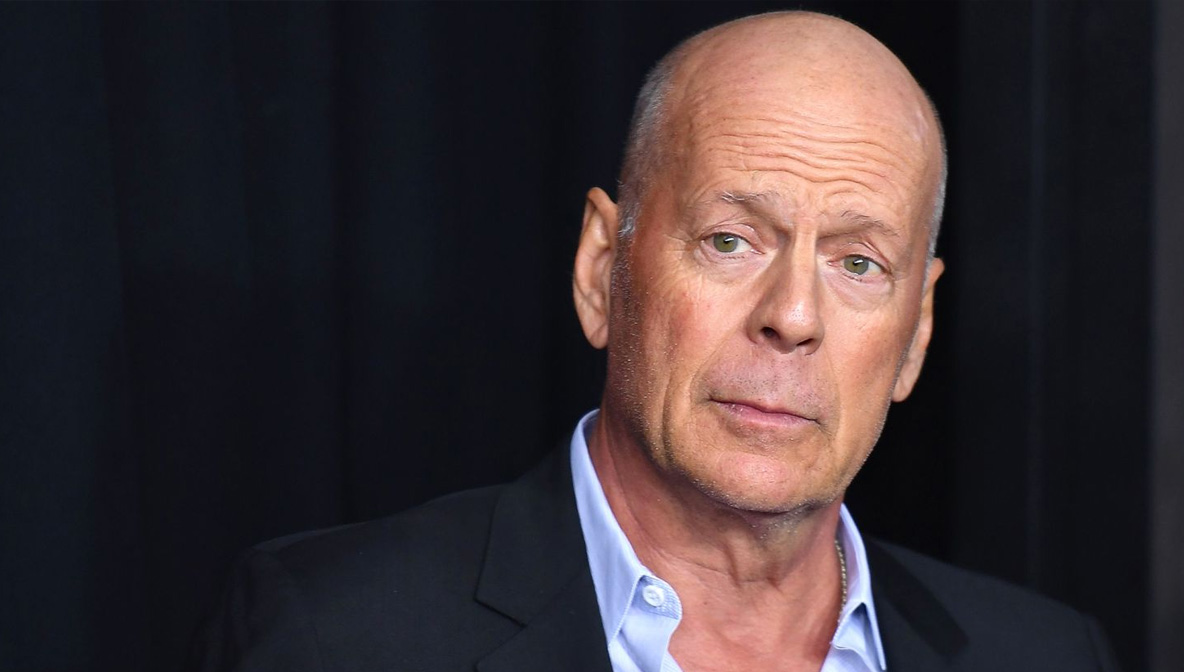

For nearly half a century, the name Bruce Willis has been synonymous with a specific kind of American hero. He was the everyman caught in an impossible situation, the wisecracking cop with a twinkle in his eye and a glock in his hand, the reluctant savior who always got the job done with a smirk and a trail of spectacular explosions. He was John McClane, the barefoot hero of Die Hard who redefined the action genre. He was Butch Coolidge, the boxer dreaming of a watch-filled future in Pulp Fiction. He was Korben Dallas, the cab-driving savior of the universe in The Fifth Element.
But behind the tough-guy persona and the box-office billions was a far more complex story: a small-town boy with a stutter who found his voice on stage, a Hollywood rebel who fought for creative control, and a family man whose world was ultimately reshaped by a cruel and unthinkable diagnosis. The narrative of Bruce Willis is not just one of fame and fortune; it is a story of resilience, reinvention, and, ultimately, a profound human tragedy that has reframed his entire legacy, transforming him from an action hero into a symbol of a very real, heartbreaking battle.
Early Life & Background: The Kid from Carneys Point
Walter Bruce Willis was born on March 19, 1955, in Idar-Oberstein, West Germany, where his American father, David, was stationed as a soldier. Shortly after his birth, the family returned to the United States, settling in Carneys Point, New Jersey, a blue-collar town that would shape his formative years. He was the oldest of four children, and his father was a welder and factory worker, while his mother, Marlene, was a bank clerk.
Life in Carneys Point was not glamorous. Willis was a shy kid, but he was also a prankster, a trait that hinted at the mischievous charisma he would later wield on screen. A significant challenge emerged in his childhood: a severe stutter. The boy who would one day become one of the most recognizable voices in the world struggled to form a simple sentence. He has said that he would often remain silent in school, terrified of being called on and humiliated. This isolation forced him inward, but it also sparked a creative solution.
He discovered that the stutter would disappear when he was on stage, performing as someone else. “I found that I could speak without stuttering if I was playing a character,” he recalled. This revelation was life-changing. He began participating in school plays and drama clubs, finding not just a refuge from his impediment, but a calling. After high school, he took a job as a security guard at a nuclear power plant, a stint that only solidified his desire for something more. He enrolled at Montclair State University, initially to study drama, but he dropped out and moved to New York City to pursue acting full-time, waiting tables and working as a bartender in Hell’s Kitchen while auditioning for roles. The New Jersey kid with the stutter was about to take on the world.
Career & Achievements: The Rise of an Unlikely Action Star
Bruce Willis’s career trajectory is a testament to timing, talent, and a healthy dose of luck. It can be divided into distinct, remarkable chapters.
The Breakthrough: Moonlighting (1985-1989)
Willis’s big break came not from film, but from television. He was cast as David Addison Jr., the smart-aleck, hyper-verbally dexterous private detective opposite Cybill Shepherd’s uptight Maddie Hayes in the ABC series Moonlighting. The role was a perfect match for his natural charm and wit. The show was a massive, water-cooler hit, and Willis became an overnight sensation. He won an Emmy and a Golden Globe for the role, proving that a blue-collar guy with a receding hairline could be a leading man. It was here that he honed the fast-talking, sarcastic persona that would define his early career.
The Action Icon: The Die Hard Era (1988-2000)
While he was still a TV star, Willis took a massive risk. He was cast in a gritty action film called Die Hard (1988). The role of NYPD detective John McClane had been turned down by every major action star of the era (including Arnold Schwarzenegger and Sylvester Stallone) because the character was too vulnerable, too human. Willis was not the obvious choice. He was known for comedy, not muscle-bound heroics.
But Die Hard was a revolution. John McClane wasn’t an invincible super-soldier; he was an ordinary guy. He was scared, he got hurt, he bled, and he complained about it. Willis’s performance was a masterclass in relatable heroism. His wisecracks (“Yippee-ki-yay, motherfucker”) were a defense mechanism against sheer terror. The film was a blockbuster, spawning a franchise and permanently etching Bruce Willis into the Mount Rushmore of action cinema.
The 1990s solidified his status as a global superstar. He starred in a mix of high-octane action films (Die Hard 2, Die Hard with a Vengeance, The Last Boy Scout) and ambitious, often quirky projects that showed his range. He played the traumatized Vietnam vet in In Country, the death-obsessed child psychologist in The Sixth Sense, and the boxer Butch in Quentin Tarantino’s Pulp Fiction, a role that reintroduced him to a new, cooler generation. He was one of the highest-paid actors in the world, commanding $20 million paychecks and becoming a guaranteed box-office draw.
The Character Actor and the Direct-to-Video Pivot (2000-2022)
As the new millennium dawned, Willis’s career entered a more varied phase. He continued to headline major action films like the Die Hard sequels and Sin City, but he also embraced smaller, weirder roles in films like The Whole Nine Yards, Moonrise Kingdom, and Looper. He seemed to be enjoying a second act as a respected character actor.
However, in the 2010s, a noticeable shift began. Willis started appearing in a flood of low-budget, direct-to-video action films. For years, critics and fans were puzzled. Why was a Hollywood A-lister churning out generic, poorly reviewed movies at such a rapid pace? The answer would only become clear in hindsight. In 2022, his family announced his retirement from acting due to a diagnosis of aphasia, a language disorder caused by brain damage. It was later specified that he was suffering from frontotemporal dementia (FTD). The pieces of the puzzle fell into place. The cognitive decline associated with FTD likely made it impossible for him to handle the demands of complex scripts and long shoots. The quick, simple action films, often shot in a matter of days, were likely the only work he could manage as his condition progressed. This final chapter of his career, once viewed with confusion, is now seen through a lens of profound sadness and understanding.
Personal Life: The Man Behind the Smirk
Bruce Willis’s personal life has been as dynamic as his career. He has been married twice, first to actress Demi Moore in 1987. Their union was a media obsession—”Brangelina” before the term existed. They were Hollywood royalty, and together they had three daughters: Rumer, Scout, and Tallulah. Their divorce in 2000 was amicable and famously modern; they remained close friends and continued to co-parent their children, a testament to their mutual respect.
In 2009, he married model Emma Heming, with whom he has two younger daughters, Mabel and Evelyn. His family became the central focus of his life away from the set. He was known as a devoted, if fiercely private, father.
Beyond acting, Willis was a passionate musician, releasing a blues-rock album, The Return of Bruno, in 1987, and fronting a band called The Accelerators. He was also a savvy businessman, investing in various ventures, including the Planet Hollywood restaurant chain. Friends and colleagues often described him as loyal, generous, and possessing a dry, sometimes impenetrable, sense of humor. He was a man who valued his privacy, building a life for himself and his large, blended family away from the Hollywood glare.
Legacy & Impact: Yippee-Ki-Yay and Beyond
Bruce Willis’s impact on popular culture is undeniable, but it has been profoundly reshaped by his illness.
-
The Blue-Collar Action Hero: Before Die Hard, action heroes were largely superhuman. Willis’s John McClane introduced a new archetype: the vulnerable, relatable everyman. He was the template for a generation of heroes who were allowed to be scared, injured, and sarcastic. This shift made action films more human and accessible.
-
A Genre Chameleon: While he will forever be associated with action, his filmography is remarkably diverse. From the romantic comedy of Moonlighting to the neo-noir of Sin City, the psychological thriller of The Sixth Sense, and the whimsy of Moonrise Kingdom, he proved his versatility time and again.
-
The Voice and the Smirk: His persona—a blend of cool detachment, wry humor, and underlying decency—was uniquely his own. That knowing smirk and his distinctive, gravelly voice are instantly recognizable cultural artifacts.
-
A New Understanding of a Difficult Chapter: His legacy is now inextricably linked with frontotemporal dementia. His very public struggle has brought global awareness to this less-understood form of dementia, putting a famous face on a devastating disease and sparking conversations about cognitive health. The narrative around his late-career films has transformed from criticism to compassion, as the public understands they were a symptom of his battle, not a choice.
-
A Unified Front of Love: The way his family—his ex-wife Demi Moore, his current wife Emma Heming, and all of his children—have rallied around him with grace, unity, and fierce protectiveness has become a powerful part of his story. In the face of tragedy, they have shown the world what unconditional love and modern family can look like.
Final Thoughts, and What We Learn
The story of Bruce Willis is a epic with a heartbreaking third act. It is a narrative that forces us to reconcile the invincible hero on screen with the fragile human being off it.
What We Learn from His Life:
-
Your Greatest Weakness Can Be Your Greatest Strength: The boy with the stutter found his power and his career by becoming someone else on stage. His biggest obstacle became the very thing that launched him to stardom.
-
Vulnerability is a Strength: John McClane resonated because he was vulnerable. Willis’s career teaches us that true strength isn’t about being invincible; it’s about being resilient in the face of fear and pain. Showing your humanity is what makes you relatable and, ultimately, heroic.
-
Legacy is Complex and Evolving: A legacy is not set in stone. Willis’s was once defined by box office receipts and iconic one-liners. Now, it is also defined by courage in the face of a debilitating illness and the powerful lesson in grace his family is providing.
-
The Importance of Family: In his final, most difficult battle, it is not his movie-star fame that sustains him, but the love and protection of his family. His story is a poignant reminder that our most important role is not a professional one, but a personal one.
-
Compassion Over Judgment: The revelation of his illness forces us to look back on his later work with empathy, not criticism. It is a lesson in withholding judgment, as we often do not know the private battles people are fighting.
Bruce Willis gave us decades of entertainment, laughter, and thrilling escapes. He taught us that heroes could be flawed, that sarcasm was a valid survival tool, and that an ordinary man could do extraordinary things. Now, in his silence, he is teaching us a deeper, more human lesson about dignity, family, and the cruel fragility of memory. The unbreakable hero is facing a battle he cannot punch or shoot his way out of, and in that, he has become more relatable, and in a way, more heroic, than any character he ever played. His story is a reminder to cherish the moments, the memories, and the people we love, for they are the true legacy any of us can hope to leave behind.