
🕊️ Introduction
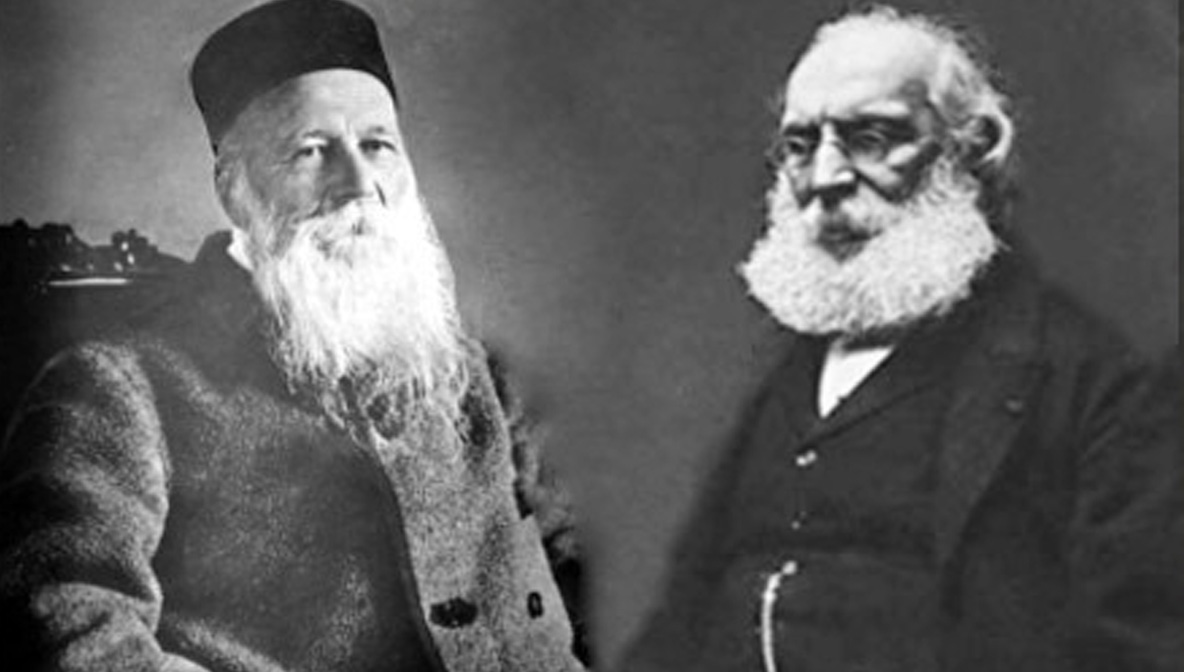
In 1901, the Nobel Peace Prize was awarded for the first time — and it went to two men who transformed the ideals of humanitarianism and pacifism into global movements: Henry Dunant of Switzerland, founder of the Red Cross, and Frédéric Passy of France, a passionate peace advocate and economist. Their lives, while distinct in focus, converged in purpose: to reduce human suffering and promote lasting peace.
🇨🇭 Henry Dunant (1828–1910) – Founder of the Red Cross
✦ Early Life
-
Born on May 8, 1828, in Geneva, Switzerland.
-
Raised in a devout Calvinist family with strong values in charity and social service.
-
Became involved early in humanitarian work, including prison and hospital aid programs.
✦ The Battle of Solferino & The Birth of the Red Cross
-
In 1859, while on a business trip in Italy, Dunant witnessed the horrifying aftermath of the Battle of Solferino, which left over 40,000 dead or wounded.
-
He organized volunteers to care for the wounded, regardless of their nationality.
-
Wrote “A Memory of Solferino” (1862), which inspired the creation of:
-
International Committee of the Red Cross (ICRC) in 1863.
-
The Geneva Convention of 1864, establishing neutrality for medical services in war.
-
✦ Later Life and Legacy
-
Faced personal financial ruin and faded into obscurity for decades.
-
Rediscovered in the 1890s and honored for his contributions to humanity.
-
Died in Heiden, Switzerland, on October 30, 1910, aged 82.
-
Today, he is remembered as the father of modern humanitarian law.
🇫🇷 Frédéric Passy (1822–1912) – Advocate for Peace Through Dialogue
✦ Early Life and Career
-
Born on May 20, 1822, in Paris, France, into a prominent family of intellectuals and politicians.
-
Trained as an economist and taught political economy.
-
Opposed militarism and war as economically disastrous and morally unjust.
✦ Peace Activism
-
Founded the French Peace Society (Société Française pour l’Arbitrage entre Nations) in the 1860s.
-
Strong advocate for international arbitration instead of war to resolve disputes.
-
Published influential works and gave lectures promoting peace and cooperation.
✦ Political Influence
-
Served in the French National Assembly.
-
Supported democratic reforms and was respected for his integrity and intellect.
✦ Later Years and Death
-
Shared the Nobel Peace Prize in 1901 for his lifelong commitment to peaceful resolution of conflicts.
-
Died in Paris on June 12, 1912, at the age of 90.
-
His work laid the intellectual groundwork for the League of Nations and later the United Nations.
🕊️ Shared Legacy: Nobel Peace Prize 1901
The Nobel Committee honored both men for their pioneering contributions:
-
Dunant for establishing a global humanitarian organization (Red Cross) and advocating for humane treatment in war.
-
Passy for promoting peaceful dialogue, disarmament, and arbitration between nations.
Their Nobel Peace Prize marked the beginning of international recognition of peace-building as a global mission.