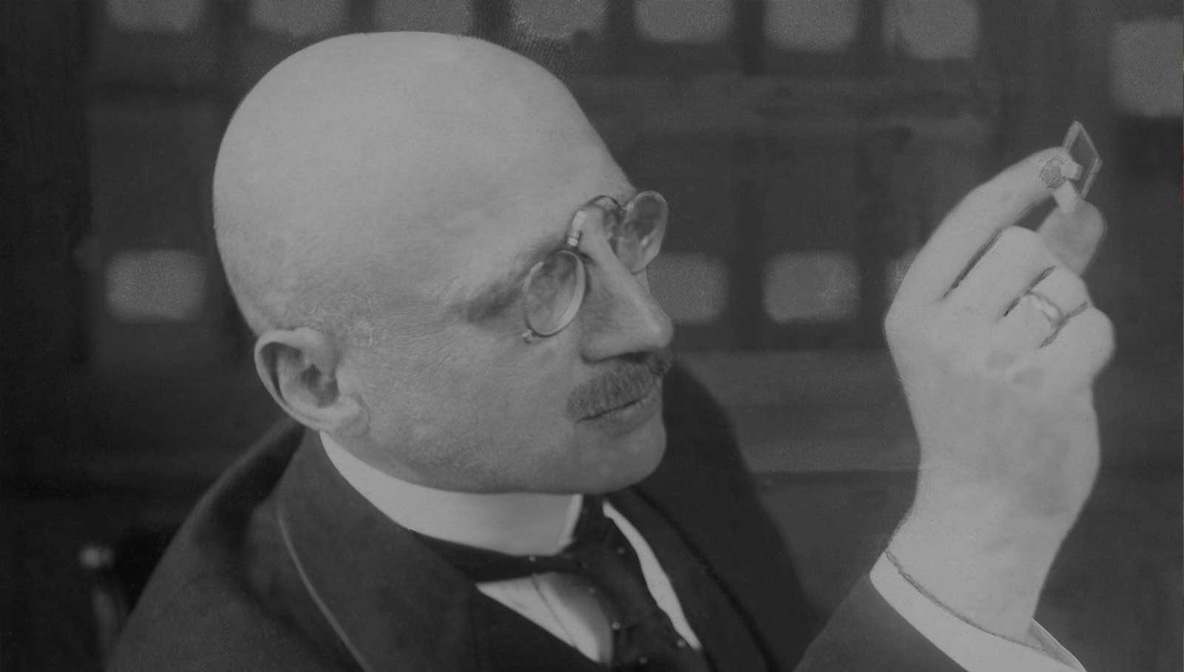

🌟 Introduction
Fritz Haber’s legacy is a powerful paradox: he provided a solution to global hunger through synthetic fertilizers, yet also pioneered chemical weapons in World War I. This blog post explores Haber’s remarkable scientific achievements, ethical controversies, and the profound lessons we can draw today.
🧬 Biography: Life & Career
Early Life & Education
-
Born December 9, 1868, in Breslau (now Wrocław, Poland), to a prosperous Jewish family
-
Studied chemistry under Bunsen, Hoffmann, and Lunge at leading universities: Heidelberg, Berlin, and Zürich
Rise to Prominence
-
Earned his PhD in 1891 and secured a research post at Karlsruhe Polytechnic in 1894 .
-
Became a tenured professor by 1906 and director of the Kaiser‑Wilhelm Institute in Berlin in 1911
Scientific Breakthrough: The Haber–Bosch Process
-
In 1909–1913, Haber developed and scaled his ammonia synthesis—turning nitrogen into fertilizer and explosives
-
Nobel Prize in Chemistry awarded in 1918 for this groundbreaking achievement .
Wartime Controversy: The “Father of Chemical Warfare”
-
Led Germany’s chemical warfare efforts in WWI, deploying chlorine gas at Ypres in 1915
-
His wife, Clara Immerwahr—a pioneering chemist herself—tragically took her life, partly in protest of his work
-
Haber defended his actions as loyalty to his homeland: “during wartime a scientist belongs to his country”
Later Years & Exile
-
Despite his conversion to Protestantism and patriotic service, Haber was targeted by the Nazis due to his Jewish heritage
-
Forced to resign in 1933 and died in exile in Basel on January 29, 1934
🌍 Impact & Controversies
Global Food Security
Haber’s process revolutionized agriculture—nearly half the world’s population today depends on its fertilizer output
War & Ethics
His invention also produced explosives and chemical weapons—and was later connected to Zyklon B’s development
Scientific Leadership
He guided Germany’s scientific scene, mentoring future luminaries like Einstein, Hahn, and Meitner
Moral Ambiguity
Haber’s life highlights the duality of science: the same discovery can nourish and destroy. His story remains a case study in ethical responsibility.
💡 Lessons from Haber’s Life
-
Science is Neutral, Humans Aren’t – Innovation can heal or harm—context matters.
-
Patriotism vs. Conscience – Loyalty to nation can challenge personal ethics.
-
Responsibility in Leadership – Large institutions need moral oversight.
-
Collaboration Matters – Work with experts like Bosch to scale ideas.
-
Ethical Boundaries in Research – Scientists must weigh consequences, not just capabilities.
Fritz Haber transformed our world—literally feeding billions. But his life also serves as a stark reminder that science wielded without conscience can bring immense suffering. The greatest lesson from Haber is that innovation must always walk hand in hand with ethical responsibility.
“A scientist belongs to the world—but in wartime, to his country.”
Haber’s words capture his complex legacy—a truth as relevant today as ever.