
Introduction
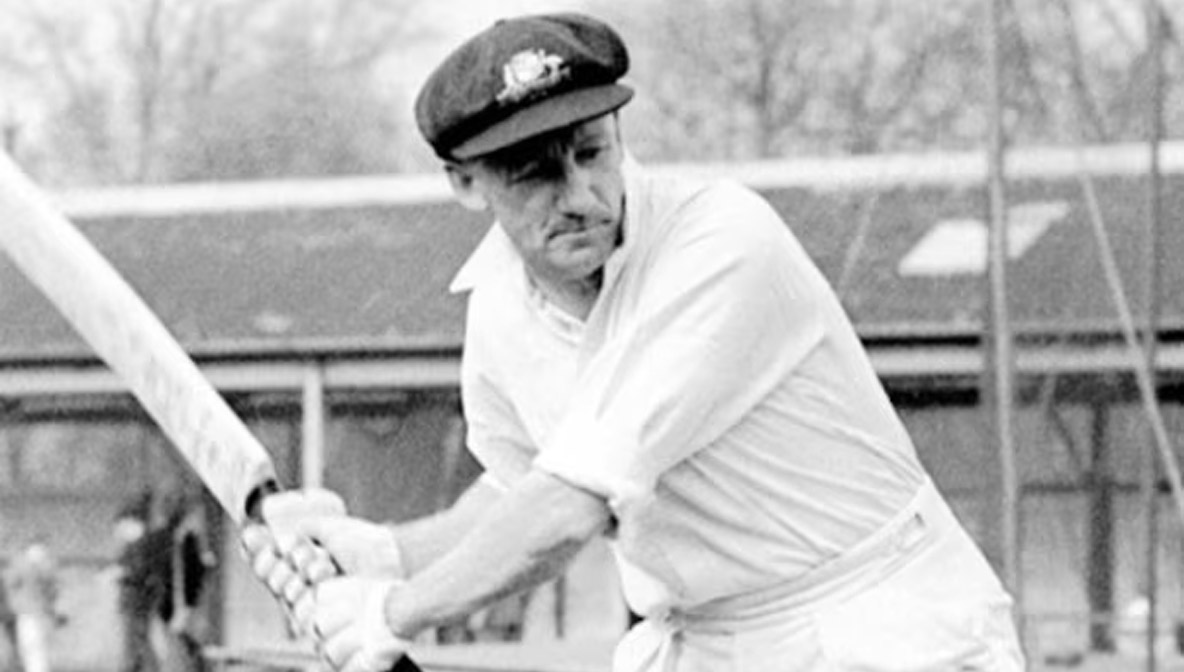
Even if you’ve never watched a single over of cricket, there’s a certain magic in the name “The Don.” It conjures images of a bygone era—of baggy green caps, timeless test matches, and a statistical anomaly that defies all logic. Sir Donald George Bradman isn’t just a cricketer; he’s a mathematical outlier, a national obsession, and a figure whose dominance over his sport is arguably unmatched in all of athletic history. His career Test batting average of 99.94 stands like Mount Everest above the rest of the game—a number that has taken on mythical proportions. For context, if you average 50 in Test cricket, you’re considered great. If you average 60, you’re an all-time legend. Bradman nearly averaged 100. This wasn’t just skill; this was something bordering on supernatural. But beyond the stats lies a story of a fiercely private, relentlessly driven man from the Australian bush who became a beacon of hope during the Great Depression, a captain who led an unbeaten team known as “The Invincibles,” and a figure who shaped the identity of a nation .
Early Life & Background
Donald George Bradman was born on August 27, 1908, in the tiny New South Wales town of Cootamundra. He was the youngest child of George and Emily Bradman, joining siblings Victor, Islet, Lilian, and Elizabeth May. His parents had been living in the hamlet of Yeo Yeo, but his mother traveled to Cootamundra to give birth at the home of a midwife—a house that now stands as the Bradman Birthplace Museum .
When Bradman was about two and a half, the family moved to Bowral in the Southern Highlands of New South Wales, a decision driven by his mother’s desire to be closer to her family and friends. It was in this rural town that the legend began to take shape—not on manicured pitches, but against a curved brick wall .
The story has become part of Australian folklore: a young boy, alone with a cricket stump and a golf ball. Behind the family home stood a water tank mounted on a curved brick stand. Bradman would hurl the golf ball at the bricks, and as it rebounded at ferocious speed and unpredictable angles, he would strike it again with his stump. This solitary game, played for hours on end, honed his hand-eye coordination, his lightning reflexes, and his uncanny ability to read the ball’s trajectory in fractions of a second .
His father, George, a carpenter and farmer, and his mother, Emily, provided a stable, hardworking environment. Cricket ran in the family—his uncle George Whatman captained the local Bowral team. By age 12, Bradman was already making waves, scoring his first century (115 not out) for Bowral Public School against Mittagong High School . At just 14, he filled in as a substitute for the Bowral senior team and scored 37 not out. Soon after, his father took him to the Sydney Cricket Ground to watch the fifth Ashes Test. Standing in the stands, the boy turned to his father and declared, “I shall never be satisfied until I play on this ground” . He meant every word.
Education
Bradman’s formal schooling ended when he was just 14. In 1922, he left Bowral Public School and began working for a local real estate agent, a job that provided the flexibility he needed to pursue his sporting passions. His boss was understanding, giving him time off for cricket and tennis, recognizing that the young man had something special .
This lack of higher education, however, didn’t reflect a lack of intellect. Bradman was methodical, analytical, and intensely observant—traits that would define his batting. He studied the game like a scientist, breaking down bowlers’ techniques, understanding conditions, and calculating probabilities. Later in life, his business acumen as a stockbroker would prove just as sharp as his cricketing instincts .
For a brief period as a teenager, Bradman actually stepped away from cricket to focus on tennis, a sport at which he also excelled. But by 1925-26, he was back, and the runs began to flow like a river breaking its banks. Playing for Bowral in the Berrima District competition, he compiled scores that made the Sydney newspapers take notice. Against Wingello, a team featuring future Test bowler Bill O’Reilly, he smashed 234. Then, in a competition final against Moss Vale that stretched across five consecutive Saturdays, he amassed an astounding 320 not out .
These performances led to an invitation to play in Sydney’s “Country Week” tournament. His boss gave him an ultimatum: one week off, choose between cricket and tennis. He chose cricket. The rest is history .
Career & Achievements
The Ascent (1927-1928)
Bradman’s rise was meteoric. After impressing in grade cricket for St George in Sydney—scoring a century on his turf wicket debut—he was selected for the New South Wales second team. In the 1927-28 season, at just 19 years old, he made his first-class debut for New South Wales against South Australia at the Adelaide Oval, replacing an unfit Archie Jackson. He marked the occasion with a dazzling 118, showcasing the fast footwork and rapid scoring that would become his trademarks .
Test Debut and Early Struggles (1928-1929)
Bradman’s Test debut came against England at Brisbane in November 1928. It was a harsh welcome to the highest level. Australia was bowled out for 66 on a sticky wicket, losing by a record 675 runs. Bradman managed scores of 18 and 1. He was dropped for the second Test, a humbling experience that he later credited as a turning point. Recalled for the third Test at the Melbourne Cricket Ground, he became the youngest player to score a Test century (112), though Australia still lost. In the fourth Test, he was run out for 58 in a heartbreaking 12-run loss—the only run-out of his entire Test career .
The 1930 Breakthrough
The 1930 tour of England was where Bradman transcended from promising talent to global phenomenon. Despite doubts about his unorthodox technique on slower English pitches, he silenced every critic. At Headingley in the third Test, he scored 334, including 309 runs in a single day—a feat that still boggles the mind. He followed this with 232 in the final Test at The Oval, helping Australia reclaim the Ashes. His series aggregate of 974 runs at an average of 139.14 remains a record .
Earlier that same year, playing for New South Wales against Queensland at the Sydney Cricket Ground, Bradman had set a world record for the highest first-class score: 452 not out, achieved in just 415 minutes. He was 21 years old and already a legend .
The Bodyline Series (1932-33)
Such was Bradman’s dominance that the English devised a radical, and highly controversial, tactic to stop him: Bodyline. Under the direction of captain Douglas Jardine, English bowlers, led by the fearsome Harold Larwood, aimed short-pitched deliveries at the batsman’s body, with a ring of fielders on the leg side waiting for catches. It was dangerous, unsporting, and nearly caused a diplomatic crisis between Australia and Britain .
Bradman adapted, averaging a still-impressive 56.57 for the series, but the tactics took a toll. The controversy reshaped cricket’s laws and remains one of the sport’s most infamous chapters. Yet, even under siege, Bradman found a way to score .
Captaincy and Comeback
Bradman was appointed Australian captain in 1936. Facing England at home, Australia fell 2-0 down in the five-Test series. The knives were out. Bradman responded with one of the greatest fightbacks in cricket history: scores of 270, 212, and 169 in the next three Tests, leading Australia to a 3-2 series win. It remains the only instance in 145 years of Test cricket where a team won a five-Test series after being 2-0 down .
The Second World War interrupted his career, robbing him of six prime years. At age 38, many doubted he could return to his best. He proved them wrong. In the 1946-47 Ashes, he scored 187 and 234. Against India in 1947-48, he plundered 185, twin centuries in the third Test, and a double-century in the fourth .
The Invincibles (1948)
Bradman’s final tour of England in 1948 was the stuff of fairytale. He led a team so dominant that they became known as “The Invincibles,” going undefeated through the entire tour—a feat unmatched before or since. At age 40, he scored 138 in the first Test and a magnificent 173 in the fourth Test at Headingley, where Australia chased down a record 404 runs on the final day .
The Final Innings
And then came the final act. At The Oval in his last Test innings, Bradman walked to the crease needing just four runs to retire with a career average of 100. The crowd gave him a standing ovation. England’s players gave him three cheers. Overcome with emotion, he took guard. The second ball he faced, a googly from Eric Hollies, spun past his bat and bowled him. He was out for a duck. He walked back to the pavilion, average forever frozen at 99.94 .
In his 52 Tests, Bradman scored 6,996 runs with 29 centuries and 13 fifties . The numbers are staggering, but they only tell part of the story.
Personal Life
On April 30, 1932, Bradman married his childhood sweetheart, Jessie Martha Menzies. He would later describe their union as the greatest partnership of his life . Their marriage lasted 65 years, until Jessie’s death in 1997. They had one son, John, and their family life was deliberately kept out of the public eye .
Bradman was an intensely private man. The constant adulation, the media scrutiny, the weight of being a national symbol—it all sat uncomfortably on his shoulders. Teammates and journalists sometimes found him aloof or wary, a defense mechanism against a world that never stopped wanting a piece of him . He was not a man of close personal relationships beyond his family, and he guarded his inner life fiercely.
Beyond cricket, Bradman was a remarkable all-round sportsman. He won the South Australian squash championship in 1938, was a scratch golfer, and excelled at tennis, table tennis, and billiards. He also played the piano, finding solace in music . In 1934, he moved to Adelaide and established himself as a stockbroker, a career that would occupy him for decades after his playing days ended .
He was knighted in 1949, the only Australian cricketer ever to receive this honor . In 1979, he was made a Companion of the Order of Australia, the nation’s highest civilian honor .
Net Worth
Estimating Sir Donald Bradman’s net worth is a complex exercise, as he played in an era long before million-dollar contracts and endorsement deals. His income came from multiple sources over a long life. As a stockbroker in Adelaide, he built a successful financial career, taking a seat on the Adelaide Stock Exchange in 1942 and holding various company directorships . This was his primary source of wealth and professional identity after cricket.
In his playing days, cricketers were amateurs in name only; they received match payments and tour expenses, but nothing approaching modern salaries. His post-retirement income came from his business activities, his writing (including several books), and later, from the commercial use of his name and image. The Bradman Museum in Bowral, which he supported, holds the commercial rights to his name, which generates significant royalties . While exact figures are not public, Bradman lived comfortably but modestly, his wealth never defining his legacy. At the time of his death in 2001, his estate was substantial but not extravagant by modern standards.
Legacy & Impact
Sir Donald Bradman’s legacy extends far beyond cricket. He is woven into the fabric of Australian identity. During the Great Depression, when unemployment and despair gripped the nation, Bradman’s batting was a source of hope, pride, and distraction. He gave people a reason to cheer .
His statistical achievements are often cited as the greatest in any sport. The gap between Bradman and the next-best batsman of his era is larger than the gap between that batsman and an average club player . As former Australian captain Bill Woodfull famously said, Bradman was “worth three batsmen to Australia” .
After retirement, he served as an administrator, selector, and writer for three decades, shaping Australian cricket from behind the scenes. He was a selector from 1936 to 1971 and chairman of the Australian Cricket Board . He was a force for attacking, entertaining cricket, and his influence was felt in every major decision .
His passing in 2001 prompted global mourning. Tributes poured in from every corner of the cricket world. Bob Woolmer called him “the greatest batsman of all.” One fan wrote, “Don Bradman was not one of the stars, but the sun itself. Now that the sun has set we must move in darkness” . Australian Prime Minister John Howard called him “the greatest living Australian” .
He was the first living Australian to have a museum dedicated to his life—the Bradman Museum in Bowral. His image has appeared on postage stamps and coins, including a $5 commemorative gold coin issued on his centenary in 2008 . In 2009, he was inducted into the ICC Cricket Hall of Fame .
What We Learn
Bradman’s life teaches us:
-
Practice with Purpose: His solitary game against the water tank wasn’t just practice; it was deliberate, focused training. He didn’t just hit balls; he trained his reflexes and his mind.
-
Resilience is Everything: From being dropped after his first two Tests to facing the dangerous Bodyline tactics to returning after a world war, he never stopped adapting and succeeding.
-
Guard Your Inner Self: In a world that demanded constant access, Bradman maintained his privacy and his dignity. He showed that you can be a public figure without surrendering your private self.
-
Excellence is a Habit: His consistency wasn’t luck. It was the result of relentless preparation, analysis, and an unwavering commitment to his craft.
Social Media Links
Sir Donald Bradman passed away in 2001, long before the era of social media. However, his legacy is preserved online through:
-
The Bradman Museum: www.bradman.org.au – The official museum in Bowral, dedicated to his life and cricket history.
-
Cricket Australia: @CricketAus on Twitter/X and Instagram, which regularly posts about Bradman’s legacy.
-
ESPNcricinfo: www.espncricinfo.com – The definitive source for his statistics and historical articles.
10 Unknown Facts About Sir Don Bradman
-
The Golf Ball Game: The famous practice method with a cricket stump and golf ball against a curved brick water tank wasn’t just a childhood game; it was the foundation of his phenomenal reflexes. The irregular bounce from the brick stand simulated the unpredictability of real bowling .
-
He Almost Chose Tennis: As a teenager, Bradman gave up cricket for two years to focus on tennis. He was so talented that he had to choose between the two sports for a “Country Week” tournament. Thankfully, he picked cricket .
-
The Only Run Out: In his entire 52-Test career, spanning 80 innings, Bradman was run out only once. It happened in the fourth Test of the 1928-29 series against England, and Australia lost the match by just 12 runs .
-
Italian Heritage: One of Bradman’s great-grandfathers was among the first Italian migrants to Australia, arriving in 1826. He had Italian ancestry through his father’s line .
-
He Scored 309 Runs in a Single Day: At Headingley in 1930, Bradman smashed 309 runs in a single day’s play, a record that still stands. He went on to make 334 .
-
He Was a Champion at Other Sports: He won the South Australian squash championship in 1938, was a scratch golfer, and was highly skilled at tennis, table tennis, and billiards .
-
Sachin Tendulkar Connection: On his 90th birthday, Bradman invited Sachin Tendulkar to his home in Adelaide. He told his wife that Tendulkar’s technique reminded him of his own. Tendulkar has called meeting Bradman a “vivid memory” .
-
The Near 100 Average: He needed just four runs in his final innings to retire with a Test average of 100. He was out for a duck, leaving his average at 99.94. He always dismissed sentimental theories about tears in his eyes, giving full credit to bowler Eric Hollies .
-
He Was a Stockbroker: Cricket wasn’t his only career. He moved to Adelaide in 1934 to join a stockbroking firm and worked in finance for decades, eventually taking a seat on the Adelaide Stock Exchange .
-
The Only Knighthood: Sir Donald Bradman is the only Australian cricketer ever to be knighted for his services to the sport. He received the honor in 1949 .
FAQ’s
Q: What was Sir Don Bradman’s Test batting average?
A: His career Test batting average was 99.94. He scored 6,996 runs in 52 matches .
Q: Why is 99.94 so famous?
A: It is statistically the greatest achievement in any major sport. The gap between Bradman’s average and every other cricketer in history is so vast that it defies comparison. To average 50 is considered great; Bradman nearly doubled that .
Q: What was the Bodyline series?
A: Bodyline was a controversial bowling tactic devised by England in the 1932-33 Ashes specifically to curb Bradman’s scoring. Bowlers aimed short-pitched balls at the batsman’s body with fielders packed on the leg side, which was dangerous and seen as unsporting .
Q: Who were The Invincibles?
A: The Invincibles was the nickname given to the Australian cricket team led by Bradman on their 1948 tour of England. They went undefeated through the entire tour, a feat never matched .
Q: How many centuries did Bradman score?
A: He scored 29 centuries in Test cricket and 117 centuries in all first-class cricket .
Q: Was Bradman married?
A: Yes, he married his childhood sweetheart, Jessie Menzies, in 1932. They were married for 65 years until her death in 1997 .
Q: Did Bradman ever coach or remain involved in cricket?
A: Yes, he served as a selector for the Australian team for 35 years (1936-1971) and was also a long-time administrator on the Australian Cricket Board, including two terms as chairman .
Q: When and how did Sir Don Bradman die?
A: He died on February 25, 2001, in Adelaide, South Australia, at the age of 92. He had been in declining health for some time .
Q: What is the Bradman Museum?
A: The Bradman Museum is located in Bowral, New South Wales, Bradman’s childhood home. It is dedicated to his life and the history of cricket. He was the first living Australian to have a museum named after him .
Sir Donald Bradman was more than a cricketer. He was a phenomenon that transcended sport, a man whose name became synonymous with excellence itself. In Australia, “The Don” remains a title of ultimate respect. His story—of a boy from the bush with a golf ball and a stump, who grew to conquer the world—is proof that greatness can emerge from the most humble beginnings, and that true legends never fade. They simply become immortal.