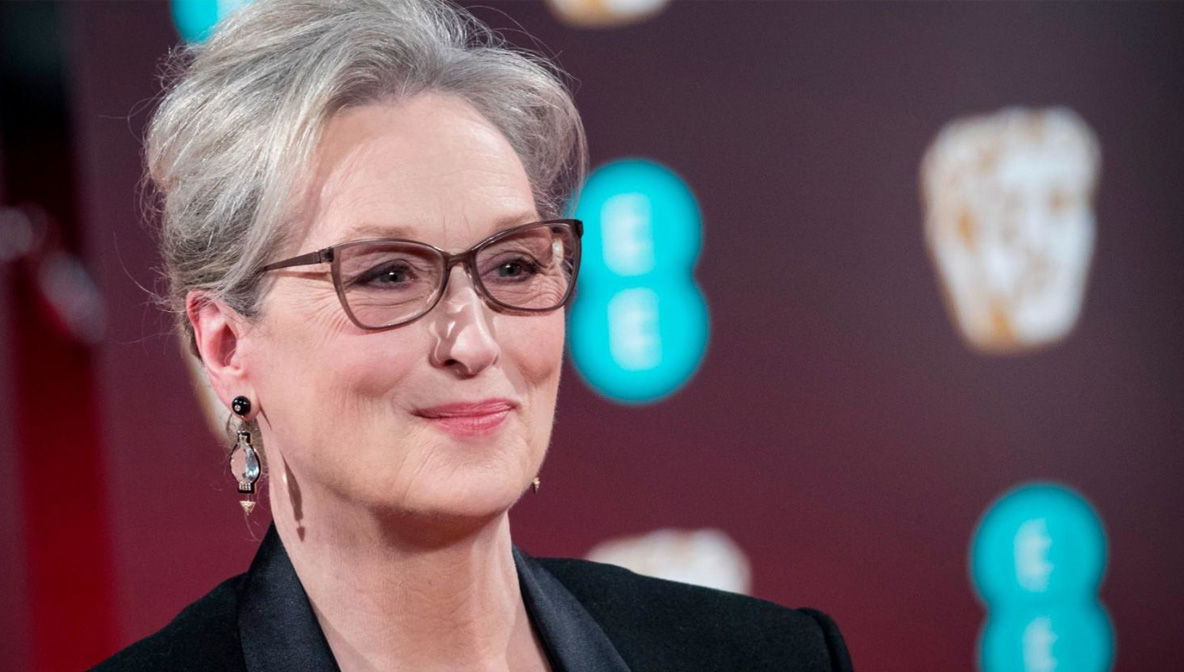

Let’s get the obvious out of the way: Meryl Streep is not just an actress. She is a force of nature, a cultural monument, and the undisputed gold standard against which all acting is measured. With a record-shattering 21 Academy Award nominations (and 3 wins), 33 Golden Globe nominations (a record 9 wins), and countless other honors, her name has become synonymous with artistic excellence.
But to reduce her to a pile of trophies is to miss the point entirely. Meryl Streep’s true genius lies in her breathtaking ability to disappear. She is the ultimate chameleon, a master of accent, posture, and emotion who can, with a flicker of her eyes, transform from a Polish Holocaust survivor to a ruthless fashion magazine editor to a singing, weeping mother in a struggling family. She doesn’t just play characters; she inhabits them, leaving audiences forever unable to separate the actor from the role.
Her career is a masterclass not in celebrity, but in craft. In an industry obsessed with youth and typecasting, Streep has navigated five decades with unparalleled intelligence, choosing complex, often difficult roles that explore the depths of the human experience. She is a living archive of American womanhood, having portrayed a staggering range of lives, from the ordinary to the extraordinary, always with a bone-deep honesty. This is the story of how a bookish girl from New Jersey became Meryl Streep, and in doing so, redefined what it means to be an actor.
Introduction: The Sound of Genius
If you need one moment to understand the myth of Meryl Streep, look no further than the 1979 film Kramer vs. Kramer. In a courtroom scene, her character, Joanna Kramer, a mother fighting for custody of her son, is asked why she left her family. The monologue she delivers is not in the script. It was improvised by Streep, who drew on her deep understanding of the character to plead her case directly to the actor playing the judge. The raw, trembling emotion, the devastating logic, the sheer humanity of it—it’s not just great acting; it’s alchemy. It won her her first Oscar.
That moment encapsulates her power. She brings an intellect and a preparation so profound that it dissolves the line between performance and reality. She is famous for her meticulous research, her mastery of dialects (from Danish to Australian to the flat vowels of the American Midwest), and her ability to find the beating, often contradictory heart of any woman she portrays. She makes the difficult look effortless, the emotional look authentic, and the transformative look like second nature. In an age of franchises and special effects, Streep remains a testament to the enduring power of a single human face telling a story.
Early Life & Background: The Girl Who Could Be Anyone
Mary Louise Streep was born on June 22, 1949, in Summit, New Jersey, and raised in the suburban town of Bernardsville. Her childhood was comfortable and artistic. Her father, Harry Streep Jr., was a pharmaceutical executive, and her mother, Mary Wilkinson Streep, was a commercial artist and art editor who encouraged creativity.
Young “Mary” (as she was called) was not the dramatic, spotlight-seeking prodigy one might imagine. She was, by her own account, a bit of a shy perfectionist who loved to observe. Her first foray into performance was through costume. At age 12, she donned a wig and practiced different voices in front of the mirror, delighting in the act of becoming someone else. This early fascination with transformation was the seed of everything to come.
In high school, she was a popular, bright student—head cheerleader, homecoming queen, and a dedicated member of the school choir and drama club. She was beautiful, yes, but her beauty was never the most interesting thing about her. Even then, she was working on her instrument. She has said she began consciously developing her vocal range and control as a teenager, understanding that a voice could be a powerful tool for character. She was already preparing, though she didn’t yet know for what.
Education: Forging the Toolbox
Streep’s academic path is a key to understanding her process. She initially envisioned a different kind of stage. She attended Vassar College, then an all-women’s school, and majored in Drama and English. At Vassar, she began to seriously study theater, but it was after graduation that her real training began.
On a whim, she applied to the prestigious Yale School of Drama for her Master of Fine Arts. She was accepted and plunged into a grueling, immersive three-year program. Yale in the early 1970s was intensely competitive and method-oriented. She performed in over 40 plays in three years, playing everything from an 80-year-old woman to a drag king. The workload was so punishing she considered quitting. But it forged her stamina, her discipline, and her incredible technical proficiency. She learned how to break down a script, build a character from the ground up, and use every part of her body and voice as a tool.
Her education didn’t end at Yale. After graduating, she moved to New York City and began the actor’s rite of passage: auditioning. She performed in Shakespeare in the Park and on Broadway, earning her first Tony Award nomination in 1976 for Tennessee Williams’ 27 Wagons Full of Cotton. The New York stage was her proving ground, where critics and peers alike took note of the serious, formidable talent that had arrived.
Career & Achievements: An Unparalleled Canon
Meryl Streep’s film career began in the late 1970s, and it exploded with a force rarely seen. Her early roles were not leading ladies in the traditional sense; they were complex, challenging women.
-
The Breakthrough (1977-1979): She made a small but searing impression in Julia (1977). Then came The Deer Hunter (1978), which earned her her first Oscar nomination. As Linda, the woman caught between two friends (Robert De Niro and Christopher Walken), she portrayed quiet, heartbroken resilience with devastating subtlety. The very next year, Kramer vs. Kramer (1979) won her the Oscar for Best Supporting Actress. She had arrived, and she was just getting started.
-
The Transformative Power (1980s): This decade cemented her legend as a master of transformation. She tackled the ultimate accent challenge in The French Lieutenant’s Woman (1981), playing dual roles with haunting mystery. Then came Sophie’s Choice (1982). Her performance as Zofia “Sophie” Zawistowski, a Polish Catholic Holocaust survivor grappling with an unspeakable past, is often cited as one of the greatest in film history. The moment of “the choice” is an aria of pure, soul-shattering agony. It won her her second Oscar, this time for Best Actress.
She defied expectations, moving from the harrowing drama of Silkwood (1983) to the romantic adventure of Out of Africa (1985), from the wrenching cries of Ironweed (1987) to the comedic shrieks of She-Devil (1989). She proved she could do anything.
-
Defying Hollywood’s Ageism (1990s-Present): As she entered her 40s, a period when many actresses see roles dry up, Streep entered a new, remarkably prolific phase. She embraced her age, choosing roles that explored the power, complexity, and humor of mature women. She was the fierce, matriarchal matron in The Bridges of Madison County (1995), the passionate opera singer in Music of the Heart (1999), and then launched into a staggering run of acclaimed performances in the 21st century.
Her late-career renaissance is unprecedented: the icy fashion editor Miranda Priestly in The Devil Wears Prada (2006) became a cultural icon; her pitch-perfect impression of Julia Child in Julie & Julia (2009) was a joy; her portrayal of British Prime Minister Margaret Thatcher in The Iron Lady (2011) won her a historic third Oscar. She sang ABBA in Mamma Mia! (2008), investigated the Catholic Church in Doubt (2008), and laid bare the fractures of a family in August: Osage County (2013). In her 70s, she took on the Washington Post publisher Kay Graham in The Post (2017) and the terrible liar in Big Little Lies on TV.
Her career is not a straight line but a sprawling, magnificent map of human emotion, with Streep as its fearless cartographer.
Personal Life: Anchored in Reality
In a town of fleeting relationships, Meryl Streep’s personal life has been a study in stability and quiet devotion. Her first great love was actor John Cazale, the brilliant but fragile star of The Godfather and Dog Day Afternoon. They met and fell in love while both performing in Shakespeare in the Park. Their relationship was deep and profound, but it was tragically cut short when Cazale was diagnosed with terminal bone cancer. Streep cared for him tirelessly until his death in 1978, an experience of grief that undoubtedly deepened her well of emotional understanding.
Just six months after Cazale’s death, heartbroken and reeling, she attended a party at the home of her brother. There, she met sculptor Don Gummer. A quiet, steady presence, he provided the anchor she desperately needed. They married in September 1978, a union that has lasted over 45 years. Together, they have four children: Henry, Mamie, Grace, and Louisa. Streep has fiercely protected her family from the spotlight, raising them primarily away from Hollywood in Connecticut.
She is famously private, down-to-earth, and known for her lack of movie-star pretense. Colleagues describe her as hardworking, collaborative, and surprisingly funny on set. Her marriage and family life seem to be her sanctuary, the solid ground from which she can leap into the chaotic emotional seas of her roles and return safely home.
Net Worth: The Value of Excellence
After a five-decade career at the absolute pinnacle of her profession, Meryl Streep has amassed significant wealth. While exact figures are private, reliable estimates consistently place her net worth in the range of $160 million.
This fortune is not the result of blockbuster franchise paydays (though The Devil Wears Prada and Mamma Mia! were huge hits), but of a sustained, top-tier career. It reflects her ability to command respect and significant salaries for both dramatic and commercial projects well into her later years. Her wealth is a direct byproduct of her peerless reputation; studios and producers know that a “Meryl Streep film” carries a weight of prestige and quality that is priceless. In an industry where women’s pay has historically lagged, her financial success is as much a statement as her artistic one.
Legacy & Impact: The Streep Standard
Meryl Streep’s impact is immeasurable. She has fundamentally changed the landscape for actors, particularly women.
-
She Redefined Longevity: She proved that an actress’s career does not have an expiration date. She created a roadmap for growing older on screen with power, grace, and increasingly interesting roles, paving the way for generations after her.
-
She Is the Benchmark: The phrase “Meryl Streep-level acting” is shorthand for the highest possible achievement. She has set a technical and emotional standard that inspires both awe and aspiration in fellow actors.
-
She Championed Women’s Stories: Throughout her career, she has consistently chosen projects that center complex, flawed, powerful women. She has used her unparalleled clout to get films made about women’s lives that otherwise might not have been greenlit.
-
She Masters the Art of “Invisible” Acting: In an era of celebrity, Streep is famous for her lack of a fixed persona. There is no “Meryl Streep type.” This chameleonic quality reinforces the primacy of the story and the character, reminding us of the actor’s true purpose: to serve the narrative.
What We Learn: The Enduring Lessons from Meryl Streep
Beyond the glittering awards, her life offers profound lessons in artistry and living.
-
Preparation is Everything: Streep’s genius is not accidental; it’s built on a foundation of relentless work. The research, the dialect coaching, the deep psychological inquiry—she teaches us that mastery in any field comes from an uncompromising commitment to the craft.
-
Embrace Change and Challenge: She never rested on her laurels or played it safe. She constantly sought roles that scared her, that were different from what she’d done before. Growth lies squarely outside your comfort zone.
-
Your Voice is an Instrument: One of her most tangible skills is her vocal control. She reminds us that how we communicate—the tone, the rhythm, the accent—is a powerful tool for conveying character and emotion, both on screen and in life.
-
Intelligence is a Superpower: She brings a fierce intellect to her work. She understands story structure, history, and psychology. She demonstrates that being smart, curious, and well-read is not just compatible with great art—it’s essential to it.
-
Cultivate a Private Sanctuary: In a profession of extreme exposure, she has maintained a fiercely private, normal family life. This separation has likely been her bedrock, allowing her to pour everything into her work without losing herself.
Social Media Links
Meryl Streep is famously not on social media. She has no public Instagram, Twitter, or Facebook accounts. In an age of constant sharing, her choice to remain absent is a powerful statement in itself, emphasizing that her work, not her personal brand, is what matters. The best way to follow her is through her films and the official pages of her projects.
10 Unknown Facts About Meryl Streep
-
She was almost a professional opera singer. Her vocal training was so serious she considered it as a career before fully committing to acting.
-
She is legally blind in one eye. She has a condition called strabismus, which causes a slight misalignment. She learned to control it for the camera through muscle memory.
-
She worked as a waitress at the Hotel Somerset in New Jersey the summer after her freshman year of college.
-
Her first Academy Award nomination was for The Deer Hunter, but she almost turned the role down because she was in the middle of a play and didn’t want to leave the cast.
-
She can play the violin and the guitar, skills she learned for specific roles (Music of the Heart, Ironweed).
-
She is an avid knitter and is often seen knitting on film sets to relax and focus.
-
She auditioned for the role of Princess Leia in Star Wars. George Lucas thought she wasn’t “sexy enough.”
-
She has a fear of helicopters, which made filming the scenes in Out of Africa particularly challenging.
-
She is the first person to win acting Oscars for both a supporting and a leading role in consecutive years (Kramer vs. Kramer in 1979, Sophie’s Choice in 1982).
-
She named her production company “Prufrock Pictures” after T.S. Eliot’s poem “The Love Song of J. Alfred Prufrock,” a favorite of hers and John Cazale’s.
A Small FAQ Section
Q: How many Oscars does Meryl Streep have?
A: She has won three competitive Academy Awards: Best Supporting Actress for Kramer vs. Kramer (1979), and Best Actress for Sophie’s Choice (1982) and The Iron Lady (2011). She also received an honorary Irving G. Thalberg Memorial Award in 2024.
Q: What is Meryl Streep’s most famous role?
A: This is highly subjective, but her most culturally iconic roles are likely Miranda Priestly in The Devil Wears Prada and Sophie Zawistowski in Sophie’s Choice.
Q: Has Meryl Streep ever been on television?
A: Yes! She started in TV movies and has returned to television in acclaimed miniseries like Angels in America (2003) and Big Little Lies (2019).
Q: Is Meryl Streep retired?
A: Absolutely not. She continues to work consistently, with multiple projects always in development. Retirement seems irrelevant to an artist of her drive.
Q: What is the secret to Meryl Streep’s success?
A: There is no single secret. It is the alchemy of preternatural talent, Yale-honed technique, voracious intellect, exquisite taste in material, profound emotional intelligence, and a work ethic that has never wavered across 50 years.
Meryl Streep’s story is not one of destiny, but of devotion. She was not anointed; she worked, she studied, she listened, and she felt more deeply than perhaps anyone else. She showed us that excellence is a choice made again and again, a relentless pursuit of truth in the service of story. She didn’t just become the greatest actress of our time; she quietly, magnificently, built the very definition of what that means.