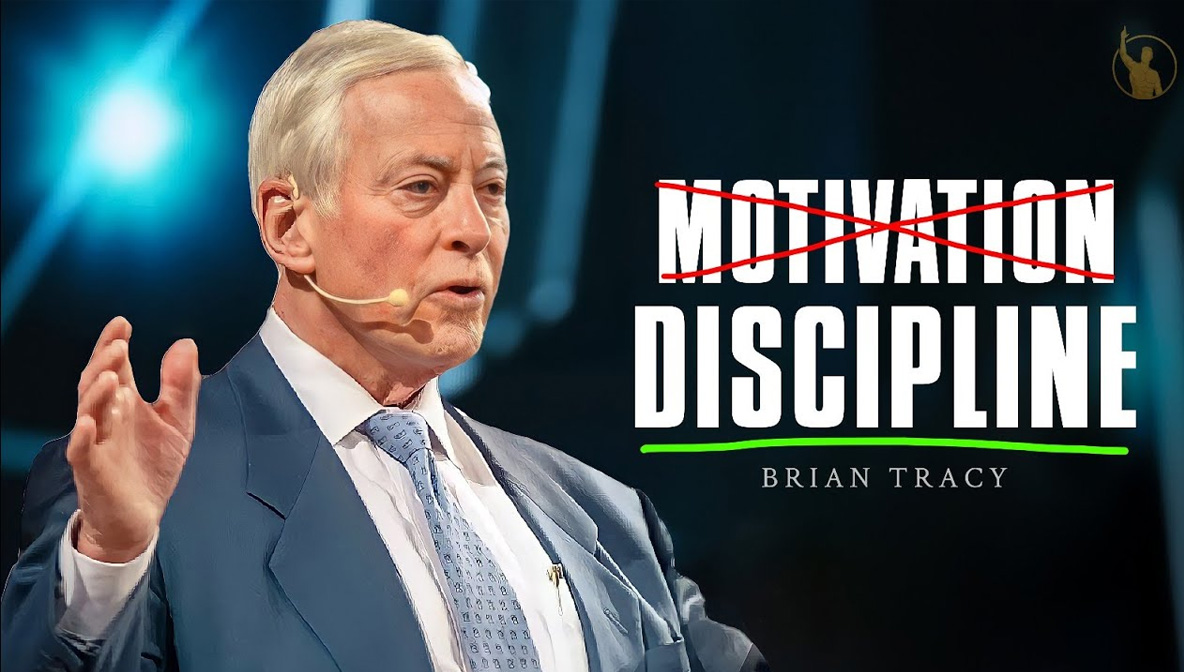

If you’ve ever set a New Year’s resolution, made a to-do list, or dreamed of a better career, you’ve walked a path that Brian Tracy has spent a lifetime mapping. He isn’t just a motivational speaker or a self-help author; he’s a master builder of personal and professional potential. While others talk about dreams, Tracy provides the blueprints, the tools, and the step-by-step instructions for turning ambition into reality.
In a world saturated with quick-fix gurus and overnight success stories, Tracy’s message stands as a testament to timeless principles: discipline, clarity, and relentless action. He is the voice of practical, no-nonsense personal development, offering strategies that feel less like esoteric secrets and more like a solid day’s work. His journey to becoming one of the world’s most respected authorities on success didn’t begin in a classroom or a corporate office; it began on construction sites, in ship engine rooms, and driving through the vast, empty stretches of the African Sahara. This is the story of how a high-school dropout with no prospects became the teacher to millions on how to achieve their goals.
Introduction: The Professor of Practical Success
Imagine a personal coach who has distilled 2,500 years of human wisdom—from the philosophies of Aristotle and Socrates to the modern principles of economics and psychology—into a set of actionable, understandable formulas for success. That is Brian Tracy in a nutshell. He is often described as the “trainer’s trainer,” the man other experts in his field study to refine their own craft.
His core philosophy is deceptively simple: You have within you, right now, everything you need to accomplish everything you truly want. The gap between where you are and where you want to be is not a matter of luck, talent, or privilege, but of learnable skills. Success, he argues, is not magic or mystery. It is a systematic process, much like baking a cake or building a house. If you follow the recipe, you will get the result.
Tracy’s work covers the entire spectrum of human achievement: sales, leadership, time management, public speaking, goal-setting, and personal wealth. He has authored over 80 books, some of which, like “Eat That Frog! 21 Great Ways to Stop Procrastinating and Get More Done in Less Time” and “No Excuses! The Power of Self-Discipline,” have become foundational texts in business and self-improvement.
But what gives his words such weight is the man behind them. Brian Tracy didn’t inherit his wisdom; he earned it through years of hard knocks, relentless curiosity, and a steadfast belief in his own potential. His credibility doesn’t come from a diploma; it comes from the dirt under his fingernails and the miles on his soul.
Early Life & Background: The School of Hard Knocks
Brian Tracy was born in Charlottetown, Prince Edward Island, Canada, in 1944. His early life was marked by what many would call disadvantage. He came from a family of modest means and his childhood was not easy. He was not a standout student and, by his own admission, lacked direction and focus.
After barely graduating from high school (a feat he has joked about, noting it was one of his first major accomplishments), he found himself without a clear path. He took a series of low-paying, labor-intensive jobs. He worked in construction, swinging a hammer under the hot sun. He toiled in sawmills, surrounded by the deafening roar of machinery. He worked on farms and in factories. These jobs weren’t stepping stones on a career ladder; they were a means of survival, a way to pay for food and rent.
The turning point, and perhaps the most defining chapter of his early life, came when he took a job as a deckhand on a Norwegian freighter. This wasn’t a luxury cruise; it was a working ship that traveled to some of the most remote and dangerous parts of the world. For eight years, Tracy circled the globe, visiting over 80 countries. He worked his way up from deckhand to a position in the engine room, and eventually, he was given the responsibility of driving jeeps and Land Rovers across long, unforgiving stretches of land while the ship was in port.
One of his most frequently shared anecdotes from this period involves a trek across the Sahara Desert. He was tasked with driving hundreds of miles from the port to a remote location. Alone in the vast, silent emptiness, with nothing but sand and sky for days on end, he was forced into a conversation with himself. He began to ask fundamental questions: “Why am I here?” “What do I want from my life?” “Why are some people more successful than others?”
He realized that the men he was working for, the ones who owned the companies and the ships, had started with nothing too. The only difference, he concluded, was what they knew and how they thought. In the middle of that desert, Brian Tracy made a pivotal decision: he would dedicate his life to learning the principles of success. He would become a student of achievement, and he would master those principles himself.
When his travels finally brought him to the United States, he arrived with little more than a suitcase and a burning determination to change his life. He started at the absolute bottom of the economic ladder, taking a job in straight-commission sales. It was a sink-or-swim environment, and for a while, he was sinking.
Career & Achievements: Building an Empire of the Mind
Tracy’s foray into sales was rocky. He struggled, faced constant rejection, and was on the verge of failure. But remembering his desert revelation, he decided to apply his new philosophy. He began to study. He asked the top performers in his company what they were doing differently. He read every book on sales and psychology he could find. He listened to audio programs in his car. He dedicated himself to becoming an expert in his field.
The results were dramatic. He went from struggling to pay his rent to becoming one of the top salespeople in his organization. He quickly moved into sales management, where he faced a new challenge: how to lead and motivate others. True to form, he immersed himself in the study of leadership, management, and effective thinking.
His success in turning around sales teams got him noticed. He was recruited by a large development corporation and was put in charge of a 95-million-dollar property development project. It was a massive responsibility for a man with no formal business education, but he succeeded by applying the same principles of focused learning and decisive action.
By the early 1980s, Tracy had a wealth of practical experience in sales, management, and entrepreneurship. He started his own consulting firm, Brian Tracy International. His initial goal was simple: to share the strategies that had worked for him with other businesses and individuals. He began giving seminars and talks, and his clear, systematic approach immediately resonated.
His career as an author and speaker exploded. He didn’t just have one big idea; he had a system of interconnected ideas that addressed every facet of success:
-
“Eat That Frog!” (2001): This book became a cultural phenomenon. The title is a metaphor for tackling your most important and dreaded task first thing in the morning. It’s a simple, powerful concept that has helped millions overcome procrastination. The phrase “Eat the frog” has entered the common business lexicon.
-
“The Psychology of Achievement” (1984): This audio program was a landmark in the self-help industry. It laid out his core philosophy in a comprehensive and accessible way, covering goal-setting, self-concept, and the master skill of self-discipline.
-
“No Excuses! The Power of Self-Discipline” (2010): In this book, Tracy argues that self-discipline is the cornerstone of all success. It is the quality that makes all other virtues possible, from courage to persistence to hard work.
-
“The 100 Absolutely Unbreakable Laws of Business Success” (2000): Here, Tracy codifies what he sees as the fundamental, immutable principles that govern success in the business world, much like laws of physics govern the natural world.
Over the decades, he has built Brian Tracy International into a global leadership and development company, offering seminars, coaching, and training materials in dozens of languages. He has consulted for more than 1,000 companies, including many Fortune 500 giants, and has spoken to over 5,000,000 people across the globe.
Personal Life: The Discipline Behind the Message
Brian Tracy’s personal life is a reflection of his professional teachings. He is famously disciplined and structured in his habits. He is an avid reader, consistently recommending that people read for at least an hour every day in their field. He is a proponent of clear goal-setting, and it’s reported that he still writes down his goals regularly.
He is married to Barbara Tracy, who is also deeply involved in his business. Together, they have four children. The family has been based in Solana Beach, California, for many years. In interviews, Tracy often speaks about the importance of family and maintaining a balance between professional ambition and personal relationships. He advocates for “thinking about what you really want” in all areas of life—career, family, health, finances—ensuring that success in one area doesn’t come at the expense of another.
Unlike some figures in the self-help world whose personal lives become tabloid fodder, Tracy has maintained a reputation of integrity and consistency. He lives the principles he teaches. This congruence between his message and his life is a significant source of his enduring credibility. He isn’t just selling a dream; he is a walking, talking example of the results his system can produce.
Legacy & Impact: The Ripple Effect of a Success Teacher
Quantifying Brian Tracy’s impact is like trying to measure the impact of a master carpenter; you have to look at the countless structures he helped build. His legacy is not a single invention or a corporate empire, but the cumulative success of the millions of individuals he has taught and inspired.
-
Democratizing Success Knowledge: Tracy took complex ideas from business theory, psychology, and philosophy and made them accessible to the average person. A salesperson, a small business owner, or a young graduate can pick up one of his books and immediately find actionable advice. He brought high-level success strategies down to Main Street.
-
The Framing of “The Mechanics” of Success: He moved self-help away from vague affirmations and into the realm of practical mechanics. His work is filled with lists, steps, formulas, and processes. This “how-to” approach gave people a sense of control and a clear path to follow.
-
Influencing a Generation of Coaches and Speakers: Many of today’s top leadership experts, sales trainers, and life coaches credit Tracy as a primary influence. His systematic approach to the field has become a standard that many others emulate.
-
The Vocabulary of Modern Productivity: Phrases like “Eat That Frog,” “Idea Muscle,” and concepts like the “Law of Three” (identifying your three most important tasks) have become part of the shared language of productivity and business.
His legacy is evident in every sales team that uses his techniques to close more deals, in every entrepreneur who applies his business laws to grow their company, and in every individual who, after reading his work, finally sat down and wrote out their goals with a clear, actionable plan. He has created a ripple effect of increased performance, ambition, and personal responsibility that has spread across the globe.
What We Learn: The Enduring Lessons from Brian Tracy
The true value of Brian Tracy’s work lies in its immediate applicability. Here are the core, actionable lessons anyone can take from his life and teachings:
-
You Are Where You Are Because of What You Know (and Don’t Know): Tracy teaches that your income, your career, and your life situation are directly related to your knowledge and skills. The good news is that knowledge and skills can be learned. The solution to any problem is to find and apply new knowledge.
-
Take 100% Responsibility for Your Life: This is the foundational principle. Stop blaming the economy, your boss, your upbringing, or your luck. The moment you accept complete responsibility for everything you are and everything you will be, you claim the power to change it.
-
Clarity is Critical: You must decide exactly what you want. Vague desires yield vague results. Tracy is a huge proponent of written goals. He famously advises people to write down ten goals, as if one year has passed and they have all been achieved. This act of writing forces clarity and makes goals tangible.
-
“Eat That Frog!” Every Morning: Tackle your biggest, most important, and most challenging task first. Do it first thing in the morning, without delay. Conquering this single task sets a positive tone for the entire day and creates tremendous momentum.
-
Become a Lifelong Learner: Your mind is your most valuable asset. Invest in it continuously. Read books, listen to audio programs, take courses. Dedicate at least 30-60 minutes per day to reading in your field. As Tracy says, “One good idea, applied at the right time, can change the course of your life.”
-
Success is a Journey, Not a Destination: Tracy emphasizes that success is not a single event, but a process of continuous improvement. It’s about becoming a little better each day—reading a few more pages, making one more sales call, learning one new skill. The cumulative effect of these small disciplines is staggering over time.
Brian Tracy’s story is the ultimate American Dream, even though he started in Canada. It’s a dream not of lottery wins or viral fame, but of quiet, consistent, determined self-construction. He is the architect who provides the plans, but he reminds us that we are the builders. We must pick up the tools, lay the bricks, and do the work. In a world searching for shortcuts, his enduring message is a powerful, grounding, and ultimately liberating call to action: There are no excuses. The power to build the life you want is in your hands, starting now.