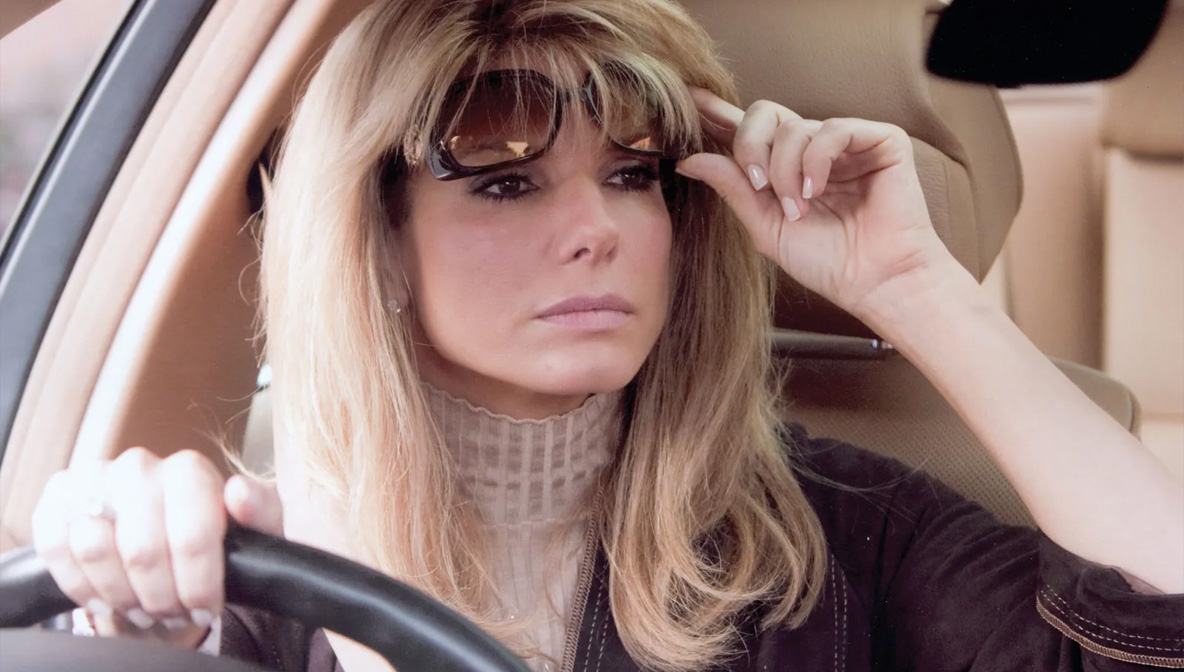

In the fickle, fast-changing landscape of Hollywood, where stars rise and fall with the opening weekend, Sandra Bullock has achieved something almost mythical: enduring, universal likability. For over three decades, she has been a constant, comforting, and wildly successful presence in our cinemas. She is the girl-next-door who just happens to be one of the most powerful actresses in the world. But to label her simply as “America’s Sweetheart” is to underestimate the sheer force of will, strategic genius, and profound resilience that defines her.
Her story is not one of a meteoric, untouchable rise. It is a story of near-misses, of bombs that could have ended her career, of personal betrayals that played out on the world stage, and of a quiet, steely determination to do things her way. She is the actress who mastered both slapstick comedy and heart-wrenching drama, the producer who created her own opportunities when the right roles didn’t come, and the mother who built a private world of love and normalcy for her children far from the Hollywood glare. Sandra Bullock didn’t just become a movie star; she built a kingdom on her own terms, proving that you can be both immensely powerful and genuinely kind.
Early Life & Background: A Transatlantic Childhood
Sandra Annette Bullock was born on July 26, 1964, in Arlington, Virginia, but her childhood was anything but typically American. Her mother, Helga Meyer, was a German opera singer from Nuremberg. Her father, John W. Bullock, was an American voice coach and former Army employee from Birmingham, Alabama. This unique blend of Southern charm and European discipline would become a cornerstone of her identity.
Music and performance were the family business. Sandra and her younger sister, Gesine, spent much of their childhood traveling around Europe with their mother, who performed in concert halls across the continent. They were raised bilingually, speaking German at home and English elsewhere. This transatlantic upbringing gave Sandra a worldly perspective and an adaptability that would later serve her well in a global industry.
As a teenager, the family settled back in the Washington D.C. area, where she attended Washington-Lee High School. She was a spirited and outgoing student, a cheerleader, and a member of the choir. But she also felt like an outsider, the girl with the strange, European background. She learned to use her charm and humor to fit in, a skill that would later become her professional trademark. After high school, she attended East Carolina University in North Carolina, where she graduated with a Bachelor of Fine Arts in Drama in 1987. Unlike many aspiring actors, she had a practical backup plan, also studying secretarial work, a nod to her pragmatic nature.
Upon graduation, she moved to New York City with her dog and $500 to her name. She waited tables, tended bar, and took acting classes, landing off-Broadway roles and a series of small, forgettable parts in low-budget films. Her big break, she thought, had arrived when she was cast in a leading role in the NBC sci-fi series Bionic Showdown: The Six Million Dollar Man and the Bionic Woman in 1989. The show was a flop, but it got her to Los Angeles. The real breakthrough was still a few years away, waiting in the form of a runaway bus.
Career & Achievements: The Slow Burn to Superstardom
Bullock’s career is a masterclass in patience and strategic choices. It unfolded not with a single explosion, but with a steady, building fire.
The Breakthrough: Speed (1994)
After small roles in films like Love Potion No. 9 and The Vanishing, Sandra Bullock was cast as Annie Porter in the 1994 action-thriller Speed. She wasn’t the first choice, but she was the right one. As the plucky, resourceful passenger forced to drive a bomb-rigged bus, she was the perfect foil to Keanu Reeves’ stoic hero. She was relatable, funny, and fiercely capable, without being a damsel in distress. The film was a summer blockbuster, and Bullock, with her girl-next-door charm and everywoman appeal, became an instant movie star. Hollywood had found its new sweetheart.
The Consolidation: Rom-Com Queen (1995-2000)
Capitalizing on her newfound fame, she deftly navigated the next phase of her career by owning the romantic comedy genre. She starred in a string of massive hits that defined the 90s: While You Were Sleeping (1995), The Net (1995), A Time to Kill (1996), and Hope Floats (1998). She had a unique ability to play characters who were both clumsy and graceful, heartbroken and hopeful, strong and vulnerable. Audiences didn’t just like her; they felt like they knew her. She was their friend on screen.
The Setbacks and the Reinvention (2000-2009)
The early 2000s brought a series of commercial and critical disappointments like Gun Shy and Murder by Numbers. The low point was arguably Speed 2: Cruise Control (1997), a critical and commercial disaster she has openly called a career mistake. Instead of fading away, she did what she does best: she adapted.
She took a step back, started her own production company, Fortis Films, and began to produce projects that gave her more creative control. This led to the Miss Congeniality films, which she produced and starred in, blending her comedic chops with action-heroics. She also began to stretch her dramatic muscles in indie films like Infamous (2006) and Crash (2004), the latter winning the Academy Award for Best Picture.
The Peak: Oscar Winner and Box Office Powerhouse (2009-Present)
The year 2009 was a landmark. She starred in two wildly different films that showcased her incredible range. First, she returned to her rom-com roots with The Proposal, a massive box-office hit that proved her lasting appeal. Then, she delivered the performance of her career in The Blind Side. As Leigh Anne Tuohy, the fierce, Southern matriarch who takes in a homeless teenager, she was powerful, nuanced, and utterly convincing. The role earned her the Academy Award for Best Actress, the Golden Globe, and the Screen Actors Guild Award. At 45, she had reached the pinnacle of her profession, transforming from America’s Sweetheart to an Oscar-winning dramatic actress.
She continued this streak with a mix of commercial hits (Gravity, The Heat, Ocean’s 8) and acclaimed dramatic turns (Extremely Loud & Incredibly Close). With Gravity (2013), she carried almost the entire film alone on screen, delivering a physically and emotionally grueling performance that earned her another Oscar nomination and proved she could anchor a high-concept, technical blockbuster. She had seamlessly transitioned into a new era, not just as a star, but as a bona fide legend.
Personal Life: The Sanctuary of Family
Sandra Bullock’s personal life has been a study in seeking normalcy amidst extraordinary fame. She has been notoriously private, fiercely protecting her family from the media circus.
Her romantic life has been the subject of intense public scrutiny. She had a long-term relationship with actor Tate Donovan in the late 1990s and was married to motorcycle builder and TV personality Jesse James from 2005 to 2010. The marriage to James ended in a very public and painful divorce after his multiple infidelities were exposed. The betrayal played out on tabloid covers worldwide, a humiliating period that she navigated with remarkable grace and silence, never engaging in a public war of words.
It was during this personal turmoil that she found her true purpose: motherhood. In 2010, in the midst of the divorce, she finalized the adoption of a baby boy, Louis Bardo Bullock. She revealed the news after winning her Oscar, stating that the award meant nothing compared to the joy of becoming a mother. In 2015, she adopted a second child, a daughter named Laila. Her children became her center of gravity. She moved them to Austin, Texas, to escape the Hollywood bubble and give them a grounded, private upbringing.
Friends and colleagues consistently describe her as one of the most genuine, loyal, and down-to-earth people in the industry. She is known for her practical jokes on set, her fierce loyalty to her friends, and her immense generosity, often making large, anonymous donations to disaster relief efforts. Her life is a testament to her belief that true happiness is found not in fame, but in the quiet, loving moments with family.
Legacy & Impact: The Bullock Blueprint
Sandra Bullock’s impact on Hollywood and popular culture is both profound and subtly revolutionary.
-
The Relatable A-Lister: She redefined what a female movie star could look and act like. She wasn’t untouchably glamorous; she was accessible. Her characters made mistakes, were awkward, and struggled with real-world problems. This relatability built a bridge of trust with audiences that has lasted for decades.
-
A Producer with Power: By founding Fortis Films, she took control of her career narrative long before it was a common practice for actresses. She created vehicles for herself and other women, ensuring that she would never be at the mercy of a fickle industry. She is a pioneer of the actor-producer model that is now essential for career longevity.
-
Longevity in a Youth-Obsessed Industry: Her career has gracefully spanned three decades. She achieved her greatest critical and commercial success in her 40s and 50s, smashing the ageist myth that an actress’s career declines after 40. She proved that talent, intelligence, and audience connection are ageless.
-
Master of Multiple Genres: Few actors have her range. She is one of the few performers to achieve top-tier success in action (Speed, Gravity), romantic comedy (The Proposal, While You Were Sleeping), and drama (The Blind Side, Crash). This versatility has made her one of the most bankable and respected stars in the world.
-
A Modern Family: Her journey to motherhood through adoption, as a single woman in her 40s, has been an inspiration to many. She has shown that family is defined by love, not biology, and has normalized a path to parenthood that resonates with a modern audience.
Final Thoughts, and What We Learn
Sandra Bullock’s story is not a fairy tale; it’s a blueprint. It’s a guide for how to build a resilient, meaningful, and joyful life on your own terms, both personally and professionally.
What We Learn from Her Life:
-
Resilience is Your Greatest Asset: Bullock faced public humiliation, box-office bombs, and personal heartbreak. Each time, she retreated, recalibrated, and came back stronger. She teaches us that it’s not about avoiding failure, but about how you rebuild after it.
-
Create Your Own Opportunities: She didn’t wait for someone to give her the perfect role. She built her own company and produced it herself. This is a powerful lesson in taking charge of your own destiny, in any field.
-
Authenticity is a Superpower: In a world of curated images, her enduring appeal is rooted in a perceived authenticity. People sense a real person behind the movie star. She shows that being genuinely yourself is the most compelling brand of all.
-
Define Your Own Happiness: She found her greatest joy not in awards or box-office numbers, but in the private, messy, beautiful reality of motherhood. Her life reminds us to identify what truly matters to us and to protect it fiercely.
-
Kindness and Power Can Coexist: She is one of the most powerful women in Hollywood, yet she is consistently described as one of the kindest. She dismantles the toxic idea that success requires ruthlessness. You can be a fierce businesswoman and a genuinely good person.
Sandra Bullock is more than a movie star. She is a strategist, a survivor, and a savior of her own narrative. She is the girl-next-door who took on Hollywood and won, not by playing their game, but by inventing a new one. She taught us to laugh at ourselves, to cry with strangers, and to always, always get back on the bus. Her legacy is a lasting reminder that the sweetest success is the one you build with your own two hands, a strong heart, and an unshakeable belief in what truly matters.