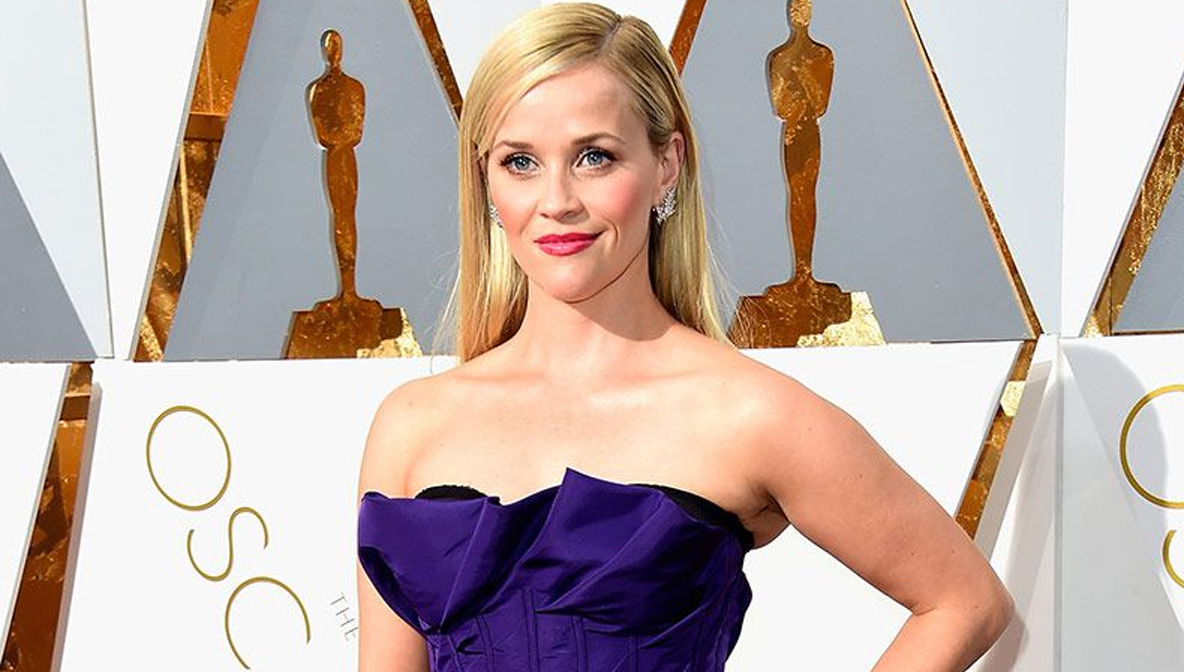

In the sprawling, sun-bleached landscape of Hollywood, where careers are often built on shifting sand and fame is a fickle currency, Reese Witherspoon stands as an oak tree. She is not just an actress; she is an architect. She didn’t just wait for roles to be offered; she built the sets, wrote the blueprints, and created the opportunities, not only for herself but for an entire generation of women in front of and behind the camera. From the fiercely ambitious Tracy Flick in Election to the legally-minded Elle Woods in Legally Blonde and the gritty Cheryl Strayed in Wild, her career is a masterclass in strategic reinvention. But her story is far grander than her filmography. It is the story of a Southern girl who harnessed her intellect, her relentless drive, and a profound understanding of a neglected audience to become a media mogul, a champion for female-driven stories, and one of the most powerful forces in the entertainment industry. This is the biography of a woman who looked at the system, decided it was broken, and calmly, charmingly, set about fixing it herself.
Early Life & Background: The Making of a Southern Overachiever
Laura Jeanne Reese Witherspoon was born on March 22, 1976, in New Orleans, Louisiana. Her story, however, is deeply rooted in the genteel, yet firm, soil of Nashville, Tennessee, where she was primarily raised. Her family was one of education and medicine. Her father, John Draper Witherspoon, was a military surgeon, and her mother, Betty, held a Ph.D. in nursing and became a professor. From the very beginning, the expectation was one of achievement and intellectual curiosity.
Reese was a classic overachiever, a trait encouraged by her parents. She was reading by age five and was a straight-A student. At just seven years old, she began modeling and appearing in local television commercials, winning her first commercial contest for a local florist. This early exposure to performance was paired with a rigorous academic focus. She attended the prestigious, all-girls Harpeth Hall School, where she was a cheerleader, a debutante, and, unsurprisingly, the student body president. The echoes of Tracy Flick are unmistakable, but Witherspoon’s ambition was always channeled with a Southern grace and a sharp intellect.
Her childhood was not all polish and poise. When she was seven, her parents separated, and she moved with her mother and older brother to Nashville. This experience instilled in her a sense of resilience and a deep reliance on the women in her family. Her grandmother, a figure she often cites as a major influence, gave her a piece of advice that would become a personal mantra: “You have to be a lady, and being a lady means being independent.” This idea—that femininity and power were not mutually exclusive but inherently linked—would become the central thesis of her career.
She entered Stanford University as an English Literature major, fully intending to become a doctor. But the pull of acting was too strong. After her freshman year, she left Stanford to pursue acting full-time, a decision her academically-minded family initially viewed with skepticism. Yet, even in this, she was strategic. This wasn’t a flight of fancy; it was a calculated pivot by a young woman who had already mapped out her path to success.
Career & Achievements: From Ingenue to Mogul
Reese Witherspoon’s career is a fascinating study in phases, each one building upon the last with deliberate precision.
The Early Years and Breakthrough (1991-2000)
Her film debut was in The Man in the Moon (1991), a critically acclaimed coming-of-age story where, at 14, she delivered a performance of remarkable emotional depth. She continued to work steadily throughout her teens in films like Jack the Bear and Fear, but it was the 1996 dark comedy Freeway that showcased her ability to subvert the sweet, all-American image she naturally projected.
The turning point, the role that truly announced her as a formidable talent, was Election (1999). As Tracy Flick, the unnervingly determined high school student, Witherspoon was a force of nature. She took a character who could have been a caricature and infused her with a terrifying, relatable humanity. Her performance was a razor-sharp satire of unchecked ambition, earning her critical raves and her first Golden Globe nomination. It proved she was more than a pretty face; she was a serious actress with impeccable comic timing and dramatic chops.
The Movie Star and the Icon (2001-2010)
If Election made her a critics’ darling, Legally Blonde (2001) made her a global superstar. The role of Elle Woods was a risk. On the surface, it was a fluffy comedy about a sorority girl going to Harvard Law School. But Witherspoon saw something deeper. She saw an opportunity to champion a woman who was underestimated because of her appearance and femininity, and who used her unique strengths to triumph. She fought for the role and produced the film, a early sign of her producer instincts. The film was a box-office smash, and Elle Woods became an unlikely but enduring feminist icon, teaching a generation that you can be both smart and like pink.
She followed this with a string of successful comedies like Sweet Home Alabama (2002), cementing her status as America’s sweetheart. But she never abandoned her dramatic roots. In 2005, she delivered the performance of her career as June Carter Cash in Walk the Line. To prepare, she spent months learning to sing and play the autoharp, and she captured June’s fierce spirit, wit, and profound strength with breathtaking authenticity. The role earned her the Academy Award, BAFTA, Golden Globe, and SAG Award for Best Actress. At 29, she had reached the pinnacle of her profession.
The Producer and the Mogul (2010-Present)
This is where the Reese Witherspoon story diverges from a typical Hollywood narrative. After winning her Oscar, she found the roles for women in her age bracket becoming fewer, less interesting, and less complex. Instead of accepting this, she created her own solution.
In 2012, she founded Pacific Standard, a production company with the explicit mission of developing material for women. Its first two films, Gone Girl (2014) and Wild (2014), were seismic events. Gone Girl was a cultural phenomenon, and Wild, which she also produced and starred in, earned her a second Oscar nomination. She had proven there was a massive, hungry audience for complex, adult stories about women.
Not resting there, she evolved Pacific Standard into Hello Sunshine in 2016. Hello Sunshine wasn’t just a production company; it was a media brand with a clear, powerful mission: “to change the narrative for women.” Through Hello Sunshine, she has become a dominant force in every form of media:
-
Film: Producing successful book adaptations like Where the Crawdads Sing (2022).
-
Television: Creating and starring in the Emmy-winning HBO hits Big Little Lies and The Morning Show, both of which feature sprawling, complex female ensembles.
-
Books: Running a wildly successful book club (Reese’s Book Club) that has become a kingmaker in the publishing industry, instantly catapulting selected books to bestseller status.
-
Digital: Selling Hello Sunshine for a reported $900 million in 2021, a staggering valuation that underscored the immense economic power of the audience she had cultivated.
Personal Life: The Real Woman Behind the Brand
Witherspoon’s personal life has been lived, for the most part, with a Southern sense of decorum, though it has not been without its very public challenges. She married actor Ryan Phillippe in 1999, after meeting him on her 21st birthday. They seemed like the perfect Hollywood golden couple, with two children, Ava and Deacon. However, their marriage ended in a highly publicized divorce in 2007, citing “irreconcilable differences.”
She later married talent agent Jim Toth in 2011, with whom she has a son, Tennessee. Their relationship was often portrayed as a stable, grounded partnership. However, in a move that surprised many, they announced their separation in 2023, demonstrating that even the most curated lives face personal transitions.
Witherspoon has been open about the pressures of balancing a colossal career with motherhood. She often speaks about the “mental load” that women carry and the importance of a supportive partnership. In 2021, she faced a minor public relations setback when a video of her and Toth being pulled over for a DUI went viral, showing her struggling with the police. She publicly apologized, acknowledging her behavior was unacceptable. It was a rare, unscripted moment that humanized the otherwise flawless mogul, a reminder of the person behind the powerful brand.
Legacy & Impact: The Ripple Effect of Hello Sunshine
It is difficult to overstate Reese Witherspoon’s impact on the entertainment industry and popular culture. Her legacy is multifaceted and still growing.
-
The Economic Proof: Her most significant contribution is proving, with billions of dollars in revenue, that female-driven stories are not a “niche” market. They are a dominant, powerful, and lucrative economic force. She didn’t just ask for a seat at the table; she built a bigger, more profitable table and invited everyone else to sit down.
-
The Power of the Producer: She redefined what it means to be a powerful woman in Hollywood. It’s no longer just about winning awards for acting; it’s about controlling the means of production. She inspired a generation of A-list actresses—from Margot Robbie to Nicole Kidman—to launch their own production companies and take control of their creative destinies.
-
Championing Authors and Readers: Reese’s Book Club has had a transformative effect on the publishing industry. By consistently selecting books by women, about women, she has created a powerful ecosystem that connects authors directly to a massive, engaged audience, demonstrating her Midas touch extends far beyond the screen.
-
Expanding the Narrative for Women: Through her work, she has insisted on showing women as they truly are: complex, messy, ambitious, sexual, funny, flawed, and powerful. She has given audiences of all ages characters they can see themselves in, from the traumatized mothers of Big Little Lies to the ambitious journalists of The Morning Show.
-
The Modern Southern Woman: She has also reshaped the perception of the Southern woman, moving it beyond stereotypes of docility or ignorance. She embodies a new archetype: the ambitious, intelligent, gracious, and fiercely capable Southern woman who can command a boardroom without losing her accent or her manners.
Final Thoughts, and What We Learn
Reese Witherspoon’s story is a masterclass in modern ambition. It is a blueprint for how to build a lasting, impactful career on your own terms in the 21st century.
What We Learn from Her Life:
-
Ambition is Not a Dirty Word: Witherspoon never apologized for her drive. She embraced it, channeled it, and turned it into her greatest asset. She teaches us that wanting more—more responsibility, more creative control, more money, more impact—is a valid and powerful goal.
-
If the Door is Closed, Build Your Own House: When she hit a career ceiling that countless other actresses have faced, she didn’t wait for someone to fix it. She used her resources, her influence, and her intelligence to create a new system entirely. This is the ultimate lesson in proactive problem-solving.
-
Know Your Audience and Serve Them: Witherspoon’s genius lies in her deep, empathetic understanding of a vast, underserved audience—women. She didn’t just make content she liked; she built an empire by authentically serving the stories and conversations her audience craved.
-
Elegance and Power are Compatible: From her Southern upbringing, she learned that you can be polite, well-spoken, and gracious while also being a tough, uncompromising negotiator and a visionary leader. She dismantles the false dichotomy that powerful women must be abrasive.
-
Your Story is Your Greatest Asset: Witherspoon is a master storyteller, not just on screen, but of her own life and brand. She has carefully crafted a narrative of smart ambition, Southern charm, and female empowerment that is authentic, marketable, and inspiring.
Reese Witherspoon is more than an actress who became a mogul. She is a cultural force who recognized a void in the storytelling landscape and filled it with such resounding success that she permanently altered the terrain. She is the architect of her own story, and in the process, she has given millions of women the blueprints to start building their own.