
Introduction
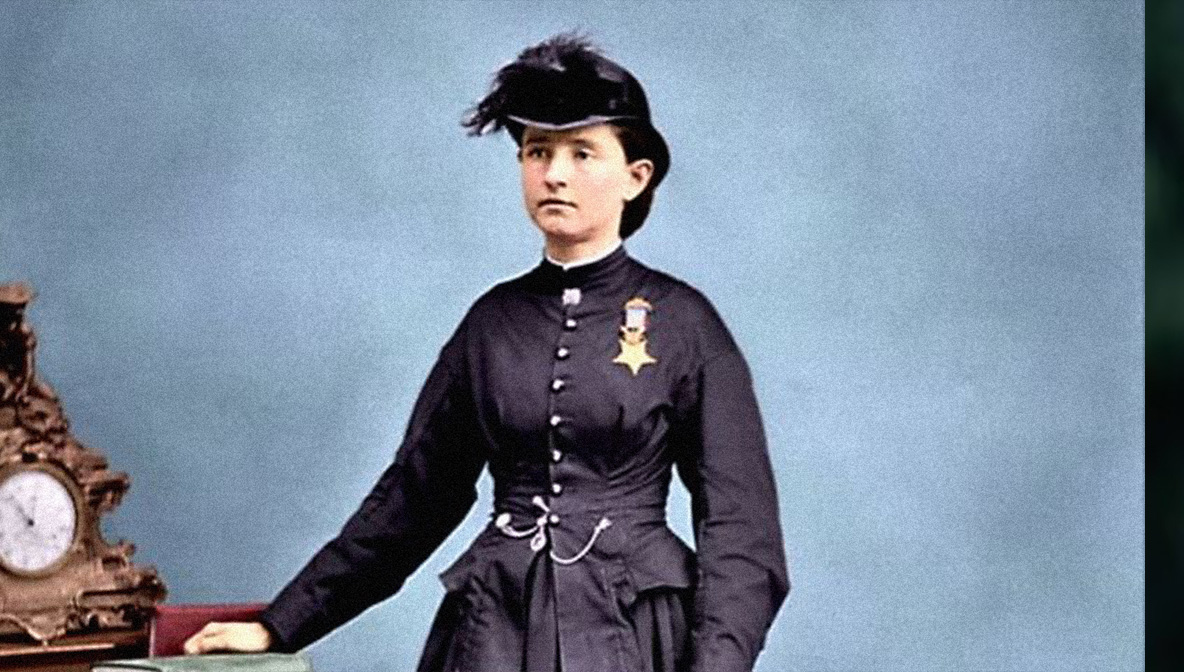
Mary Edwards Walker (1832–1919) was an American abolitionist, prohibitionist, prisoner of war, surgeon, and women’s rights advocate. She remains the only woman in U.S. history to receive the Medal of Honor, the nation’s highest military decoration for valor. A pioneering figure in medicine and gender equality, Walker defied societal norms by wearing men’s clothing, advocating for dress reform, and challenging legal and cultural barriers against women in medicine and the military.
Early Life and Education
Mary Edwards Walker was born on November 26, 1832, in Oswego, New York, to progressive parents who encouraged education and independent thinking. Her father, Alvah Walker, was a farmer and self-taught doctor who believed in equal education for his daughters.
Walker attended Falley Seminary in Fulton, New York, and later graduated from Syracuse Medical College in 1855, becoming one of the few female physicians in the country at the time. She married fellow medical student Albert Miller in 1856, but their marriage was unconventional—she refused to take his last name and wore a short skirt with trousers, a controversial choice at the time. The couple divorced in 1869 due to Miller’s infidelity.
Civil War Service and Medal of Honor
When the Civil War broke out in 1861, Walker volunteered as a surgeon but was initially denied a commission because she was a woman. Undeterred, she worked as an unpaid volunteer before being hired by the Union Army as a civilian surgeon in 1863.
In 1864, she was captured by Confederate forces while treating civilians and was held as a prisoner of war for four months before being exchanged in a prisoner swap. After her release, she was appointed as an assistant surgeon in the Ohio 52nd Infantry, making her the first female U.S. Army surgeon.
In recognition of her bravery and service, President Andrew Johnson awarded her the Medal of Honor on November 11, 1865—the only woman to ever receive the honor. However, in 1917, her medal (along with 910 others) was rescinded when the government revised eligibility criteria to include only “actual combat with the enemy.” Walker refused to return the medal and wore it proudly until her death. In 1977, President Jimmy Carter posthumously restored her award.
Women’s Rights and Dress Reform Advocacy
After the war, Walker became a prominent women’s rights activist, working alongside leaders like Susan B. Anthony and Elizabeth Cady Stanton. She campaigned for suffrage, equal pay, and dress reform, famously wearing trousers, coats, and top hats—a style that often led to her arrest for “impersonating a man.”
She wrote and lectured extensively on women’s rights, arguing that restrictive clothing like corsets harmed women’s health. Her 1871 book, Hit, criticized societal norms and advocated for gender equality.
Later Years and Death
Despite her contributions, Walker faced financial struggles and public ridicule in her later years. She continued lecturing and writing but lived in relative obscurity. She died on February 21, 1919, at the age of 86, just before the ratification of the 19th Amendment granting women the right to vote.
Final Thoughts
Mary Edwards Walker was a fearless trailblazer who shattered gender barriers in medicine, the military, and society. Her unwavering commitment to justice, equality, and personal freedom made her a symbol of resistance against oppression. Though often overlooked in history, her legacy endures as a testament to courage and perseverance.
Walker’s life reminds us that progress often comes from those who dare to challenge the status quo—no matter the cost. Her restored Medal of Honor stands as a lasting tribute to her extraordinary contributions to America.