
Introduction
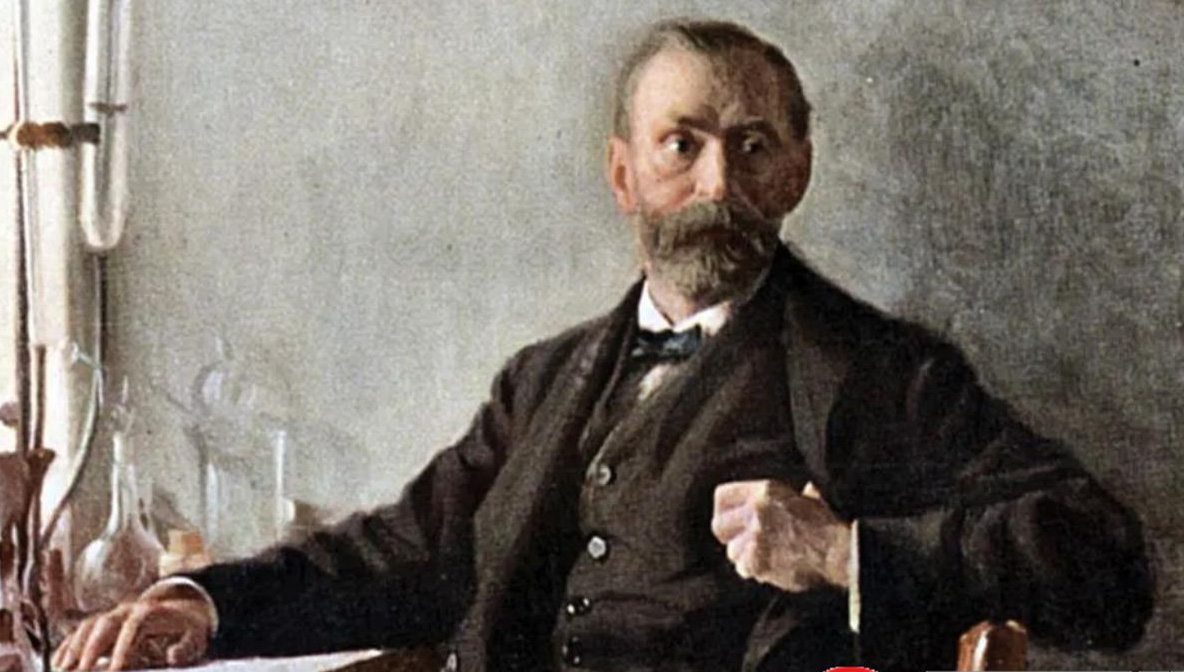
Alfred Nobel (1833–1896) was a Swedish chemist, engineer, inventor, and philanthropist best known for inventing dynamite and establishing the Nobel Prizes. A man of contradictions, he amassed a fortune from explosives but later dedicated his wealth to honoring peace, science, and literature. His life was marked by brilliance, tragedy, and an enduring legacy that continues to shape the world.
Timeline of Alfred Nobel’s Life
1833: Birth & Early Years
-
October 21, 1833: Born in Stockholm, Sweden, to Immanuel Nobel (an engineer) and Andriette Nobel.
-
1837: Family moves to Russia after his father’s business fails in Sweden.
1842–1850: Education & Early Interests
-
Studied chemistry, physics, and languages (became fluent in Swedish, Russian, French, English, and German).
-
Developed a fascination with explosives, influenced by his father’s work on naval mines.
1850s: Travel & Research
-
Worked in the U.S. under John Ericsson (designer of the USS Monitor).
-
Conducted experiments with nitroglycerin, a highly unstable explosive.
1863: Invention of the Blasting Cap
-
Patented a detonator to control nitroglycerin explosions, improving mining and construction safety.
1864: Tragedy Strikes
-
Nobel’s younger brother, Emil, died in a nitroglycerin explosion in their family lab.
-
Swedish authorities banned nitroglycerin experiments within Stockholm, forcing Nobel to move tests to a barge on a lake.
1867: Dynamite Revolution
-
Patented dynamite, a stabilized form of nitroglycerin mixed with kieselguhr (diatomaceous earth).
-
Marketed as “Nobel’s Safety Powder,” it transformed construction, mining, and warfare.
1875: Gelignite & Further Inventions
-
Invented gelignite, a more stable and powerful explosive.
-
Held 355 patents by the end of his life, including artificial silk and synthetic rubber.
1888: The Premature Obituary
-
A French newspaper mistakenly published his obituary titled: “The Merchant of Death is Dead.”
-
Shocked by being remembered as a “destroyer of lives,” Nobel reconsidered his legacy.
1895: Creation of the Nobel Prizes
-
Signed his last will, dedicating 94% of his fortune (about $265 million today) to establish the Nobel Prizes in:
-
Physics
-
Chemistry
-
Medicine
-
Peace
-
1896: Death & Legacy
-
December 10, 1896: Died of a stroke in San Remo, Italy.
-
The first Nobel Prizes were awarded in 1901, five years after his death.
10 Lesser-Known Facts
-
Nobel never married; his closest relationship was with Bertha von Suttner, a peace activist.
-
He composed poetry and drama (one play, Nemesis, was banned for blasphemy).
-
His factories produced ballistite, a smokeless gunpowder that led to legal battles.
-
The Nobel Peace Prize is awarded in Oslo, while other prizes are given in Stockholm.
-
He suffered chronic health issues from handling nitroglycerin (migraines, depression).
-
The Nobel Foundation was nearly bankrupt by 1946 due to Swedish taxes.
-
Three leaders have won both Nobel Prizes and Ig Nobel Prizes (parody awards).
-
Mahatma Gandhi was nominated five times but never won the Peace Prize.
-
The Nobel Medal contains 18K gold and is handcrafted in Sweden.
-
In 1968, Sweden’s central bank added the Nobel Memorial Prize in Economics.
Discussion Questions
-
Should Nobel have foreseen dynamite’s military applications?
-
How might his legacy differ if the mistaken obituary never appeared?
-
Are the Nobel Prizes still fulfilling their original purpose today?
Final Thoughts
Alfred Nobel’s life was a paradox—a man who profited from destruction but ultimately championed progress. Though remembered for dynamite, his greatest invention was the Nobel Prize, ensuring that wealth from explosives would fund human advancement. His story is a reminder that legacy is not what we create, but what we choose to honor.