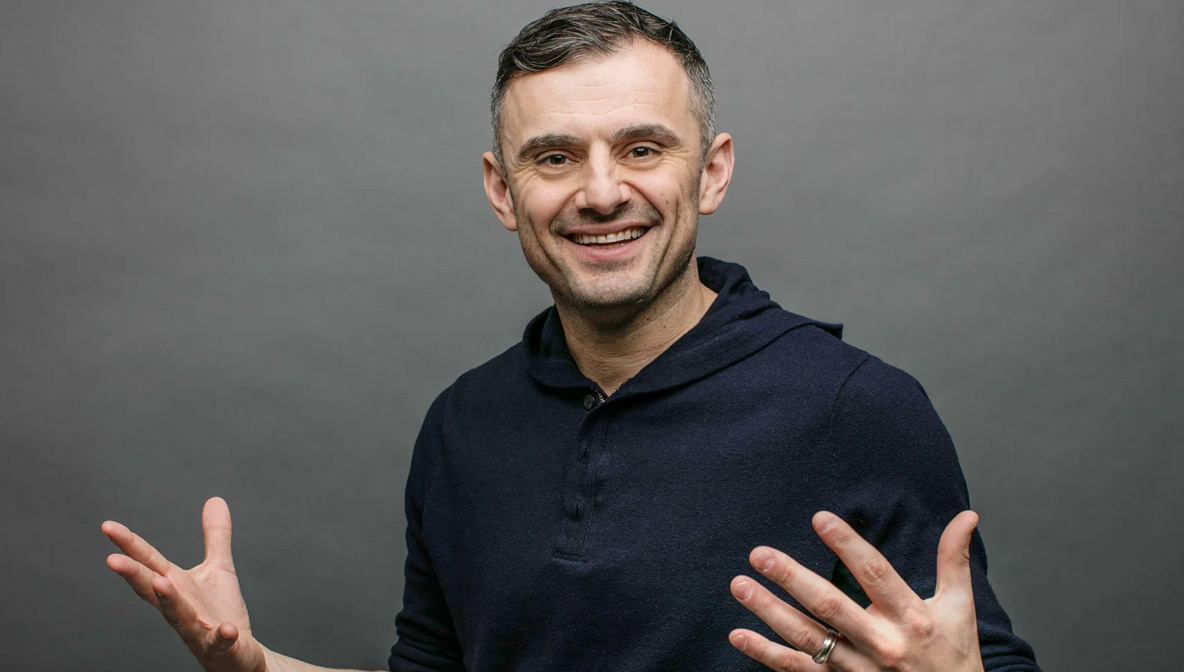

If you’ve spent more than five minutes on the internet, you’ve likely encountered a rapid-fire, expletive-laced monologue about hustle, self-awareness, or the untapped potential of TikTok. The man behind the message is Gary Vaynerchuk, known to the world as Gary Vee. He isn’t just a social media personality or a marketing guru. He is a human sparkplug, a business savant with a preternatural ability to see the cultural and commercial future, and the modern-day prophet of entrepreneurial hustle.
In a world of polished, corporate-branded influencers, Gary Vee is a shock to the system. He is brutally honest, relentlessly energetic, and preaches a gospel of self-awareness, patience, and kindness, all while telling you to “stop with the bullshit” and execute. His story isn’t one of a Silicon Valley wunderkind; it’s a story of an immigrant kid who took his family’s local liquor store and, by understanding the internet before anyone else, turned it into a multi-million dollar empire, launching himself into the stratosphere as one of the most forward-thinking entrepreneurs of our time. This is the story of how a boy from Soviet Belarus became Gary Vee.
Introduction: The Emperor of Attention
Before “influencer” was a job title, before every brand had a “social media strategy,” there was Gary Vee, yelling into a video camera about wine. He is the ultimate internet native, a businessman who understood that the currency of the 21st century isn’t money—it’s attention.
Gary’s genius lies in his ability to read the “digital room.” He saw the potential of Google AdWords when it was just a curiosity. He launched a video blog (“Wine Library TV”) on YouTube when it was a nascent platform for cat videos. He championed Facebook and Instagram for business as they emerged. He was screaming about TikTok’s potential when most marketers saw it as a silly dancing app for teens. His predictions often seem like clairvoyance, but he insists it’s simply pattern recognition and a deep understanding of human psychology.
What makes Gary Vee so compelling, and often controversial, is his delivery. He is the antithesis of the calm, meditative self-help guru. He is a whirlwind of energy, profanity, and blunt truths. He doesn’t coddle. He challenges. He calls out excuses, procrastination, and the “lottery ticket” mentality that hopes for overnight success. His mantra, repeated like a drumbeat, is “document, don’t create.” He urges people to share their real, messy journey to success, not just the polished highlight reel.
But beneath the aggressive exterior is a surprisingly nuanced philosophy centered on gratitude, kindness, and self-awareness. He is a complex cocktail of street-smart hustle and emotional intelligence, and he has built a vast, loyal army of followers—the “VaynerNation”—by speaking a language of raw, unfiltered truth that resonates deeply in an age of curated perfection.
Early Life & Background: The Soviet Hustle
Gary Vaynerchuk was born Gennady Vaynerchuk on November 14, 1975, in Babruysk, Soviet Belarus (now Belarus). His early childhood was defined by the harsh realities of the Soviet Union. He lived in a small apartment with his parents, Sasha and Tamara, and his grandmother, and his family was Jewish in a systemically anti-Semitic state. The experience was formative, instilling in him a deep-seated drive and a profound appreciation for the opportunity that America represented.
In 1978, his father managed to emigrate to the United States, settling in Queens, New York. The rest of the family—Gary, his mother, and his grandmother—followed in 1979. They arrived with nothing. The story of his family’s journey is Gary’s foundational myth, a tale of sacrifice and hope that he references constantly. He saw his parents work menial, back-breaking jobs to build a new life. His father worked multiple shifts as a stockboy and a cab driver, and his mother assembled electronics in a factory.
When Gary was six years old, his father saved enough money to buy a small liquor store in Springfield, New Jersey, which he named Shopper’s Discount Liquors. The store became the center of Gary’s universe. From the age of eight, he was working there: stocking shelves, sweeping floors, and later, running the register. This was his business school.
He learned the art of the deal by watching his father negotiate with distributors. He learned sales by interacting with customers. He learned marketing by setting up a makeshift baseball card stand in the store’s lobby. This wasn’t a hobby; it was a serious business. By the time he was a teenager, Gary was making a significant income by buying and selling sports cards and memorabilia, using the classified ads in newspapers as his marketplace. He was a digital native before the internet, understanding the fundamental principles of supply, demand, and marketing.
After high school, he attended Mount Ida College in Massachusetts, but his heart was always in business. He graduated in 1998 and immediately returned to New Jersey to work full-time at the family store, which was now called Wine Library. He had a vision to transform it from a local shop into a national powerhouse.
Career & Achievements: From Wine to VaynerMedia
When Gary took over the day-to-day operations of Wine Library, he saw its potential was limited by its physical location. The internet was just beginning to bloom, and Gary, with his innate understanding of commerce, saw it as the ultimate storefront.
His first masterstroke was in the early 2000s. He convinced his skeptical father to invest the family’s entire life savings—$50,000—into a new, unproven advertising platform: Google AdWords. While other businesses were still relying on phone books and billboards, Gary was buying keywords like “wine,” “Chardonnay,” and “Bordeaux” for pennies. The ROI was astronomical. Almost overnight, WineLibrary.com went from a local business to a national e-commerce leader, with annual revenue skyrocketing from $3 million to over $60 million by 2005.
But Gary wasn’t done. He understood that driving traffic to the site was only half the battle; he needed to build a brand. In 2006, he launched Wine Library TV, a daily video blog where he reviewed wines. This was a radical idea. The wine world was stuffy, elitist, and ruled by sommeliers who spoke in inaccessible jargon. Gary blew that model up. He was energetic, loud, and relatable. He used descriptors like “grapey” and “oaky,” and famously spat his wine into a “dump bucket” with dramatic flair. He wasn’t selling wine; he was selling personality, entertainment, and trust. The show became a massive hit, building a huge community and supercharging his business. It was a masterclass in personal branding and content marketing before those terms were even widely used.
He had proven his model. He was now a recognized expert in digital marketing and e-commerce. In 2009, he left the day-to-day operations of Wine Library to start VaynerMedia, a digital advertising agency, with his brother, AJ. The premise was simple: help large Fortune 500 companies understand and leverage the social media platforms that Gary had already mastered.
VaynerMedia started small but grew at a blistering pace. It became one of the hottest agencies in the world, working with clients like PepsiCo, General Electric, and Johnson & Johnson. The company now employs hundreds of people and has expanded into a full-service communications firm, including a publishing arm, VaynerX.
Gary’s personal brand continued to explode. He became a prolific content creator, adopting every new platform with zeal. He became a master of the short-form video on Vine, then Instagram, and now, most famously, TikTok and YouTube. His “DailyVee” video blog documents his life as a CEO, investor, and father, embodying his “document, don’t create” philosophy.
He is also a prolific angel investor and advisor, with early stakes in companies like Facebook, Twitter, Tumblr, and Uber. He launched VaynerSports, a sports agency, and The Sasha Group, a consultancy for small and medium-sized businesses. He is a five-time New York Times bestselling author, with books like Crush It!, Jab, Jab, Jab, Right Hook, and Twelve and a Half that codify his marketing and business philosophies.
Personal Life: The Grateful CEO
Despite his public persona as a relentless hustler, Gary Vee’s personal life is built on a foundation of family and gratitude. He is married to Lizzie Vaynerchuk, and they have two children. He is fiercely protective of their privacy, rarely showing their faces or using their names in public, a deliberate choice to give them a normal childhood away from his massive online footprint.
His parents, Sasha and Tamara, remain central figures in his life and his narrative. He speaks of them with a reverence that is palpable. His father’s work ethic is his guiding star, and his mother’s kindness is a quality he actively promotes. The name of his holding company, The Sasha Group, is a tribute to his father.
Gary is a self-proclaimed workaholic, often working 18-hour days. However, he vehemently argues that it’s not “work” in the traditional sense because he is so deeply passionate about what he does. His hobbies are his business. He finds joy in the deal, in the content, in the mentorship.
He is also a notorious sneakerhead and an avid collector of sports memorabilia, harkening back to his childhood business. This isn’t just a hobby; it’s a multi-million dollar passion that he also documents and monetizes, further blurring the lines between his personal interests and his professional life.
The core of his personal philosophy, which often gets lost in his aggressive business advice, is kindness. He consistently preaches the importance of being a good person, of empathy, and of gratitude. He argues that long-term business success is impossible without genuine human connection and trust.
Legacy & Impact: The Godfather of Hustle Culture
Gary Vaynerchuk’s impact on business and culture is profound and multifaceted.
-
He Demystified Entrepreneurship: Gary took the Ivy League MBA out of entrepreneurship. He proved that you could build a massive business with street smarts, intuition, and relentless execution. He made entrepreneurship feel accessible to the everyday person.
-
He Championed Hustle Culture (and Now Its Nuances): Gary is the undisputed face of “hustle culture.” For years, his message was pure, unadulterated grind. More recently, he has nuanced this, emphasizing the importance of self-awareness. He distinguishes between the “macro” (the long-term, 20-year journey that requires patience) and the “micro” (the daily, relentless execution). He warns against hustling in the wrong direction.
-
He Taught a Generation to Market: His books and content have become the marketing playbook for the social media age. Jab, Jab, Jab, Right Hook is a seminal text on creating native content for each social platform. He taught businesses that they need to provide value (the jabs) before they ask for the sale (the right hook).
-
He is the Ultimate Trend Forecaster: His track record of predicting the rise and commercial utility of new platforms is arguably unmatched. He provides a practical roadmap for where to place attention and marketing dollars before the crowd arrives.
-
He Normalized “The Grind”: By documenting his own long hours and intense focus, he made ambition and hard work a publicly celebrated virtue, for better or worse.
His legacy is a generation of entrepreneurs and creators who think about attention, content, and business building through a “Gary Vee” lens. He has created a playbook for the digital age that prioritizes agility, authenticity, and a deep understanding of platform-native behavior.
What We Learn: The Enduring Lessons from Gary Vee
Cutting through the energy and the profanity, here are the core, actionable lessons from Gary Vee’s life and work:
-
Self-Awareness is Your Greatest Competitive Advantage: The most important business question you can ask is, “What am I good at? What do I actually enjoy?” Gary pushes people to find the intersection of their skills and their passions. Hustling for something you hate is a path to misery.
-
Patience at the Macro, Hustle at the Micro: This is the central, nuanced thesis of his current philosophy. You must have the patience to understand that building something meaningful takes 10, 20, even 30 years (the macro). But you must also have the daily hustle (the micro) to execute and put in the reps every single day to make that long-term vision a reality.
-
Document, Don’t Create: Stop trying to create perfect, polished content. Instead, document your journey. Share your process, your failures, your learnings. Authenticity builds trust and connection far more effectively than highly produced, impersonal content.
-
Attention is the Currency: Understand where attention is flowing today and, more importantly, where it will flow tomorrow. Then, provide immense value in that space without an immediate expectation of return. Build your brand and authority before you try to monetize.
-
Kindness is a Business Strategy: In a hyper-connected world, your reputation is everything. Being a good person, treating people with respect, and practicing empathy are not just moral imperatives; they are smart business. People do business with those they know, like, and trust.
-
Execution is Everything: Ideas are worthless without execution. Gary’s famous line is, “I have 5000 ideas a day, and so do you. The difference is, I execute on five of them.” Stop waiting for the perfect plan. Take action, learn from the feedback, and iterate.
Gary Vaynerchuk’s story is the ultimate American Dream, filtered through a modern, digital lens. He is the immigrant kid who took the lessons from his family’s corner store and applied them to the global marketplace of the internet. He is a realist who preaches kindness, a hustler who preaches patience, and a businessman who understands that in the end, it’s all about understanding people. He didn’t just read the digital room; he built his own house in it and invited everyone to come inside and learn how to build their own.