
Early Life and Background
Bessie Coleman was born on January 26, 1892, in Atlanta, Texas, to a family of sharecroppers. She was the tenth of thirteen children born to George and Susan Coleman, both of whom were of African American and Native American descent. Her father left the family when Bessie was a child, and her mother worked tirelessly to support the household.
Growing up in the racially segregated South, Bessie faced enormous obstacles. Despite walking four miles each day to attend a one-room schoolhouse, she excelled in reading and mathematics. From a young age, Bessie dreamed of doing something extraordinary.
Education and Early Work Life
At 18, Coleman enrolled in the Oklahoma Colored Agricultural and Normal University (now Langston University) but had to leave after one term due to financial constraints. She later moved to Chicago to live with her brothers and worked as a manicurist in a barber shop. It was there that she first heard stories from World War I pilots and developed a passion for flying.
However, no flight school in the U.S. would admit a Black woman, so Bessie set her sights on France, where race and gender were less of a barrier in aviation.
Training in France and Historic Pilot License
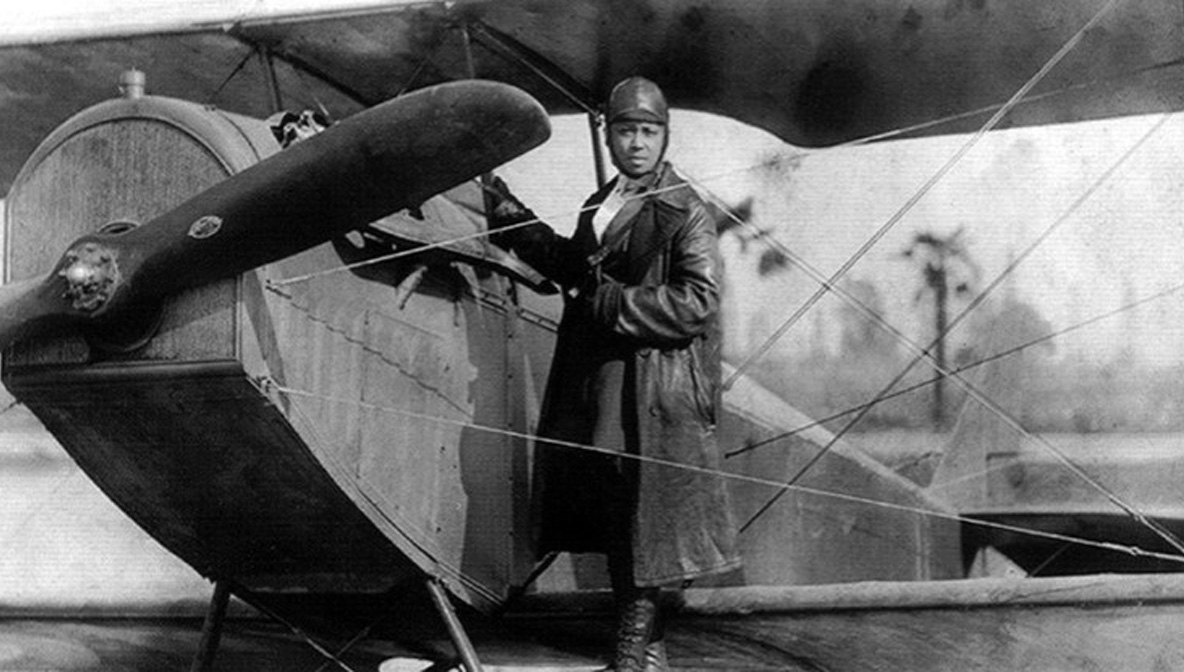
With financial backing from African American entrepreneur Robert Abbott and others, Bessie learned French and traveled to France in 1920. She enrolled in the Caudron Brothers School of Aviation in Le Crotoy, France.
On June 15, 1921, Bessie Coleman became the first African American woman and the first Native American woman to earn a pilot’s license, issued by the Fédération Aéronautique Internationale.
Career and Achievements
Returning to the U.S. as a media sensation, Coleman knew that commercial aviation jobs were not available to Black women. She instead focused on barnstorming—performing aerial stunts and shows. Nicknamed “Queen Bess,” she wowed crowds with loop-the-loops, figure eights, and daring aerial tricks.
Her career was not just about fame; it was about inspiring African Americans to pursue aviation and breaking down racial and gender barriers. She refused to perform at venues that didn’t allow Black spectators.
Bessie Coleman also dreamed of opening a flying school for African Americans, determined to make aviation more accessible for her community.
Tragic Death and Legacy
On April 30, 1926, at just 34 years old, Bessie Coleman tragically died in a plane crash during a test flight in Jacksonville, Florida. She was preparing for an airshow when the aircraft, piloted by mechanic William Wills, malfunctioned mid-air. Bessie was thrown from the plane and died instantly.
Her untimely death sent shockwaves through the African American community. Thousands attended her memorial services in Chicago, Dallas, and Orlando.
What We Can Learn from Bessie Coleman
Bessie Coleman’s life teaches us valuable lessons:
-
Break barriers: Don’t accept limitations imposed by society.
-
Pursue your dreams relentlessly: She crossed continents to achieve her goal.
-
Empower others: Bessie wanted to build a legacy by uplifting her community.
-
Resilience is key: Despite poverty, racism, and sexism, she made history.
Bessie’s courage paved the way for generations of aviators, including the Tuskegee Airmen and contemporary Black female pilots.
Legacy and Honors
-
The Bessie Coleman Aero Club was founded in 1929 by Black aviators.
-
Streets, libraries, and schools across the U.S. bear her name.
-
In 1995, the U.S. Postal Service issued a commemorative stamp in her honor.
-
In 2023, American Airlines and others commemorated her legacy with all-Black female flight crews.