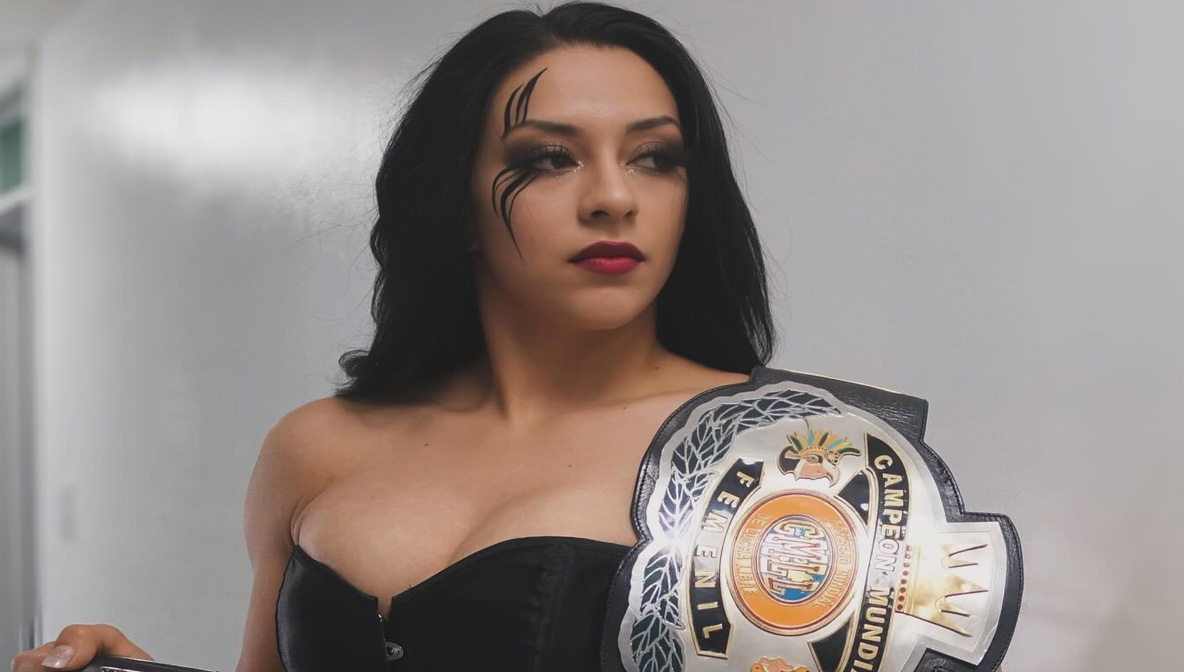

In the roaring, chaotic, and intensely masculine world of Lucha Libre, a revolution is taking place. For decades, the spotlight in Mexican wrestling has shone brightest on the legendary luchadores—El Santo, Blue Demon, Rey Mysterio. But a new force has emerged, a competitor whose power, grace, and undeniable presence is shattering stereotypes and commanding attention on a global scale. Her name is Stephanie Vaquer, and her journey to the summit of professional wrestling is not just a story of athletic triumph; it is a profound narrative of resilience, born from unimaginable personal tragedy.
Vaquer is more than a talented wrestler. She is a symbol of a new era in Lucha Libre, where women are no longer relegated to secondary roles but are headlining events and capturing the most coveted championships. Her path has been marked by a relentless work ethic, a deep respect for the traditions of the sport, and a quiet, steely determination that was forged in the fires of loss. This is the biography of a woman who turned her grief into fuel, her passion into power, and in doing so, has become one of the most compelling and important figures in wrestling today. She is not just winning matches; she is redefining what is possible for a luchadora.
Early Life & Background: A Chilean Childhood Forged in Passion
Stephanie Vaquer was born on October 26, 1993, in Santiago, Chile. From a young age, she was drawn to the world of physical performance and athleticism, but not initially to wrestling. Her first love was gymnastics, a discipline that requires immense strength, flexibility, and body control—attributes that would later become the foundation of her in-ring style. She dedicated herself to the sport, developing the core physical literacy that separates good athletes from great ones.
However, the high-cost and specific trajectory of competitive gymnastics in Chile presented challenges. As she grew older, she began to search for a new outlet for her athletic energy, a pursuit that could satisfy her competitive spirit and her desire for artistic expression. It was during this period of exploration that she discovered professional wrestling.
Like many across Latin America, the spectacle of Lucha Libre—the vibrant masks, the high-flying acrobatics, the dramatic storytelling—captured her imagination. But for Vaquer, it was more than just entertainment; it was a calling. She saw in the squared circle a unique fusion of sport and theater, power and poetry. She made the decision to pursue it professionally, a daunting path for any aspiring athlete, but particularly for a young woman in a region where the scene was, and still is, heavily male-dominated.
Her training began in Chile, a country with a small but passionate wrestling community. She learned the fundamentals, taking bumps on hard mats and in rudimentary rings, far from the glamour of televised events. This grassroots beginning instilled in her a toughness and a deep appreciation for the craft. She wasn’t just learning to perform; she was learning to survive. She began wrestling on the independent circuit in Chile, adopting the ring name “Stephanie Vaquer” and slowly honing her skills in front of small, but often fiercely loyal, audiences. It was a humble beginning, but it was the essential first chapter in the story of a future champion.
Career & Achievements: A Meteoric Rise Through Conquest
Vaquer’s career trajectory is a testament to her talent and her willingness to seek out greater challenges. She didn’t stay in the comfort of her home country for long, recognizing that to be the best, she would have to test herself against the best.
The Foundation: The Chilean Independent Scene
Her early years were spent building a reputation in promotions across Chile. She developed her in-ring persona: a technically sound, powerful wrestler who could also execute breathtaking high-flying moves. This combination of ground-based power and aerial agility made her a versatile and unpredictable opponent. She quickly became a standout in the Chilean scene, but the ceiling for growth was low. The real proving grounds were to the north, in the spiritual home of Lucha Libre: Mexico.
The Leap to Mexico: CMLL and a New Home
In pursuit of her dream, Vaquer made the life-altering decision to move to Mexico. This was more than a career move; it was a cultural and personal immersion. She began competing for Consejo Mundial de Lucha Libre (CMLL), the oldest and most prestigious wrestling promotion in the world. CMLL is the guardian of Lucha Libre’s traditions, and earning a spot there is a privilege reserved for the most dedicated and skilled luchadores.
Her debut in CMLL was a pivotal moment. She was no longer a big fish in a small pond; she was a new contender in the most competitive pond of all. She had to adapt to the unique Lucha Libre style—faster-paced, more sequence-based, and deeply rooted in a specific cultural context. She embraced this challenge, studying the legends of the past while refining her own modern style.
Her hard work began to pay off in the form of championship gold, cementing her status as a top star:
-
CMLL World Women’s Championship: This is the top prize for a luchadora in CMLL, a title with a lineage of great champions. Capturing this championship was a clear signal that Vaquer had arrived among the elite. Her reign was marked by successful defenses against the best competition CMLL and its international partners could offer.
-
NJPW Strong Women’s Championship: Her success in Mexico caught the attention of New Japan Pro-Wrestling (NJPW), one of the most respected promotions in the world, known for its strong-style, hard-hitting approach. In a historic moment, Vaquer won the NJPW Strong Women’s Championship, becoming the first Chilean wrestler to hold a title in the promotion. This victory was not just a personal achievement; it was a landmark for the entire Chilean wrestling community.
The Rivalry That Defined a Generation: vs. Stephanie Vaquer
A crucial element of her rise has been her high-profile rivalry with another standout wrestler, often creating a compelling narrative of two powerful “Stephanies” vying for supremacy. These matches, often for major championships, have been critically acclaimed for their intensity, technical mastery, and storytelling. They have headlined events and demonstrated that women’s matches can be the main event, drawing the loudest reactions from the crowd.
Personal Life: The Anchor of Family and the Shadow of Loss
While Stephanie Vaquer is a public figure in the ring, she has kept her personal life remarkably private. What is known, however, adds a profound layer of depth and humanity to her warrior persona.
She is in a long-term relationship with fellow professional wrestler Dragon Lee (real name Carlos Muñoz González). Dragon Lee is a superstar in his own right, a former ROH World Television Champion and a current standout in WWE. Their relationship represents a “wrestling power couple,” two individuals who understand the unique demands, sacrifices, and perils of the profession. They can be seen supporting each other at events, a quiet pillar of mutual understanding in the chaotic world of touring and performance.
However, Vaquer’s life has also been marked by a tragedy that has undoubtedly shaped the resilient woman she is today. In 2021, her younger sister, Constanza Vaquer, passed away. The details remain private, as Vaquer has fiercely protected her family’s grief from public scrutiny. The loss of a sibling is a devastating blow that forever alters a person’s world. For an athlete whose performance depends on mental fortitude, such a loss could have been professionally crippling.
Yet, Vaquer did not retreat. Instead, she has channeled her grief into her work. While she doesn’t speak of it often publicly, her dedication and intensified focus in the ring following this period suggest that her wrestling career became a sanctuary, a purpose, and a tribute. Every match, every championship won, carries the weight of her sister’s memory. This silent dedication in the face of heartbreak is the ultimate testament to her strength of character. It reveals that the “Phoenix” persona is not just a ring character; it is a reflection of her real-life ability to rise from the ashes of profound sorrow.
Legacy & Impact: Redrawing the Map of Lucha Libre
Though her career is still in its prime, Stephanie Vaquer’s impact on the wrestling landscape is already significant and multifaceted.
-
A Trailblazer for Chilean Wrestling: She is, without question, the most successful and internationally recognized Chilean professional wrestler in history. By succeeding at the highest levels in Mexico and Japan, she has put Chilean wrestling on the global map. She has become a hero and an inspiration for aspiring wrestlers in her home country, proving that geographic boundaries no longer limit potential in the globalized world of wrestling.
-
Elevating the Women’s Division in CMLL: In CMLL, a promotion steeped in tradition, Vaquer has been at the forefront of the evolution of the women’s division. Her main-event caliber matches and championship reigns have forced management and fans to view the luchadoras not as an opening act, but as a central pillar of the promotion. She has helped secure more screen time, better storylines, and greater respect for the women of CMLL.
-
The Modern Luchadora: She embodies a new archetype for female wrestlers in Mexico. She seamlessly blends the high-flying, acrobatic tradition of Lucha Libre with a powerful, hard-hitting style influenced by Japanese strong style and American technical wrestling. This hybrid approach makes her a unique and compelling performer who appeals to a wide range of wrestling fans.
-
A Symbol of Quiet Dignity and Resilience: In an industry often defined by loud promos and over-the-top personalities, Vaquer’s aura is one of quiet, confident intensity. Her resilience, both in the ring and in her personal life, resonates deeply with fans. She leads by example, demonstrating that strength doesn’t always need to be shouted; it can be demonstrated through action, consistency, and an unwavering commitment to excellence.
Final Thoughts, and What We Learn
The story of Stephanie Vaquer is still being written with every match, every championship defense, and every barrier she breaks. But the chapters so far provide powerful lessons about ambition, grief, and identity.
What We Learn from Her Journey:
-
Talent is Global, Opportunity is Not: Vaquer’s story underscores that incredible talent exists everywhere, but it must often leave its home to find its stage. Her success is a lesson in the courage required to venture into the unknown to pursue a dream.
-
Grief Can Be a Catalyst, Not a Cage: The tragic loss of her sister could have defined her in a negative way. Instead, she has used it as a source of inner strength. She teaches us that while we cannot control tragedy, we can control our response to it, and that our deepest pains can fuel our greatest purposes.
-
Tradition and Innovation Can Coexist: By respecting the traditions of Lucha Libre while infusing it with her own unique style, Vaquer has not dishonored the past; she has enriched its future. This is a lesson for any field: understand and respect the foundations, but do not be afraid to build something new upon them.
-
Strength is Multifaceted: Her strength is not just physical. It is the emotional strength to endure personal loss, the mental strength to perform under pressure, and the spiritual strength to stay true to herself in a demanding industry. True power is a combination of all these elements.
-
Quiet Confidence is Still Confidence: In a world that often mistakes volume for validity, Vaquer proves that you don’t need to be the loudest person in the room to be the most formidable. Her quiet, focused demeanor commands a different, but equally powerful, form of respect.
Stephanie Vaquer is more than a champion; she is a pioneer. She is the phoenix who rose from personal tragedy and the determined athlete who crossed continents to conquer the world of Lucha Libre. Her legacy is one of broken borders, elevated standards, and quiet, unbreakable strength. As she continues her career, she carries not just championship gold, but the hopes of a nation and the promise of a more inclusive and exciting future for the sport she loves.