
Introduction
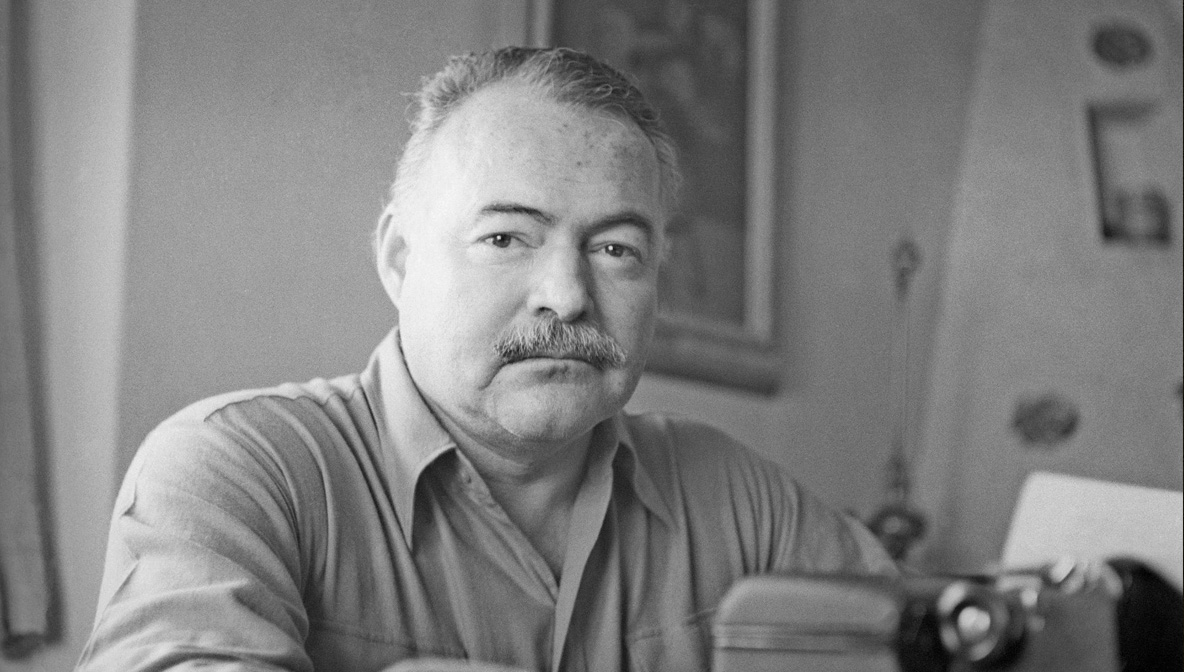
Ernest Hemingway was more than just a writer—he was a war hero, an adventurer, and a literary icon whose bold, minimalist style transformed American literature. From the battlefields of World War I to the bullfighting rings of Spain, Hemingway lived a life as gripping as his novels. His works, like The Old Man and the Sea and A Farewell to Arms, continue to inspire readers with themes of courage, love, and resilience. But behind his legendary status lay a man battling depression, alcoholism, and personal demons.
This in-depth biography explores Hemingway’s extraordinary life, timeless works, and the lessons we can learn from his triumphs and struggles. Whether you’re a literature lover, a history buff, or someone seeking inspiration, Hemingway’s story is one you won’t forget.
Early Life and Background
Ernest Miller Hemingway was born on July 21, 1899, in Oak Park, Illinois, a suburb of Chicago. His father, Clarence Edmonds Hemingway, was a physician, and his mother, Grace Hall Hemingway, was a musician. Hemingway grew up in a strict, religious household and developed a love for outdoor activities like fishing, hunting, and boxing—themes that later dominated his writing.
He attended Oak Park and River Forest High School, where he excelled in English and wrote for the school newspaper. After graduation, he worked briefly as a reporter for The Kansas City Star, where he honed his concise, impactful writing style.
World War I and the “Lost Generation”
In 1918, Hemingway volunteered as an ambulance driver for the Red Cross in Italy during World War I. He was severely wounded by mortar fire but still helped rescue Italian soldiers, earning the Italian Silver Medal of Bravery. His wartime experiences deeply influenced his writing, particularly his novel “A Farewell to Arms” (1929).
After the war, he moved to Paris, joining a group of expatriate writers known as the “Lost Generation,” including F. Scott Fitzgerald, Gertrude Stein, and Ezra Pound. His time in Paris shaped his minimalist prose style, famously called the “Iceberg Theory”—where deeper meanings lie beneath the surface of simple sentences.
Major Works and Literary Success
Hemingway’s career took off with “The Sun Also Rises” (1926), a novel capturing post-war disillusionment. Other iconic works include:
-
“A Farewell to Arms” (1929) – A tragic love story set in WWI.
-
“For Whom the Bell Tolls” (1940) – Inspired by the Spanish Civil War.
-
“The Old Man and the Sea” (1952) – A Pulitzer Prize-winning novella about resilience.
-
“The Snows of Kilimanjaro” (1936) – A short story exploring regret and death.
He won the Nobel Prize in Literature (1954) for his mastery of narrative art and influence on contemporary style.
Personal Life: Adventures, Marriages, and Struggles
Hemingway was known for his adventurous lifestyle—big-game hunting in Africa, deep-sea fishing in Cuba, and bullfighting in Spain. However, his personal life was turbulent:
-
Four marriages: Hadley Richardson, Pauline Pfeiffer, Martha Gellhorn, and Mary Welsh.
-
Struggles with depression and alcoholism: Led to multiple hospitalizations.
-
Electroshock therapy: In his later years, he underwent painful treatments.
On July 2, 1961, Hemingway died by suicide at his home in Ketchum, Idaho, following years of mental health struggles.
What We Can Learn from Hemingway
-
Simplicity in Writing – His “Iceberg Theory” teaches that less can be more.
-
Resilience – His characters (and life) embody perseverance.
-
Adventure & Curiosity – He lived fully, seeking new experiences.
-
Mental Health Awareness – His struggles highlight the importance of mental well-being.
-
Discipline – Despite his wild lifestyle, he maintained a strict writing routine.
Conclusion
Ernest Hemingway remains one of the most influential writers of the 20th century. His bold prose, adventurous life, and tragic end make him a fascinating figure. By studying his work and life, we gain insights into craftsmanship, courage, and the human condition.