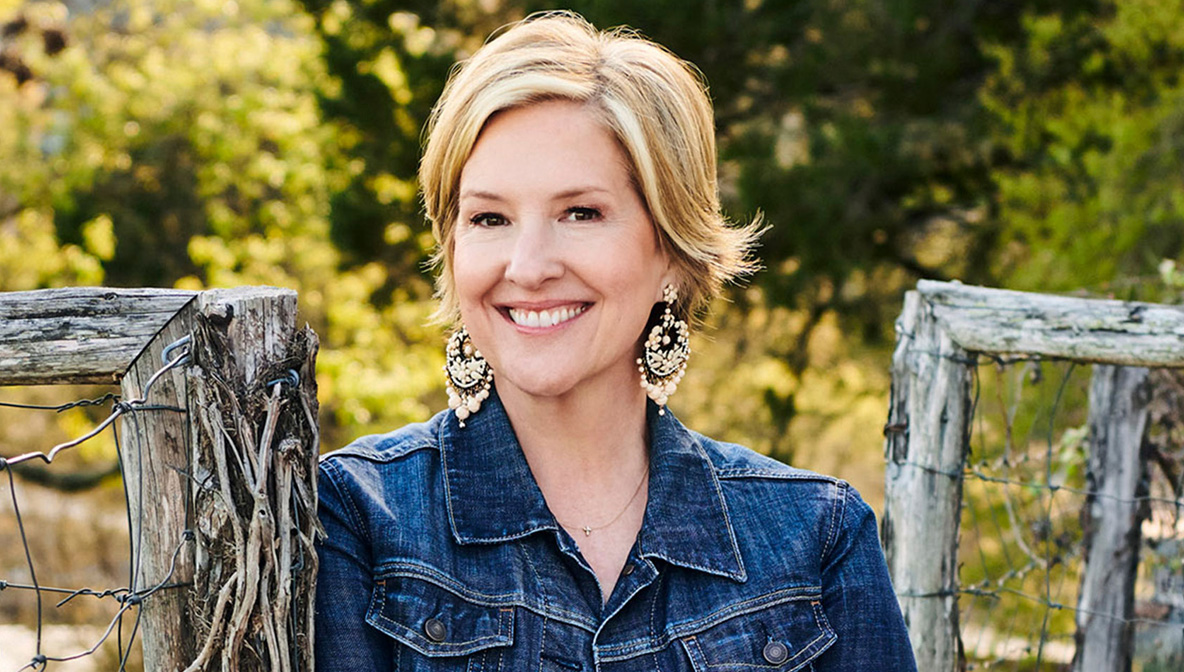

If you’ve ever felt the sting of not being good enough, the fear of what people might think if they really knew you, or the exhausting weight of trying to be perfect, then you’ve lived in the territory that Brené Brown has spent her entire career mapping. She isn’t just a research professor or a bestselling author. She is a pioneering storyteller who took a topic we all feel but rarely discuss—shame and vulnerability—and placed it under the bright light of data, transforming it from a source of fear into a wellspring of courage, connection, and wholehearted living.
With a Texas accent that feels like a warm embrace and a laugh that’s instantly contagious, Brown has become a cultural touchstone. She’s the researcher who gave us permission to be imperfect, the leader who argued that vulnerability is not weakness but our greatest measure of courage, and the voice that told a weary, over-connected world that true belonging doesn’t require us to change who we are. This is the story of how a woman who set out to control and predict the human experience ended up discovering that the messy, unpredictable parts are what make us truly human.
Introduction: The Mapmaker of the Human Heart
Before Brené Brown, the conversation around emotions like shame, vulnerability, and fear was often relegated to therapy rooms or self-help books filled with vague affirmations. Brown entered this space not as a guru, but as a scientist. Armed with a Ph.D. in social work and a fierce determination, she approached the swampy, uncomfortable feelings we all try to avoid with the rigor of a researcher. She didn’t want to just talk about shame; she wanted to define it, measure it, and understand it.
What she discovered in her data, however, was a story. It was the story of a group of people she came to call the “Wholehearted.” These were individuals who lived with a profound sense of worthiness, who loved with their whole hearts even when there was no guarantee, who practiced compassion and connection because they knew they were enough. They weren’t perfect; they were courageous. And their courage was rooted in a shocking, counterintuitive practice: they embraced vulnerability.
Brown’s 2010 TEDx talk in Houston, “The Power of Vulnerability,” was the moment this research exploded into the public consciousness. What started as a talk for a few hundred people became a viral sensation, now one of the top five most-viewed TED talks in the world with over 60 million views. Why? Because she gave language to a universal human experience. She made us feel seen.
She took her research from the academic journal to the kitchen table, writing a series of books that have become modern bibles for living a brave life, including The Gifts of Imperfection, Daring Greatly, and Braving the Wilderness. She has become a trusted guide for everyone from Fortune 500 CEOs and military leaders to parents and teachers, all seeking the same thing: a way to live, love, parent, and lead with more authenticity and less armor.
Early Life & Background: The Roots of a Researcher
Brené Brown was born on November 18, 1965, in San Antonio, Texas. Her background is a key part of her story and her relatability. She describes her family as a classic, “lock-your-heart-and-load-your-guns” kind of Texas family where vulnerability was not seen as a virtue. The unspoken rules were: never show your weakness, always be in control, and hustle for your worth.
From a very young age, Brown felt a deep desire to understand the “physics of human nature.” She was the child who would line up her stuffed animals and ask them questions, trying to figure out the rules of the game. This drive came from a place of wanting to predict and control the messy, unpredictable world of human emotions. If she could just figure out the patterns, she could avoid pain and ensure she was always liked and accepted.
Her parents divorced when she was in high school, a event she has described as profoundly destabilizing. It shattered her illusion of control and forced her to navigate uncertainty and change—the very things her family’s philosophy told her to avoid. This experience, while painful, planted an early seed of understanding about life’s inherent messiness.
After high school, Brown bounced through a couple of years of college, feeling uninspired and disconnected. She has been open about this period of her life, describing herself as “lost.” She eventually found her way to the University of Texas at Austin, but it was a course in social work that truly ignited her passion. Here was a field that was all about understanding people, their environments, and their struggles. It was the “physics of human nature” she had been searching for since she was a little girl.
She earned her Bachelor of Social Work (BSW) in 1995, followed by a Master of Social Work (MSW) in 1996, both from the University of Texas at Austin. But she wasn’t done. Her insatiable curiosity led her to pursue a Ph.D. in Social Work at the University of Houston, which she completed in 2002. Her doctoral research was the beginning of her deep dive into the very topics that had haunted her: shame, fear, and vulnerability.
Career & Achievements: From Data to a Movement
Brown’s early career was spent in academia, teaching at the University of Houston Graduate College of Social Work. It was here that she launched the research project that would define her life’s work. She started studying connection. But as she interviewed people about their lives, their relationships, and their sense of belonging, she kept running into the same roadblock: shame.
Her participants would talk about the fear of disconnection, the terrifying thought that “if people really know me, they won’t love me.” This led Brown on a six-year quest to study shame. She collected thousands of stories through interviews and surveys, becoming one of the primary shame researchers in the country.
What emerged from the data was a critical distinction. She saw that some people had a strong sense of love and belonging, while others struggled for it. The difference between them was worthiness. The people who felt worthy, the “Wholehearted,” believed they were enough, exactly as they were. And they lived by a specific set of practices that fostered this belief.
The key practice? Vulnerability.
This was a huge problem for Brown. As she recounts in her famous TED talk, her data pointed to vulnerability as the birthplace of joy, creativity, and connection. But everything in her upbringing and personality screamed that vulnerability was danger. She went through what she calls a “year-long breakdown,” which her therapist reframed as a “spiritual awakening.” She had to confront her own data and decide whether she was willing to live by it.
She did. And she began to write, not for academic journals, but for everyone. Her 2010 book, The Gifts of Imperfection: Let Go of Who You Think You’re Supposed to Be and Embrace Who You Are, was her manifesto. It introduced the world to the “guideposts” for wholehearted living, which include cultivating authenticity, self-compassion, resilience, gratitude, and intuition.
Then came the TEDxHouston talk. Its viral explosion changed everything. Suddenly, the world was hungry for her message. She followed it with her landmark 2012 book, Daring Greatly: How the Courage to Be Vulnerable Transforms the Way We Live, Love, Parent, and Lead. The title comes from Theodore Roosevelt’s “Man in the Arena” speech, and the book argues that vulnerability is not winning or losing; it’s having the courage to show up and be seen when you have no control over the outcome.
Her career since has been a prolific and powerful expansion of these core ideas:
-
Rising Strong (2015): This book explored the process of what happens after we fall—after we are vulnerable and it doesn’t work out. It outlines a three-step process: The Reckoning (walking into our story), The Rumble (owning our story), and The Revolution (writing a new, braver ending).
-
Braving the Wilderness (2017): In an era of intense political and social division, Brown tackled the quest for true belonging. She argued that true belonging doesn’t require us to change who we are; it requires us to be who we are, even when we stand alone.
-
Dare to Lead (2018): Here, she took her research into the workplace. She argued that a daring leader is one who has the courage to be vulnerable, to build trust, and to create cultures where people can be brave, not perfect.
Beyond her books, Brown co-founded (with her sister, Ashley Brown Ruiz) a podcast, Unlocking Us, which quickly became a #1 podcast, offering deep-dive conversations on the emotions and experiences that define us. She also launched the Dare to Lead program, which is being used to train leaders in organizations worldwide, from the military to Silicon Valley.
Personal Life: Walking the Talk
Brené Brown’s personal life is deeply intertwined with her work, and she shares it with a refreshing and rare authenticity. She is married to Steve Alley, a pediatrician, and she often jokes that she is a “Texan through and through,” living in Houston with her family. They have two children, a son and a daughter.
Her stories about her family are not polished, perfect anecdotes. They are messy, real, and hilarious. She talks about “vulnerability hangovers”—the regret and fear that can follow sharing something deeply personal. She shares her own struggles with perfectionism and the “gremlins” of shame that whisper in her ear. She talks about fights with her husband and parenting fails, using them as examples of how to “rumble” with difficult conversations and practice the principles she teaches.
This willingness to be a “living example” of her research is what makes her so credible. She isn’t a researcher who has it all figured out; she is a fellow traveler on the path, constantly practicing, stumbling, and getting back up. Her authenticity is her credibility. She has said that her family is her “bravest place,” the laboratory where she practices daring greatly every single day.
Legacy & Impact: The Vocabulary of Courage
Brené Brown’s impact is profound and multifaceted. She didn’t just introduce new ideas; she gave us a new language to talk about our inner lives.
-
She Demystified and De-stigmatized Shame: By defining shame as “the intensely painful feeling or experience of believing that we are flawed and therefore unworthy of love and belonging,” she gave people a tool to identify it. Her distinction between shame (“I am bad”) and guilt (“I did something bad”) is a foundational concept that has changed parenting, teaching, and leadership.
-
She Rebranded Vulnerability: She took a word associated with weakness, exploitation, and fear and redefined it as “the birthplace of love, belonging, joy, courage, empathy, and creativity.” She made it clear that vulnerability is the courage to show up when you can’t control the outcome, which is the essence of innovation, trust, and connection.
-
She Created a Framework for Wholehearted Living: Her “guideposts” and “arenas” are not just theories; they are practical, actionable practices that millions have integrated into their daily lives. She moved the conversation from “what’s wrong with me?” to “what practices will help me live a braver life?”
-
She Brought Empathy and Courage into the Workplace: With Dare to Lead, she made a powerful case that the “soft skills” are the hardest and most essential skills for effective leadership. She provided a tangible tool for building trust with her acronym BRAVING (Boundaries, Reliability, Accountability, Vault, Integrity, Non-Judgment, Generosity).
Her work has sparked a global conversation and created a community of people who are committed to “showing up” in their lives. Critics sometimes argue that her focus on the individual can overlook systemic issues, but her supporters counter that systemic change begins with courageous individuals.
Ultimately, her legacy is one of permission. She has given millions of people permission to be imperfect, to set boundaries, to say “I love you” first, to be kind to themselves, and to believe that they are enough. In a culture that profits from our self-doubt, her work is a radical act of defiance.
What We Learn: The Enduring Lessons from Brené Brown
The real power of Brené Brown’s work is that it provides a practical roadmap for a more courageous life. Here are the core, actionable lessons:
-
Embrace Vulnerability as Courage: The next time you feel afraid to speak up, ask for help, or put your work into the world, recognize that feeling not as weakness, but as courage. Vulnerability is the emotion we experience during times of uncertainty, risk, and emotional exposure. It is the path to meaningful connection.
-
Shame Cannot Survive Empathy: The antidote to shame is empathy. Shame thrives in secrecy, silence, and judgment. When we share our story with someone who responds with empathy and understanding, shame loses its power. We must learn to talk to ourselves with the same kindness we’d offer a friend.
-
Cultivate Self-Compassion: Wholehearted living requires us to practice self-compassion. This means acknowledging our pain and responding with kindness, rather than criticism. You are allowed to be a work in progress. You are worthy of love and belonging now, not when you lose the weight, get the promotion, or achieve perfection.
-
Clear is Kind. Unclear is Unkind: This is a cornerstone of her leadership work. Whether as a leader, a partner, or a parent, avoiding a difficult conversation to be “nice” is ultimately unkind. Setting clear boundaries, giving honest feedback, and expecting accountability is the kindest thing you can do for a relationship or a team.
-
Rumble with Your Story: When you fall, don’t bury the story. “Rumble” with it. Get curious. Ask yourself: What more do I need to learn and understand about the situation? What part did I play? The goal is not to assign blame, but to own our story so we don’t let it own us.
-
True Belonging is an Inside Job: You belong everywhere and nowhere until you belong to yourself. True belonging doesn’t require you to fit in or silence your truth. It happens when you present your authentic, imperfect self to the world and have the courage to stand alone in your beliefs.
Brené Brown’s story is a powerful testament to the idea that our greatest strengths are often found in the places we are most afraid to look. She turned her own quest for control into a gift of surrender, showing us that the messy, tender, and vulnerable parts of ourselves are not liabilities. They are the very source of our power, our creativity, and our capacity for deep, meaningful connection. She taught us that to dare greatly is not to win, but to show up, be seen, and live with our whole hearts.