
Introduction
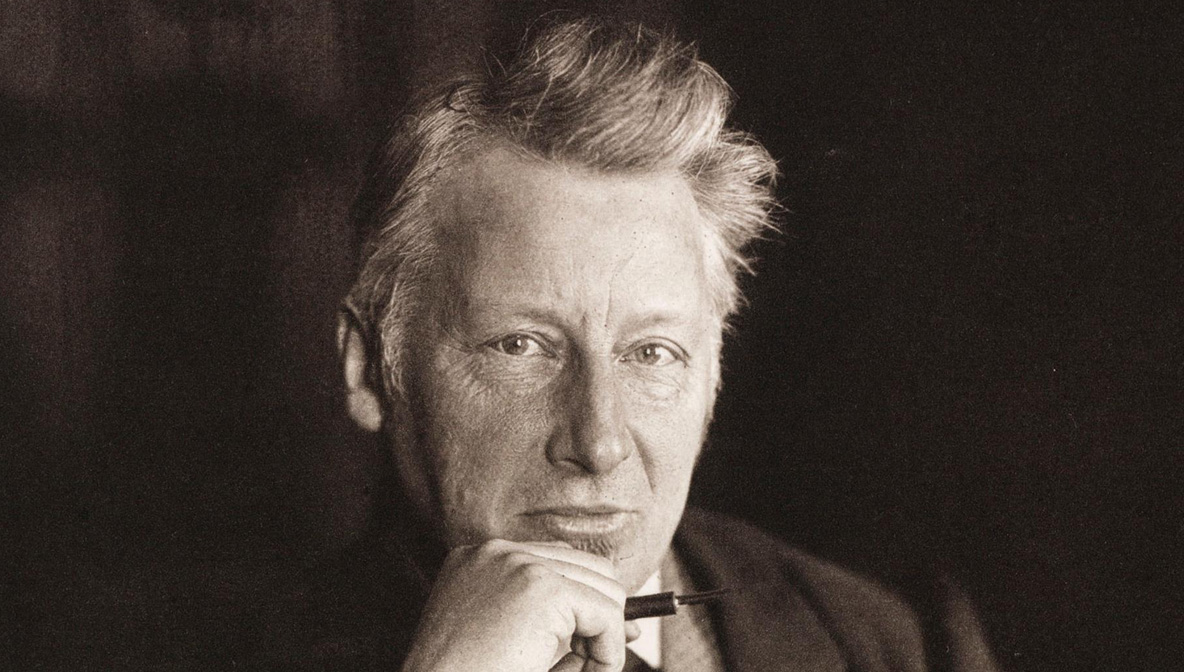
Jacobus Henricus van ’t Hoff (30 August 1852 – 1 March 1911) was a Dutch chemist who shaped modern chemistry by pioneering stereochemistry and founding physical chemistry. He was the first-ever Nobel Laureate in Chemistry (1901), honored “for the extraordinary services he has rendered by the discovery of the laws of chemical dynamics and osmotic pressure in solutions”
🧪 Full Biography
Early Life & Education (1852–1874)
-
Born in Rotterdam, the third of seven children to a physician father
-
Initially drawn to philosophy, poetry, maths, physics—studied at Delft (1869–71), Leiden, then Bonn (under Kekulé), Paris (under Wurtz), and obtained his doctorate at Utrecht in 1874
Breakthrough in Stereochemistry (1874–1876)
-
His 1874 pamphlet introduced the tetrahedral carbon atom concept, explaining optical isomerism; built molecular models and anticipated axial chirality
-
Validated independently by J.A. Le Bel; initially criticized but accepted by 1880
Academic Career & Physical Chemistry (1876–1896)
-
Lecturer at Utrecht Veterinary College (1876), then professor at University of Amsterdam (1878–96)
-
1884: Études de dynamique chimique introduced chemical kinetics, equilibrium, affinity
-
Demonstrated gas–solution analogies and formulated osmotic pressure law (π = iMRT), defining the van ’t Hoff factor
-
Co-founded Zeitschrift für physikalische Chemie with Ostwald (1887)
Berlin Years & Later Work (1896–1911)
-
Appointed to Prussian Academy of Sciences in Berlin in 1896, reducing teaching load to focus on research
-
Investigated thermodynamics of salt deposit formation (Stassfurt), culminating in a two-volume work (1905–09)
-
Died of tuberculosis at age 58 in Steglitz, Berlin
Honors & Awards
-
Nobel Prize in Chemistry (1901)
-
Davy Medal (1893), Pour le Mérite (1895), elected ForMemRS (1897), Helmholtz Medal (1911), Legion of Honour (1894), multiple honorary doctorates
🎓 Lessons from Van ’t Hoff
-
Imagination in Science – He emphasized creativity as essential in scientific breakthroughs .
-
Three‑Dimensional Thinking – His tetrahedral insight redefined molecular models and chemistry forever.
-
Bridging Disciplines – Seamlessly united organic chemistry, thermodynamics, kinetics, and physical chemistry.
-
Quantitative Rigor – Introduced mathematical relationships that underlie reaction dynamics and colligative properties.
-
Balancing Teaching & Research – Preferred research-intensive environments to maximize discovery.
Jacobus van ’t Hoff exemplifies how bold theoretical insight, paired with mathematical precision, can revolutionize entire scientific fields. His legacy reminds us to imagine boldly, quantify meticulously, and integrate disciplines courageously.