
Introduction
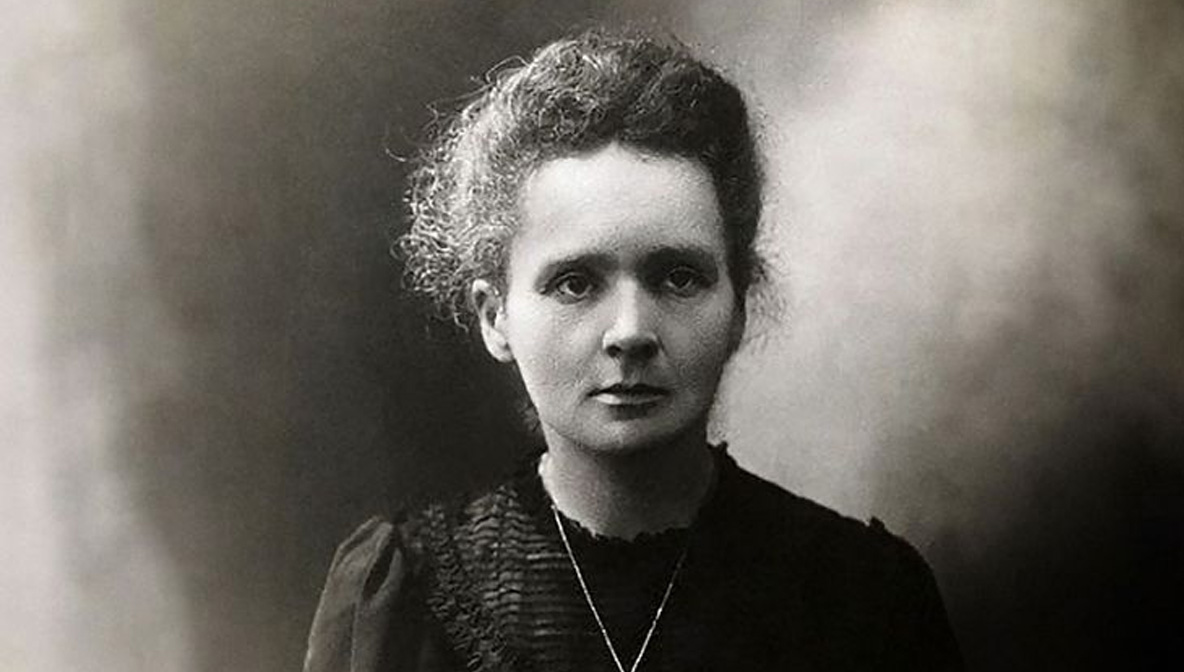
Marie Curie didn’t just break barriers—she shattered them with a hammer of brilliance. The first woman to win a Nobel Prize, the only person to win in two different sciences, and the mother of radioactivity, her discoveries changed medicine, physics, and chemistry forever.
From a poverty-stricken childhood in Poland to a Parisian lab that glowed with mysterious rays, this is the story of a woman who loved science more than fame, and knowledge more than comfort.
Early Life & Background
Born Maria Skłodowska on November 7, 1867, in Warsaw, Poland, Marie grew up under Russian oppression, where Polish women were barred from higher education. Her family, though educated, was penniless after her father, a teacher, lost his savings.
Undeterred, Marie:
✔ Taught herself in secret “floating universities” (illegal Polish schools).
✔ Worked as a governess for eight years to save money for college.
✔ Moved to Paris at 24, sleeping in freezing attics and living on bread and tea while studying at the Sorbonne (University of Paris).
Career & Achievements
1. Discovering Radioactivity (1896-1902)
Working with her husband, Pierre Curie, Marie:
✔ Coined the term “radioactivity” after studying uranium rays.
✔ Discovered two new elements: polonium (named after her homeland) and radium.
✔ Won the 1903 Nobel Prize in Physics (shared with Pierre and Henri Becquerel).
2. Tragedy & Triumph (1906-1911)
After Pierre’s sudden death in a street accident, Marie took over his teaching post—becoming the Sorbonne’s first female professor.
✔ Won a second Nobel Prize in 1911 (Chemistry) for isolating pure radium.
✔ Faced sexist backlash—the French press vilified her for an affair with a married colleague.
3. World War I & Mobile X-Ray Units
When war broke out, Marie:
✔ Invented “Petites Curies”—mobile X-ray vans to help battlefield surgeons.
✔ Trained 150 women to operate the machines, saving countless lives.
Personal Life
Marie’s life was marked by passion and sacrifice:
-
Love: Married Pierre Curie in 1895; their partnership was both romantic and scientific.
-
Motherhood: Raised two daughters—Irène (who also won a Nobel Prize) and Ève (a writer and humanitarian).
-
Struggles: Worked in a leaky shed for years, handling toxic materials without protection.
She carried test tubes of radium in her pockets, unaware of the deadly cost of her discovery.
Legacy & Impact
✔ First Female Nobel Laureate – Paved the way for women in STEM.
✔ Medical Advancements – Radium treatments helped early cancer therapy.
✔ Cultural Icon – Her name became synonymous with unyielding intellect.
Her notebooks are still radioactive and stored in lead-lined boxes.
Final Thoughts & What We Learn
Marie Curie’s life teaches us:
✔ No Barrier is Unbreakable – Poverty, sexism, war—she overcame all.
✔ Curiosity is Courage – She handled deadly elements just to see what would happen.
✔ Legacy Over Comfort – Even her death (from aplastic anemia in 1934) was caused by her life’s work.
As she said: “Nothing in life is to be feared; it is only to be understood.”
Why Curie Still Matters Today
In a world still grappling with gender gaps in science, her story screams: Genius has no gender.
Final Word: Marie Curie wasn’t just a scientist—she was a force of nature who glowed in the dark.