
Introduction
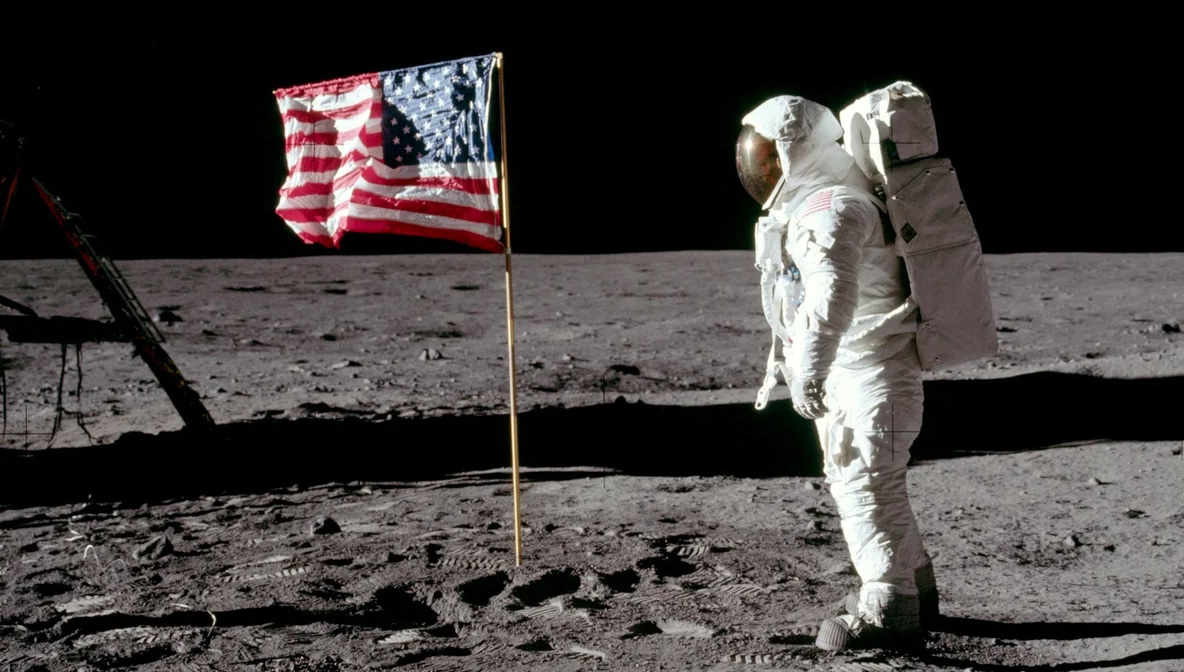
Neil Armstrong didn’t just take a step—he made the greatest leap in human history. On July 20, 1969, the soft-spoken test pilot became the first person to walk on the Moon, uttering the immortal words: “That’s one small step for man, one giant leap for mankind.”
But behind this iconic moment was a man who shunned fame, loved flying more than talking, and carried the weight of history with quiet humility. This is the story of how a small-town boy from Ohio touched the stars.
Early Life & Background
Born on August 5, 1930, in Wapakoneta, Ohio, Neil Alden Armstrong was fascinated by flight from age 2, when his father took him to an airshow. By 6, he was building model airplanes. By 15, he was taking flying lessons—earning his pilot’s license before his driver’s license.
After high school, he:
✔ Studied aeronautical engineering at Purdue University (Navy scholarship).
✔ Became a fighter pilot in the Korean War, flying 78 combat missions.
Career & Achievements
1. Test Pilot Years (1955-1962)
Before NASA, Armstrong:
✔ Flew rocket-powered X-15 jets at 4,000 mph (edge of space).
✔ Survived multiple near-death crashes, calmly ejecting each time.
2. NASA & Gemini (1962-1966)
✔ Gemini 8 (1966): Performed the first successful docking in space—then saved the mission when the spacecraft spun wildly.
✔ Lunar Landing Research: Trained in dangerous, crash-prone simulators to master Moon landings.
3. Apollo 11 & the Moon Landing (1969)
On July 20, 1969, with Buzz Aldrin, Armstrong:
✔ Manually steered the Eagle lunar module past a boulder field with just 30 seconds of fuel left.
✔ Spent 2.5 hours on the Moon, collecting rocks and planting the U.S. flag.
✔ Returned to Earth as the most famous man alive—yet refused to cash in on his fame.
4. Post-NASA Life
✔ Taught aerospace engineering at the University of Cincinnati.
✔ Served on corporate boards but avoided interviews, calling himself just a “nerdy engineer.”
Personal Life
Armstrong was intensely private and humble:
✔ Married Janet Shearon in 1956; had three children (one died of a brain tumor at 2).
✔ Divorced in 1994; remarried Carol Knight in 1999.
✔ Never signed autographs after learning they were being sold for thousands.
Friends described him as “the most reluctant hero in history.”
Legacy & Impact
✔ Defined Human Exploration – Proved we could reach other worlds.
✔ Symbol of Quiet Leadership – Never exploited his fame.
✔ Inspired Generations – The Moon landing remains humanity’s greatest technological achievement.
Honors include:
-
Presidential Medal of Freedom
-
Lunar crater and asteroid named after him
-
“First Man” biopic (2018) starring Ryan Gosling
Final Thoughts & What We Learn
Neil Armstrong’s life teaches us:
✔ Humility in Victory – He saw himself as part of a team, not a lone hero.
✔ Grace Under Pressure – Saved missions with ice-cool calm.
✔ Some Steps Echo Forever – His footprint on the Moon is timeless.
As he said: “Mystery creates wonder, and wonder is the basis of man’s desire to understand.”
Why Armstrong Still Inspires
In an age of self-promotion, his silent strength reminds us true greatness needs no spotlight.
Final Word: Neil Armstrong wasn’t just an astronaut—he was the quiet man who made the universe feel small.