
Introduction
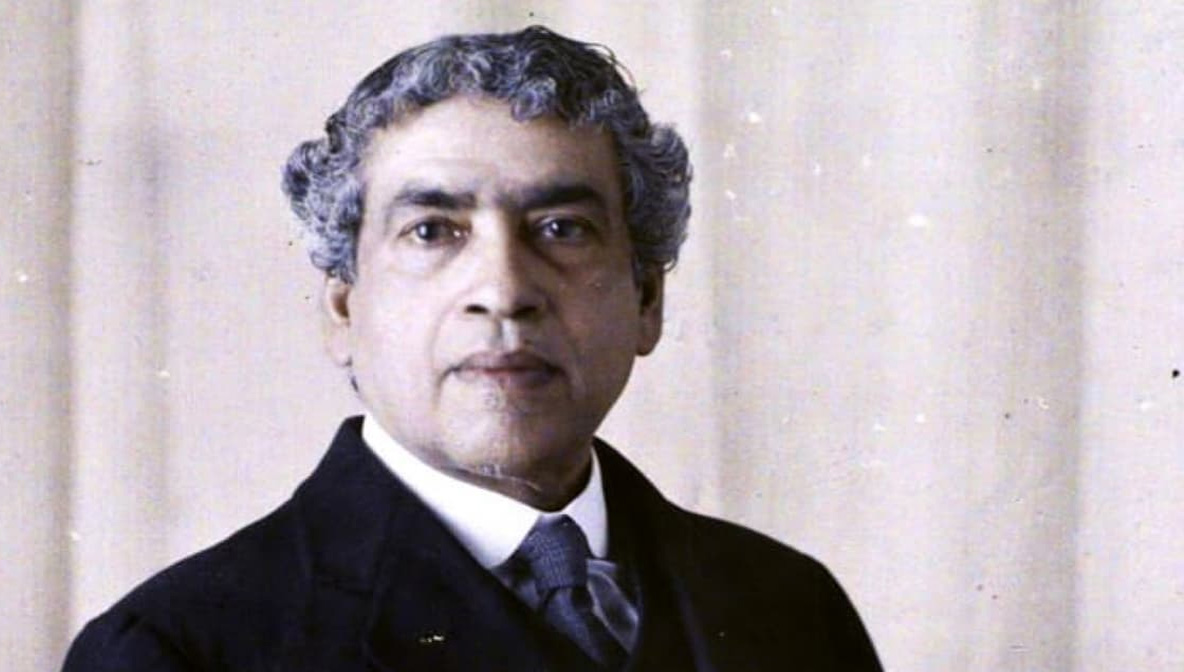
Sir Jagadish Chandra Bose, often known as J.C. Bose, was a pioneering scientist, biologist, physicist, and botanist whose groundbreaking work laid the foundation for modern wireless communication and plant physiology. Despite his immense contributions, his name often remains overshadowed by Western scientists like Marconi and Tesla. Bose’s relentless curiosity and innovative experiments proved that plants respond to stimuli, blurring the line between living and non-living matter. His legacy is a testament to the power of perseverance and interdisciplinary thinking.
Early Life & Background
Born on November 30, 1858, in Mymensingh (now in Bangladesh), Bose grew up in a humble yet intellectually stimulating environment. His father, Bhagawan Chandra Bose, was a deputy magistrate and a firm believer in education. Unlike many Indian elites of his time, Bose’s father insisted he learn in vernacular schools before attending English institutions, ensuring he remained rooted in his culture.
Bose attended St. Xavier’s College in Calcutta, where he developed a passion for science. Later, he traveled to England to study medicine at the University of London but had to quit due to health issues. Undeterred, he shifted to natural sciences at Christ’s College, Cambridge, where he studied under renowned scientists like Lord Rayleigh.
Career & Achievements
Upon returning to India in 1885, Bose joined Presidency College in Calcutta as a physics professor. Despite facing racial discrimination and lower pay than his British colleagues, he conducted revolutionary experiments in electromagnetism and plant biology.
Key Contributions:
-
Wireless Communication Pioneer: Bose demonstrated wireless radio waves in 1895, two years before Marconi’s famous patent. His “iron-mercury-iron coherer” was a breakthrough in detecting radio waves.
-
Plant Neurobiology: He proved that plants have life responses similar to animals—they feel pain, fatigue, and respond to stimuli, a radical idea at the time.
-
Crescograph Invention: Bose created the crescograph, a device that magnifies plant growth and movements, providing evidence of plant consciousness.
-
Millimeter-Wave Research: His work on millimeter wavelengths laid the groundwork for modern microwave and satellite technology.
Despite his discoveries, Bose refused to patent most of his inventions, believing science should be free for humanity.
Personal Life
Bose married Abala Bose, a social reformer and women’s education advocate, in 1887. Their partnership was one of mutual respect and intellectual companionship. Though they had no children, they dedicated their lives to science and education.
A man of diverse interests, Bose was also a science fiction writer, penning “Niruddesher Kahini” (The Story of the Missing One), one of the earliest Bengali sci-fi works.
Legacy & Impact
Bose’s contributions were finally recognized when he became the first Indian scientist to be knighted (1917) and elected as a Fellow of the Royal Society (1920). The Bose Institute, which he founded in 1917, remains a premier research center in India.
His work inspired future scientists in biophysics and wireless technology. Today, researchers continue to explore plant intelligence, validating his century-old theories.
Final Thoughts & What We Learn
J.C. Bose’s life teaches us the importance of curiosity, resilience, and ethical science. Despite colonial-era challenges, he pursued knowledge without seeking fame or profit. His interdisciplinary approach—merging physics, biology, and literature—shows that innovation thrives beyond rigid boundaries.
In an age of commercialization, Bose’s selfless dedication to science reminds us that true progress serves humanity, not just personal gain. His story urges us to question, explore, and respect the unseen intelligence of nature.
Why Remember J.C. Bose?
-
He proved plants are more than passive organisms.
-
His wireless research predates and rivals Marconi’s.
-
He championed open science long before it became a trend.
Bose was not just a scientist—he was a visionary who saw connections where others saw divisions. His legacy is a beacon for future innovators.