
Introduction
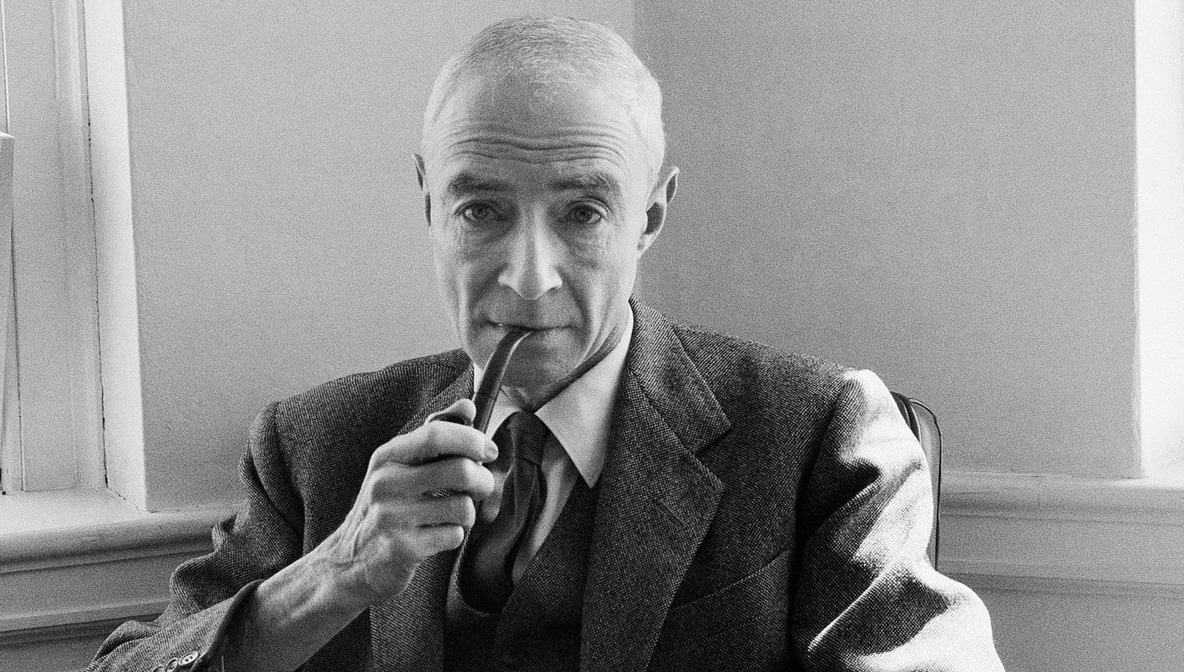
Julius Robert Oppenheimer (1904–1967) was an American theoretical physicist who led the Manhattan Project, the World War II effort to develop the first atomic bomb. A brilliant but complex figure, Oppenheimer’s legacy is defined by both his scientific genius and his moral reckoning with nuclear weapons. His famous quote from the Bhagavad Gita—“Now I am become Death, the destroyer of worlds”—captures the profound ethical burden he carried.
Early Life & Education
1904–1925: Formative Years
-
April 22, 1904: Born in New York City to a wealthy, secular Jewish family.
-
1922–1925: Studied chemistry at Harvard but shifted to physics after exposure to quantum theory.
-
1925–1927: Conducted groundbreaking work at Cambridge and Göttingen, contributing to quantum mechanics.
1929–1942: Academic Rise
-
Became a professor at UC Berkeley and Caltech, mentoring future Nobel laureates.
-
Pioneered research in black holes (later called “Oppenheimer–Snyder collapse”).
The Manhattan Project (1942–1945)
Appointment as Scientific Director
-
1942: Recruited by General Leslie Groves to lead Los Alamos Laboratory.
-
Assembled a team of top physicists, including Enrico Fermi, Richard Feynman, and Niels Bohr.
The Trinity Test (July 16, 1945)
-
First successful detonation of an atomic bomb in New Mexico.
-
Oppenheimer later recalled the Bhagavad Gita verse: “Now I am become Death…”
Hiroshima & Nagasaki (August 1945)
-
The bombs “Little Boy” and “Fat Man” killed ~200,000 people.
-
Oppenheimer expressed pride in the scientific achievement but deep regret over civilian deaths.
Post-War Struggles & McCarthyism
Advocacy for Nuclear Control
-
1947–1952: Chairman of the Atomic Energy Commission (AEC), opposing the hydrogen bomb.
-
Warned of nuclear arms races and promoted international oversight.
Security Hearing & Fall from Grace (1954)
-
Accused of communist ties due to past left-wing associations.
-
Stripped of security clearance in a controversial trial, ending his government influence.
Later Years & Legacy
-
1963: Symbolically rehabilitated with the Enrico Fermi Award by JFK.
-
February 18, 1967: Died of throat cancer in Princeton, NJ.
deeper insights into key aspects:
The Psychology of a Genius: Oppenheimer’s Inner Conflicts
-
Early Signs of Brilliance and Instability
-
Could read Sanskrit and discuss Hindu philosophy while simultaneously solving complex physics problems
-
Suffered depressive episodes in college, once left an apple poisoned with chemicals on his tutor’s desk
-
His 1925 breakdown at Cambridge (attempted to strangle his friend) revealed deep emotional turbulence
-
The Transformation at Los Alamos
-
Went from tweedy academic to chain-smoking leader who could speak the Army’s language
-
Developed surprising administrative skills, mediating between temperamental scientists and military
-
His famous “cowboy hat at Trinity” symbolized his new American identity (despite his European affectations)
The Science Behind the Bomb: Oppenheimer’s Key Contributions
-
Critical Breakthroughs
-
Solved the neutron diffusion problem that made plutonium bombs feasible
-
Developed the concept of “implosion” after realizing gun-type design wouldn’t work for plutonium
-
Orchestrated the simultaneous work on uranium and plutonium paths to ensure success
-
The Forgotten Post-War Work
-
His 1946 prediction of “nuclear winter” (before the term existed)
-
Early climate science research through his studies of atmospheric effects
-
Pioneering astrophysics work that laid groundwork for black hole research
The Political Fallout: Anatomy of a Witch Hunt
-
The Real Reasons for His Downfall
-
Not just communist ties – his opposition to the H-bomb angered Teller and Strauss
-
The FBI had been monitoring him since 1941 (2,400 pages of surveillance)
-
His intellectual arrogance made powerful enemies in Washington
-
The Hearing’s Lasting Impact
-
Set dangerous precedent for political interference in scientific research
-
Created chilling effect on arms control advocacy during Cold War
-
Ironically made him more famous as martyr for academic freedom
Modern Parallels: The Oppenheimer Dilemma Today
-
AI as the New Atomic Energy
-
Similar ethical questions about uncontrolled technological development
-
Tech leaders echoing Oppenheimer’s warnings about powerful creations
-
Government-industry partnerships repeating Manhattan Project dynamics
-
Oppenheimer’s Cultural Resurrection
-
Why his story resonates now with climate scientists and AI researchers
-
The 2023 film’s timing amid new nuclear threats and tech ethics debates
-
His rehabilitation as icon of responsible science in age of ChatGPT and CRISPR
Little-Known Facts That Reveal His Complexity
-
Couldn’t drive a car (had chauffeurs at Los Alamos)
-
His first love was poetry (published poems in Harvard magazine)
-
Nearly became a mineralogist instead of physicist
-
Secretly funded Spanish Civil War refugees through communist networks
-
His last words were reportedly in Sanskrit
This multifaceted examination shows how Oppenheimer’s story remains relevant as we face new technological crossroads
Final Thoughts
Oppenheimer embodied the duality of scientific progress—capable of both creation and destruction. His life forces us to confront ethical responsibility in science, asking: Should knowledge have limits? Though he helped end WWII, he spent his later years warning against the weapons he created.