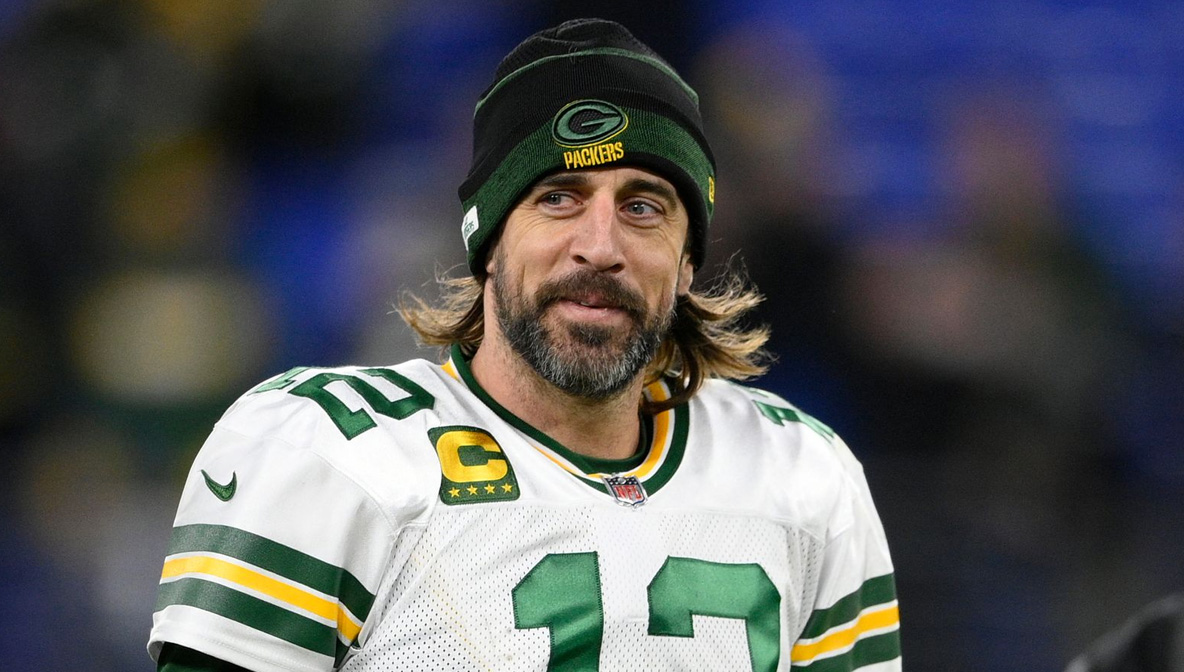

If you’ve spent any Sunday in the last two decades watching the NFL, you’ve witnessed the artistry of Aaron Rodgers. With a flick of his wrist, a defensive scheme unravels. With a subtle shoulder fake, a nation holds its breath. But to define Rodgers solely by his rocket arm and pre-snap wizardry is to miss the man entirely. He is one of the most talented, complex, and scrutinized athletes of his generation—a quarterback who rewrote record books in Green Bay’s frozen tundra, chased a new dream in the New York spotlight, and cultivated a persona far more intricate than your average football star. His story isn’t just about touchdowns and MVPs; it’s about relentless self-belief, profound patience, and an intellectual approach to the game that transformed the quarterback position. This is the journey of a small-town kid who waited, watched, and then rewrote the rules on his own terms.
Early Life & Background
Aaron Charles Rodgers was born on December 2, 1983, in Chico, California. He was the second of three sons to Edward (Ed) and Darla Rodgers. His father, a chiropractor, was a disciplinarian who instilled a fierce competitive drive. The family’s athletic cornerstone was football, with weekends spent watching games and analyzing plays. From age two, Aaron could accurately identify every NFL team’s helmet.
His older brother, Luke, was a talented football player, and Aaron’s early identity was often “Luke’s little brother.” This fueled a quiet but burning desire to prove himself. The Rodgers backyard was a crucible of competition, where games of “500” and one-on-one basketball often ended in fistfights, teaching Aaron to never back down.
When Aaron was in seventh grade, his parents divorced, a pivotal moment he has described as profoundly shaping his worldview. He lived primarily with his father, and the relationship, while foundational to his work ethic, was often strained. Ed Rodgers was his first and toughest coach, emphasizing mechanics, film study, and perfection. This demanding environment forged Rodgers’ legendary attention to detail but also planted the seeds of a resilient, sometimes defiant, independence that would define his career.
Sports were his outlet and his identity. He was a multi-sport star at Pleasant Valley High School, excelling in baseball as a slick-fielding catcher with a strong arm and in basketball as a sharp-shooting guard. But football was his future, even if that future initially seemed to belong to anyone but him.
Education
Rodgers’ educational path is a testament to his belief in his own potential when few others did.
High School: At Pleasant Valley High, Rodgers was a solid but not spectacular quarterback. He was undersized and his team’s run-heavy offense didn’t showcase his passing skills. Despite setting school records, he received zero NCAA Division I scholarship offers. The recruiting world saw a 5’10”, 160-pound quarterback with a quirky sidearm delivery. Rodgers saw a future NFL player.
The Junior College Crucible: Unwilling to give up, he enrolled at Butte College, a community college in Oroville, California. This wasn’t a detour; it was a declaration. At Butte, Rodgers thrived. He led the Roadrunners to a 10-1 record and a #2 national ranking, throwing 28 touchdowns against just 4 interceptions. He grew physically and refined his mechanics. Most importantly, he proved he could dominate. His play screamed “I belong,” and this time, the football world listened.
Berkeley and the Pac-10 Stage: His performance at Butte caught the eye of University of California, Berkeley coach Jeff Tedford, known as a “quarterback whisperer.” Rodgers transferred to Cal, redshirted in 2002, and took over as starter in 2003. In Berkeley, he blossomed into a star. He majored in American Studies, but his real curriculum was Tedford’s complex offensive system. He learned to read defenses at an elite level, commanded a pro-style offense, and in 2004, led the Golden Bears to a 10-1 record and a near-miss at the national championship game. He finished his collegiate career with a staggering 5,469 passing yards, 43 TDs, and a 150.3 passer rating, leaving no doubt he was NFL-ready.
Career & Achievements
Rodgers’ professional journey is a saga of patience, peak performance, and persistent pursuit.
The Green Bay Wait (2005-2007): In the 2005 NFL Draft, Rodgers experienced a famously agonizing slide. Projected as a possible #1 pick, he sat in the green room as team after team passed, until the Green Bay Packers selected him 24th overall. He landed behind a living legend, Brett Favre. For three seasons, Rodgers held a clipboard, absorbing the offense and enduring Favre’s annual retirement drama. This period was frustrating but formative. It hardened him, sharpened his knowledge, and built an immense internal pressure that would soon be released.
The Dynasty Begins (2008-2020): When Favre was traded in 2008, the keys to the franchise were handed to Rodgers. The pressure was immense, but he was more than ready. He announced his arrival with a 4,000-yard season. By 2010, he was a superstar. That season culminated in a magical playoff run. Rodgers & Co., a #6 seed, won three road games and then dominated the Pittsburgh Steelers in Super Bowl XLV. Rodgers was named Super Bowl MVP, completing a storybook ascent from draft-day fall guy to champion.
What followed was a decade of sustained brilliance rarely seen in sports:
-
4 NFL MVP Awards (2011, 2014, 2020, 2021), tying him for the second-most all-time.
-
10 Pro Bowl selections.
-
A career passer rating of over 103.1, the highest in NFL history among qualified quarterbacks.
-
The only QB ever with over 500 TD passes and fewer than 125 interceptions. His TD-INT ratio is the gold standard.
-
Countless iconic moments: the “Miracle in Motown” Hail Mary in 2015, “Run the Table” in 2016, and a masterclass MVP season in 2020 at age 37.
His play was a blend of surgical precision and backyard creativity. He operated head coach Matt LaFleur’s offense with pre-snap autonomy, using hard counts and audibles to get the perfect play. His “off-schedule” magic—escaping pressure and making impossible throws—became his trademark. However, his time in Green Bay ended with a sense of unmet potential, as repeated playoff heartbreaks and a growing tension with the front office led to a seismic shift.
The New York Chapter (2023-Present): In a blockbuster 2023 trade, Rodgers was dealt to the New York Jets. The move promised a new challenge and instant championship aspirations. Tragically, his Jets debut lasted just four snaps before a torn Achilles tendon ended his season. The 2024 season looms as one of the most compelling comeback stories in sports history. Can the 40-year-old quarterback, returning from the most devastating injury for an athlete, reclaim his magic in the crucible of New York?
Personal Life
Rodgers’ personal life is a mosaic of deep relationships, spiritual exploration, and intense privacy. He was in a long-term, high-profile relationship with actress and NASCAR driver Danica Patrick from 2018 to 2020. Their pairing was a fascination for the tabloids, representing a merger of two iconic sports worlds.
For years, he was linked to various Hollywood actresses, but his most significant and enduring relationships are with his family and inner circle. His rift with his family, particularly his parents and brother Jordan, became very public around 2016. The details remain private, but Rodgers has acknowledged a period of estrangement, speaking of “family issues” and the need for “healing.” This separation added a layer of complexity to his public persona, contrasting the team leader with the private individual navigating personal pain.
In recent years, Rodgers has been openly exploring different avenues of self-discovery. He participated in a darkness retreat before making his decision about playing in 2023. He has delved into psychedelic medicine, speaking about its role in mental health and personal growth. He is a vocal supporter of his former Packers teammate Marcedes Lewis, and his friendship with offensive tackle David Bakhtiari is the stuff of locker room legend. He is also known for his philanthropic work, notably through his Aaron Rodgers Foundation, which supports children’s charities and community initiatives.
Net Worth
Through two decades of elite NFL play and savvy off-field moves, Aaron Rodgers has built a financial empire. His net worth is estimated to be in the ballpark of $200 million. The bulk stems from his massive NFL contracts. His last deal with Green Bay was a 3-year, $150 million extension, making him one of the highest-paid players annually. His current contract with the New York Jets is a 2-year deal worth $75 million guaranteed, with incentives that could push it much higher.
Beyond the gridiron, Rodgers is a sharp businessman. He has had endorsement deals with giants like State Farm, Adidas, and Prevea Health. He’s also an investor, with stakes in companies like the Milwaukee Bucks (a small ownership share) and is actively involved in venture capital. His financial acumen ensures his “quarterback” role extends far beyond the field.
Legacy & Impact
Aaron Rodgers’ legacy is multifaceted and still being written.
-
The Efficiency Revolutionary: He redefined quarterback efficiency. His career stats are a monument to protecting the football while creating explosive plays, influencing how the next generation is taught the position.
-
The Master of Control: His pre-snap command and ability to manipulate defenses with his brain and his cadence set a new standard for quarterback autonomy within an offense.
-
The Patience Paradigm: His three-year apprenticeship, followed by immediate elite success, revived the debate on the value of sitting and learning for young quarterbacks.
-
A Complex Icon: He represents the modern athlete—intellectually curious, unafraid to discuss non-football topics, and fiercely protective of his personal journey, for better or worse. He showed that a quarterback’s identity could extend beyond the film room.
-
The “What If”: His legacy is also tinged with the question of championships. With only one Super Bowl ring despite his immense talent, debates will forever swirl about his place among the all-time greats compared to Brady, Montana, and Manning. His move to New York is his final, grand attempt to shape that narrative.
What We Learn
Rodgers’ path teaches us:
-
Belief Before Validation: He believed he was a D-I quarterback and an NFL star long before any scout or coach did. His self-confidence was his engine.
-
The Power of Preparation: His legendary work ethic and film study turned waiting periods into incubators for greatness. When his chance came, he was overpoweringly ready.
-
Embrace the Unconventional: His curiosity about life outside football—from psychedelics to darkness retreats—reminds us that high performance can come from a holistic, personal approach, not just a regimented one.
-
Resilience is Non-Negotiable: From draft-day humiliation, to replacing a legend, to family strife, to a catastrophic injury at 39, his career is a masterclass in responding to adversity.
Social Media Links
Aaron Rodgers is selectively present on social media, often using it for announcements or specific causes.
-
Instagram: @aaronrodgers12 (His primary platform, featuring personal photos, workout clips, and promotional content).
-
Twitter/X: @AaronRodgers12 (Less active, used mostly for official statements and sharing interviews).
-
The Aaron Rodgers Foundation: For information on his charitable work.
10 Unknown Facts About Aaron Rodgers
-
Jeopardy! Host Aspirant: After his MVP 2020 season, he served as a highly-rated guest host for Jeopardy! and was genuinely passionate about becoming the permanent host, calling it a “dream job.”
-
The Secret Sidearm: In high school and early at Butte, he had a pronounced sidearm throwing motion. He diligently worked with coaches to raise his release point to the classic over-the-top style he uses now.
-
He Was a Bat Boy: For the MLB’s Milwaukee Brewers during some off-seasons early in his Packers career, a quirky way to stay around sports and out of the spotlight.
-
California Baseball Star: He was such a good baseball catcher that he drew interest from professional scouts and had a chance to play at the collegiate level.
-
A Whiz at Wheel of Fortune: As a kid, he would solve Wheel of Fortune puzzles before the contestants, often during the first few letters.
-
The State Farm Joke Origin: The famous “Discount Double Check” celebration was originally a playful dig at Packers fans who criticized him for not being “cheap” like Brett Favre. He and teammate Clay Matthews turned it into a iconic ad campaign.
-
Avid Reader: He is a devoted bookworm, often sharing his reading lists which include everything from history to spirituality and science fiction.
-
Owns a Part of the Bucks: He was part of the ownership group that purchased the NBA’s Milwaukee Bucks in 2014, a rare cross-sports ownership stake for an active player.
-
Panic at the Disco Connection: He is close friends with Panic! at the Disco frontman (and fellow Jeopardy! guest host) Brendon Urie and has made surprise appearances on stage at their concerts.
-
The “Last Dance” Mentality: He famously watched the Michael Jordan documentary The Last Dance during the 2020 offseason, which heavily influenced his approach to his final years in Green Bay, embracing a “all-in” mentality.
FAQ’s
Q: How many Super Bowls has Aaron Rodgers won?
A: Aaron Rodgers has won one Super Bowl (Super Bowl XLV with the Green Bay Packers in the 2010 season), where he was named Super Bowl MVP.
Q: What is Aaron Rodgers’ career passer rating?
A: Rodgers holds the NFL’s all-time career passer rating record for qualified quarterbacks at 103.1, a testament to his incredible efficiency and decision-making.
Q: Why did Aaron Rodgers and the Packers split up?
A: The split was the result of accumulating factors: reported tensions with the front office over personnel decisions, a desire for a new challenge after 17 seasons, and the Packers’ selection of quarterback Jordan Love in the 2020 draft, which signaled a future plan.
Q: Is Aaron Rodgers married?
A: No, Aaron Rodgers has never been married. He was in a long-term relationship with Danica Patrick and has kept his relationship status private since.
Q: What was Aaron Rodgers’ Achilles injury timeline?
A: He suffered a torn Achilles on the 4th snap of his New York Jets debut on September 11, 2023. He underwent a innovative “speed bridge” surgical procedure and aimed for a historically fast recovery, targeting a return for the 2024 season.
Q: What is Aaron Rodgers’ jersey number?
A: He has worn #12 for his entire college and professional career, first at Cal and then with the Packers and Jets.
Q: Does Aaron Rodgers have any siblings?
A: Yes. He has an older brother, Luke (a former professional football player), and a younger brother, Jordan (a former college QB and The Bachelorette contestant).
Aaron Rodgers’ story is unfinished. The final chapters in New York will determine how the tale is ultimately told. But whether he adds another Super Bowl or not, his legacy is secure as a quarterback who played the position with a singular blend of genius, grit, and guile. He wasn’t just playing the game; he was solving it, one defensive look at a time, always on his own terms