
🌟 Introduction
Wangari Maathai was a trailblazing Kenyan environmentalist, activist, and politician whose pioneering work not only fought deforestation but reshaped democracy, women’s rights, and community development across Africa.
📚 Full Biography & Career Highlights
Early Life & Education
-
Born on 1 April 1940 in Ihithe (Nyeri District), Kenya
-
Through a Kennedy Airlift scholarship, she earned a B.S. in biology at Mount St. Scholastica College (1964) and an M.S. at the University of Pittsburgh (1966)
-
In 1971, she became the first woman in East/Central Africa to earn a Ph.D., receiving her doctorate from the University of Nairobi
Professional Journey
-
Joined University of Nairobi as research assistant; rose to Chair of Veterinary Anatomy (1976–77), another historic milestone
-
Active in the National Council of Women of Kenya (1976–87), and served as its chair from 1981 to 1987
Green Belt Movement
-
In 1977, Maathai founded the Green Belt Movement, urging rural women to plant trees to combat deforestation, restore water, and create income — strengthening both environment and community
-
Over 30 million trees planted initially in Kenya; eventually 51–60 million across Africa
Activism & Political Leadership
-
Maathai’s environmental activism broadened into civic education and democratic resistance, including protests such as protecting Uhuru Park, which led to her being beaten and arrested
-
Elected to Kenya’s National Assembly in 2002, securing nearly 98% of votes, and served as Assistant Minister (2003–2007)
Global Recognition & Final Years
-
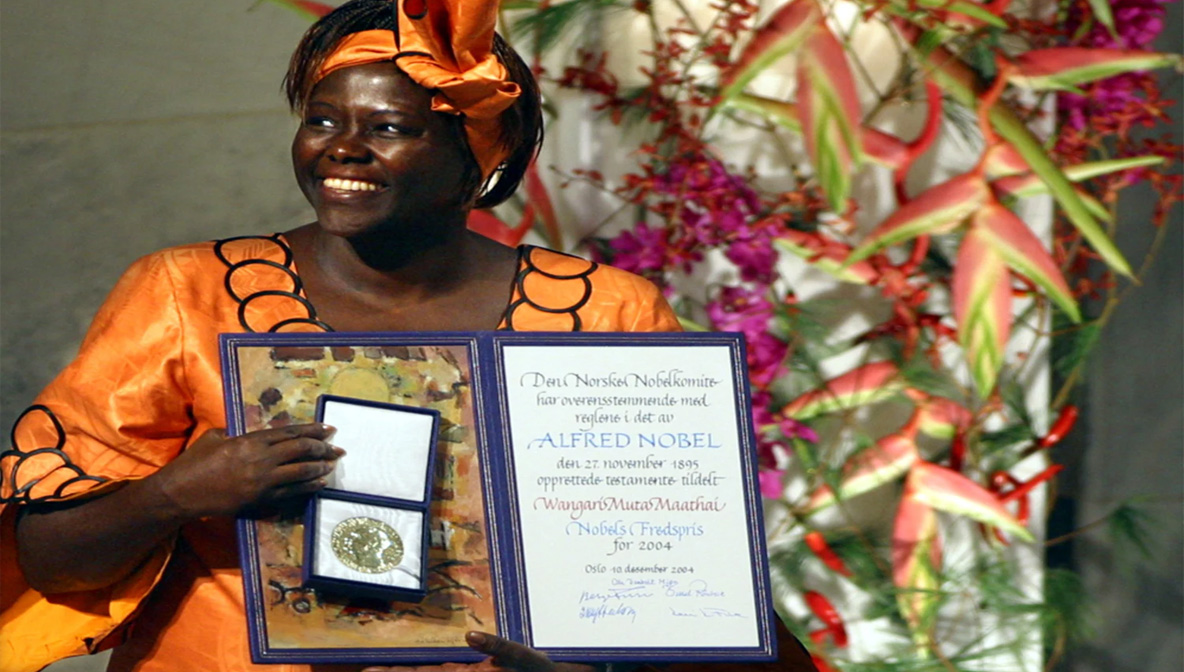
Awarded the Nobel Peace Prize in 2004—the first African woman to earn this honor—for her integrated approach to sustainable development, democracy, and human rights
-
Named a UN Messenger of Peace in 2009 with focus on environment and climate change
-
She passed away from ovarian cancer on 25 September 2011 in Nairobi
🌱 Key Lessons We Learn
-
Empowerment through Environment: Link personal livelihoods with conservation to spark grassroots change.
-
Women as Catalysts: Uplifting women uplifts entire communities.
-
Act Locally, Influence Globally: Begin small—green your village, grow a movement.
-
Perseverance and Courage: Stand firm even when physically attacked or politically silenced.
-
Holistic Advocacy: Environmental efforts can (and should) connect to democracy, justice, and equity.
🧩 Final Thoughts
Wangari Maathai’s life exemplifies how one person’s vision can grow into a movement—that tends the earth and uplifts human rights. She showed us that planting trees is more than an environmental act—it’s a statement of empowerment, justice, and hope. Her legacy reminds us that true green change is rooted in both soil and spirit.
“It’s the little things citizens do. That’s what will make the difference.” — Wangari Maathai