
🖋️ Introduction
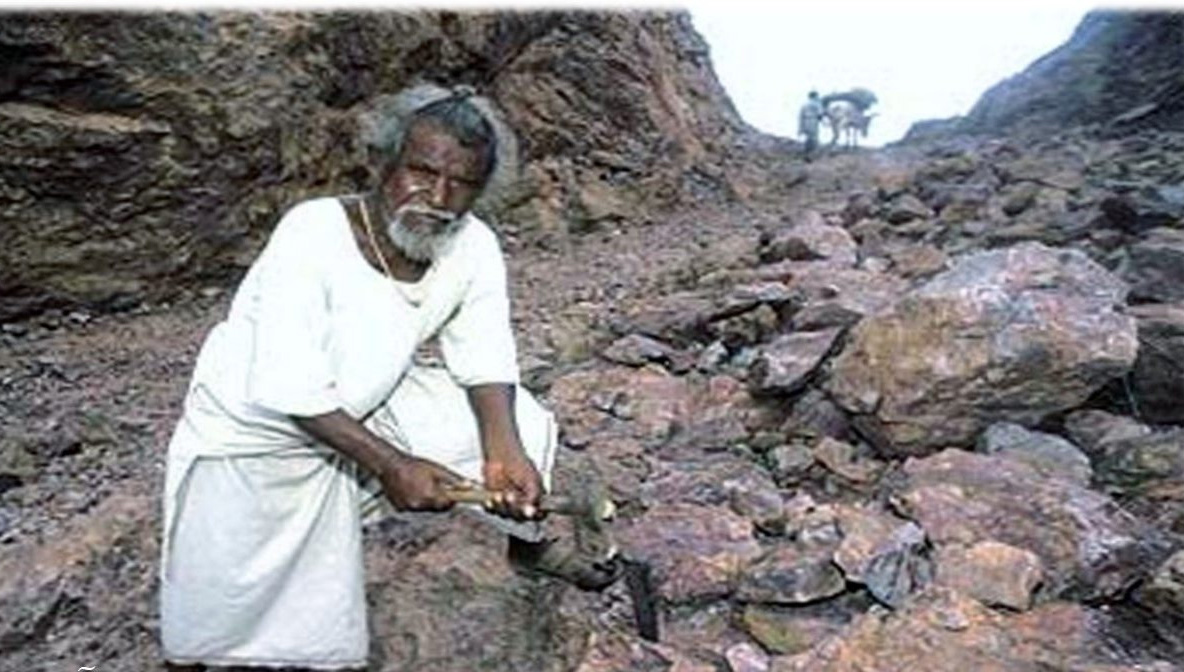
Dashrath Manjhi (1934–2007), better known as “The Mountain Man,” was a poor laborer from Gehlaur village in Bihar, India, who performed a feat so extraordinary, it defied logic and inspired generations.
After losing his wife due to delayed medical aid caused by a mountain blocking the way to the nearest town, Manjhi took a hammer and chisel—and over 22 years, he carved a road through a mountain—alone. His story is one of grit, love, and relentless determination.
📅 Early Life and Background
-
Born: January 14, 1934
-
Birthplace: Gehlaur, a small village in the Gaya district of Bihar, India
-
Community: Musahar (a Dalit, marginalized caste)
-
Occupation: Daily wage laborer, farmer
Living in extreme poverty, Manjhi’s life reflected the daily hardships of countless Indian villagers. His village was isolated by a rugged mountain, forcing residents to walk around it—a 55 km journey—for basic needs, education, and medical help.
💔 The Turning Point: A Tragic Loss
In the early 1960s, Dashrath’s wife, Falguni Devi, was injured and needed urgent medical attention. But the nearest town, Wazirganj, was on the other side of the mountain.
By the time help arrived—she had died.
Fueled by grief and anger, Dashrath vowed that no one else should suffer like he did. With only a hammer, chisel, and sheer will, he began to carve a road through the mountain—alone.
⛏️ The Impossible Mission
-
Years of work: 1960–1982 (22 years)
-
Tools used: Hammer, chisel, and crowbar
-
Mountain carved: Gehlour hills, Bihar
-
Road length: 110 meters long, 9.1 meters wide, and 7.6 meters deep
-
Impact: Reduced travel distance from 55 km to just 15 km
Villagers initially mocked him, calling him mad. But he didn’t stop. Rain, sun, hunger—nothing could deter him. Eventually, many joined in or offered food and support.
Dashrath didn’t wait for the government. He became the government—a one-man Public Works Department.
🏅 Recognition and Legacy
Though largely ignored during his years of toil, Dashrath eventually gained national attention.
Honors and Recognition:
-
Known as “The Mountain Man of India”
-
Felicitated by then Chief Minister of Bihar, Nitish Kumar
-
Featured in documentaries and news reports
-
Inspired the Bollywood film Manjhi – The Mountain Man (2015), starring Nawazuddin Siddiqui
After His Death:
-
Died: August 17, 2007, from gallbladder cancer
-
Given a state funeral by the Government of Bihar
-
The road he built was named after him
-
His legacy now symbolizes people’s power and perseverance
🧠 What We Learn from Dashrath Manjhi
1. Love Can Move Mountains—Literally
His road wasn’t built with machines, but with grief and love.
2. Never Wait for Permission
He didn’t wait for help; he picked up a hammer and became a builder of change.
3. Obstacles Are Just Delays, Not Dead Ends
A mountain may block the way, but the right mindset can cut through it.
4. Even the Forgotten Can Be Heroes
From the poorest caste and the smallest village came a man whose story is larger than life.
🙏 Conclusion
Dashrath Manjhi’s story is not just about a road. It’s about a path of possibility, forged through unimaginable hardship. He proved that no dream is too big, and no obstacle too hard, when fueled by love and purpose.
“When I started hammering the hill, people called me a lunatic. But that only steeled my resolve.” – Dashrath Manjhi