
Introduction
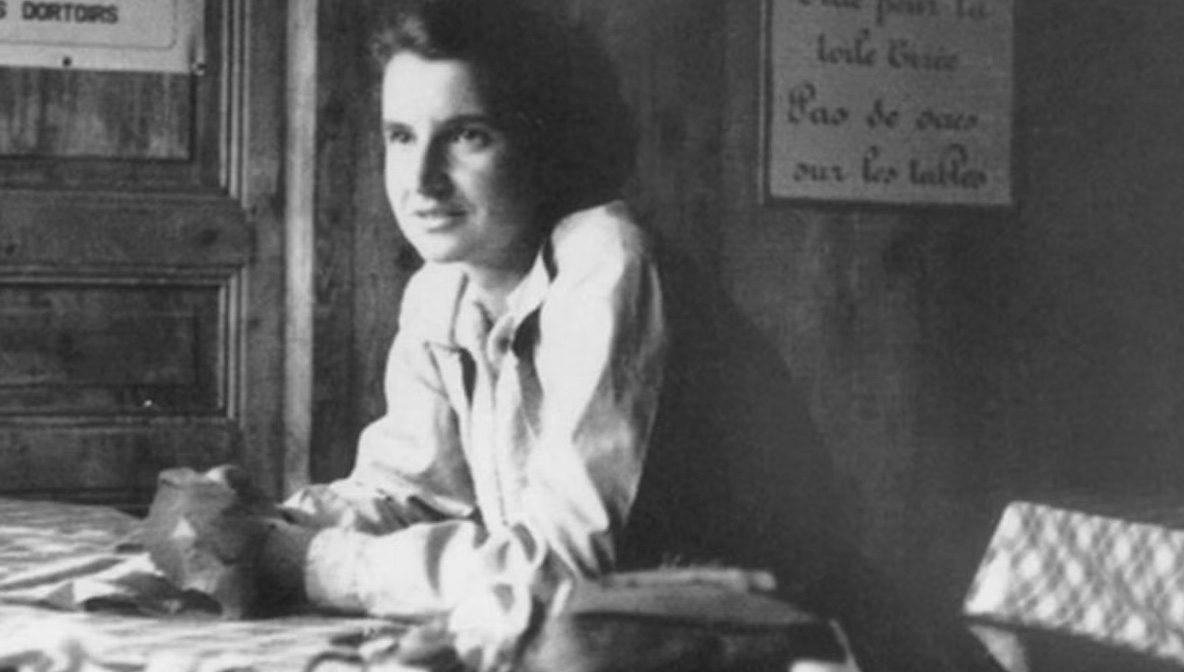
Rosalind Franklin (1920-1958) was a brilliant British chemist and X-ray crystallographer whose groundbreaking work was instrumental in uncovering the structure of DNA. Despite her crucial contributions, her role was largely overshadowed during her lifetime, with James Watson and Francis Crick receiving most of the credit (and the Nobel Prize) for the double helix model. Today, Franklin is rightfully recognized as a pioneering scientist who changed biology forever.
Early Life & Education
Born on July 25, 1920, in London, Franklin displayed an early aptitude for science. She:
-
Studied natural sciences at Cambridge University, specializing in physical chemistry.
-
Earned her PhD in 1945 for work on coal porosity (which later helped classify coal for wartime fuel efficiency).
-
Learned X-ray diffraction techniques in Paris, becoming an expert in crystallography.
The DNA Breakthrough (1951–1953)
At King’s College London, Franklin produced the clearest X-ray images of DNA at the time—including the famous “Photo 51,” which revealed the helical structure.
Key Contributions:
-
Proved DNA had two forms (A and B), with the B-form showing a clear helix.
-
Calculated DNA’s dimensions, water content, and symmetry—critical for the double helix model.
-
Suspected DNA’s backbone was on the outside (later confirmed).
The Controversy:
-
Without her knowledge, her colleague Maurice Wilkins shared Photo 51 with Watson & Crick at Cambridge.
-
They used her data (published without her permission) to finalize their model in 1953.
-
Franklin was not properly credited when their findings were announced.
Later Work on Viruses & Untimely Death
After DNA, Franklin shifted to studying tobacco mosaic virus (TMV) and RNA structures at Birkbeck College. Her work laid foundations for virology. Tragically:
-
Diagnosed with ovarian cancer in 1956 (likely due to radiation exposure from X-ray work).
-
Died on April 16, 1958, at just 37 years old.
-
The 1962 Nobel Prize for DNA went to Watson, Crick, and Wilkins—Franklin was ineligible posthumously.
Legacy & Posthumous Recognition
-
Universities and institutions now honor her with fellowships, lectures, and buildings in her name.
-
The Rosalind Franklin Mars rover (ESA, 2023) pays tribute to her scientific impact.
-
Historians now emphasize her indispensable role in the DNA discovery.
Final Thoughts
Franklin’s story is one of genius overshadowed by gender bias—yet her work remains foundational to genetics. She exemplifies how scientific progress often relies on uncredited contributors, and her belated recognition serves as a reminder to celebrate all pioneers fairly.