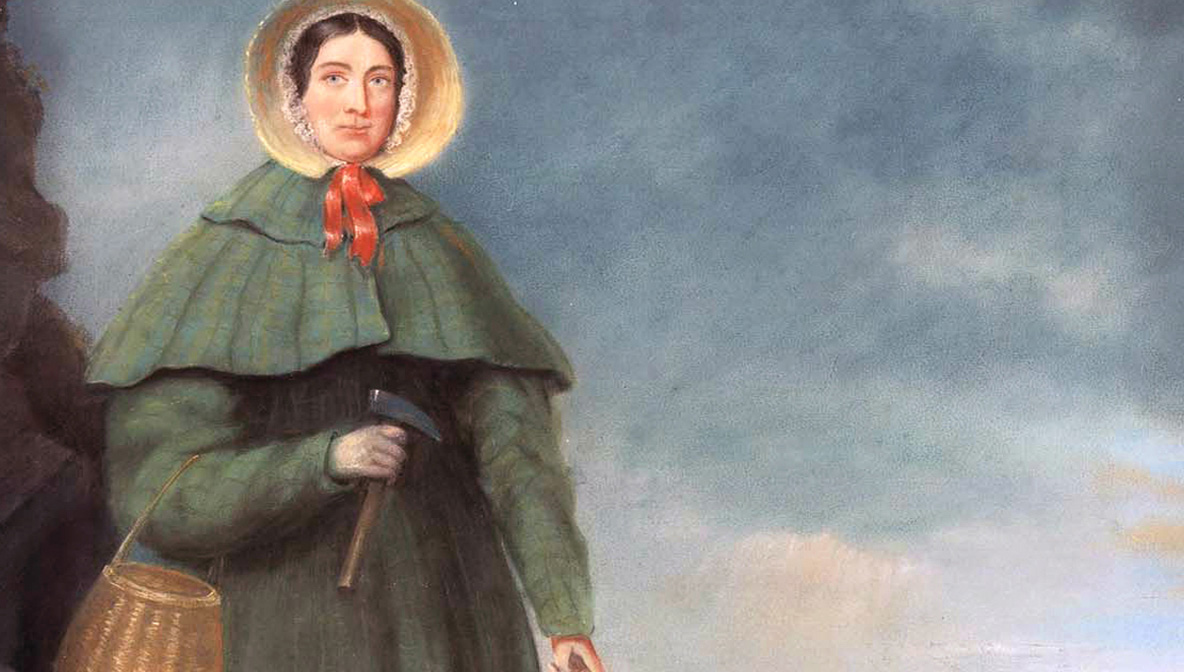

Explore the life, legacy, and lessons of a pioneering woman in science
🌱 Introduction
Mary Anning (1799–1847) transformed our understanding of prehistoric life through her relentless fossil discoveries along England’s Jurassic Coast. She unearthed the first scientifically recognized ichthyosaur and plesiosaur skeletons—groundbreaking finds that challenged early 19th-century science. Despite facing gender and class barriers, Anning’s legacy endures as one of the most influential figures in paleontology.
🧭 Life & Career Overview
Early Life
-
Born 21 May 1799 in Lyme Regis, Dorset, England.
-
Raised in a poor, religious dissenting family, she had limited formal education but learned to read in Sunday school
-
Survived a lightning strike at 15 months, which local lore attributes to her later vigor and curiosity
Fossil Hunting Beginnings
-
Taught by her father to find and clean fossils; turned collecting into the family’s main income after his death in 1810
-
At around age 12, helped her brother unearth a nearly complete ichthyosaur skeleton, later described by Everard Home in 1814
Major Discoveries
-
Ichthyosaurus (~1811–1812): First scientifically identified skeleton in Britain
-
Plesiosaurus (1823): Her discovery sparked debate and validation by Georges Cuvier after William Conybeare presented it
-
Pterosaur (1828): First identified outside Germany by William Buckland, who credited Anning
-
Coprolites & fish fossils: Identified fossilized feces and ink sacs in belemnites—a major leap in paleontological science
Recognition & Struggles
-
Despite selling key finds to prominent scientists, Anning often went uncredited due to her gender and social status
-
Toward the end of her life, she received a stipend from the British Association and was made honorary member of the Dorset County Museum
-
Died of breast cancer on 9 March 1847, at age 47
🔬 Why Mary Anning’s Work Matters
-
Shifted Scientific Paradigm: Provided evidence supporting extinction and pre-Darwinian evolutionary theories .
-
Advanced Paleontology: Initiated paleoart through Henry De la Beche’s famous Duria Antiquior illustration, inspired by her finds
-
Paved the Way for Women: Breaking through gender and class barriers, recognized in 2010 by the Royal Society as one of Britain’s top 10 influential women scientists
🧠 What we learn from Mary Anning
-
Self-education is powerful: She mastered complex fields by copying texts and studying independently
-
Perseverance matters: Excavating massive fossils from treacherous cliffs reflects unwavering dedication
-
Challenge the status quo: Her findings forced scientists to reconsider dominant religious and scientific beliefs .
-
Credit is important: Her lack of recognition underscores the ongoing fight for equity in science.
-
Science is global: Working-class contributors can transform disciplines if given opportunity.
🧭 Final Thought
Mary Anning’s journey from a working-class girl to a globally influential paleontologist is a testament to the power of curiosity, resilience, and determination. Her discoveries turned cliffs into classrooms and laid the foundation for modern paleontology. Today, her legacy reminds us: breakthroughs can come from anywhere—and every voice deserves recognition.