
📝 Introduction:
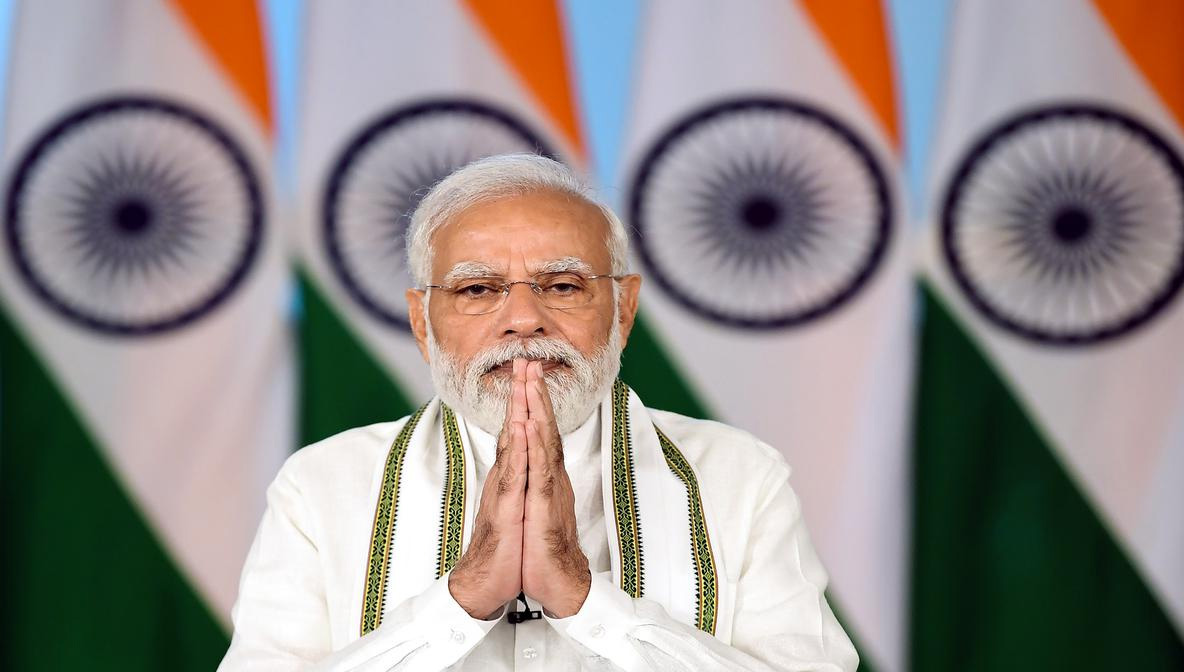
From the humble alleys of Vadnagar to the grand corridors of the Prime Minister’s Office, Narendra Modi’s journey is not just one of personal triumph but of a nation’s transformation. Once a tea seller, now one of the world’s most influential leaders, Modi has reshaped Indian politics with his bold reforms, visionary leadership, and a deep connect with the common citizen. Whether you admire his economic strategies or critique his assertive governance, one thing is undeniable — Modi has left an indelible mark on India’s story in the 21st century. This biography dives deep into his life, achievements, legacy, and the lessons we can learn from his rise to power.
Early Life
-
Full Name: Narendra Damodardas Modi
-
Date of Birth: 17 September 1950
-
Place: Vadnagar, Gujarat, India
-
Family: Born into a lower-middle-class family of grocers; his father ran a tea stall where Modi helped as a child.
-
Education:
-
BA in Political Science (Distance education – Delhi University)
-
MA in Political Science (Gujarat University)
-
Early Political Career
-
Joined RSS (Rashtriya Swayamsevak Sangh) at a young age.
-
Became a pracharak (campaigner) and then a full-time worker for the RSS.
-
Joined the Bharatiya Janata Party (BJP) in 1987.
Chief Minister of Gujarat (2001–2014)
-
Took over as CM after the 2001 Bhuj earthquake.
-
Focused on economic growth, infrastructure, and industrial development.
-
Controversial for the 2002 Gujarat riots, which drew criticism, though courts later cleared him of wrongdoing.
Prime Minister of India (2014–Present)
-
Became PM in May 2014 after BJP’s massive electoral victory.
-
Re-elected with a bigger mandate in 2019.
-
Known for strong leadership, bold decisions, and a vision for a modern India.
🏆 Major Achievements
1. Economic Reforms
-
GST (Goods and Services Tax): Simplified indirect tax system.
-
Demonetization (2016): Banned ₹500 and ₹1,000 notes to curb black money (debatable impact).
-
Startup India, Make in India: Boosted entrepreneurship and manufacturing.
-
Digital India: Promoted e-governance and digitization.
2. Infrastructure & Development
-
Rapid construction of highways, railways, and airports.
-
Expansion of metro rail networks in many cities.
-
Electrification of all villages by 2018.
3. Social Welfare Schemes
-
Ujjwala Yojana: Free LPG connections to poor households.
-
Swachh Bharat Abhiyan: Nationwide cleanliness and sanitation campaign.
-
Ayushman Bharat: World’s largest health insurance scheme for poor families.
-
Jan Dhan Yojana: Millions of new bank accounts for financial inclusion.
4. Foreign Policy
-
Stronger ties with the US, Japan, UAE, and Israel.
-
Assertive stand on Pakistan and China.
-
Promoted India as a global leader on climate change and digital innovation.
5. Defense and National Security
-
Surgical Strikes (2016) and Balakot Airstrike (2019) in response to terrorist attacks.
-
Abrogation of Article 370: Ended special status of Jammu and Kashmir.
-
Strengthened border infrastructure and modernized armed forces.
🇮🇳 What He Has Done for the Country
-
Brought decisive leadership and stability.
-
Empowered the poor through direct benefit transfers and subsidies.
-
Promoted self-reliance (Atmanirbhar Bharat).
-
Strengthened national pride and identity.
-
Gave attention to long-neglected sectors like sanitation, startups, and rural infrastructure.
⭐ Importance of Narendra Modi
-
One of the most influential leaders in India’s post-independence history.
-
Viewed globally as a strong, nationalist leader.
-
Has shaped a new era of assertive Indian diplomacy.
-
Connects with the masses through effective communication and a personal narrative of struggle.
📚 What We Can Learn from Him
1. Hard Work and Determination
-
From selling tea to becoming PM — his journey teaches that humble beginnings don’t limit success.
2. Vision and Clarity
-
Always has a clear mission, whether it’s Digital India or a 5-trillion-dollar economy.
3. Communication Skills
-
Connects with people of all classes through simple, powerful speeches.
4. Discipline and Focus
-
Known for a strict routine, strong willpower, and focus on goals.
5. Leadership Under Pressure
-
Made bold decisions during crisis situations like COVID-19, border tensions, and economic challenges.
🧭 Conclusion
Narendra Modi is a transformative figure in Indian politics. Whether one agrees with all his policies or not, it’s clear that he has changed the direction and narrative of Indian governance, politics, and global presence.